


Competitor analysis is the systematic process of researching businesses that compete for your customers so you can identify gaps, sharpen your positioning, and make smarter strategic decisions. The SBA recommends using competitive analysis to learn from rivals, estimate market share, and spot indirect threats before they cost you clients. You can start in the next 60 minutes with three actions:
- Name three competitors your ideal customer would consider instead of you.
- Write down the top three things each one claims to do better than everyone else.
- Pick one gap in their offer and design a quick experiment to own it.
Pro Tip: When choosing your three starting competitors, pick the ones your last five lost prospects mentioned or chose, not the ones you find most threatening personally. Buyer behavior is the signal; your intuition is the noise.
Key Takeaways
Competitor analysis is only as useful as the decisions it drives: the firms that treat it as a living, evidence-backed document updated quarterly consistently outperform those that run it once and file it away.
| Point | Details |
|---|---|
| Start with three competitors | Pick rivals your last five lost prospects actually chose, not the ones you find most threatening. |
| Evidence beats opinion | Every SWOT cell and pricing observation needs a dated screenshot or source URL to be actionable. |
| SWOT is a tool, not the process | SWOT organizes findings gathered elsewhere; running it without prior data collection produces guesswork. |
| Update quarterly | Salesforce and FastStrat both recommend treating competitor analysis as a living document reviewed every 90 days. |
| Lawseo applies this for law firms | Lawseo delivers evidence-backed competitor audits with exclusivity agreements, so your intelligence stays yours. |
What competitor analysis actually covers (and what it doesn’t)
Competitor analysis, as Coursera describes it, is a stepwise process: identify who competes for your customers, gather information on their products, pricing, messaging, and channels, then apply frameworks like SWOT and positioning maps to convert raw data into decisions. That definition matters because it draws a clear boundary around what belongs in the exercise.
What to research:
- Products and service tiers (features, depth, bundling)
- Pricing models and published rate structures
- Core messaging and value propositions
- Marketing channels (organic search, paid ads, social, email, events)
- Customer reviews and recurring complaints
- Operational signals visible from the outside (hiring pages, partnerships, press releases)
What to leave out:
- Internal cost structures you cannot verify externally
- Speculation about unreleased products with no public evidence
- Operational minutiae that does not affect the buyer’s decision
One distinction worth making explicit: SWOT (Strengths, Weaknesses, Opportunities, Threats) is a framework you apply inside a competitor analysis, not a synonym for the whole process. SWOT organizes findings; it does not collect them. Running a SWOT on a competitor without first gathering pricing data, review themes, and channel activity produces opinion, not analysis.
Why competitor analysis matters for your business
The core business case is straightforward. Salesforce frames it well: a proper competitor analysis converts suspicions into data-backed facts, letting entrepreneurs act proactively rather than react to surprises. The benefits stack up across every major strategic decision:
- Positioning: Understand where rivals are crowded so you can claim uncrowded space.
- Pricing decisions: See whether you are priced above, below, or in line with the market and whether that gap is intentional.
- Product roadmap signals: Identify features competitors are adding or dropping to anticipate buyer expectations.
- Marketing channel choices: Spot channels your rivals are ignoring or underinvesting in.
- Risk detection: Catch new entrants and substitute solutions before they erode your share.
Two short use cases illustrate the ROI. A startup entering a crowded software market used competitor analysis to find that every established player required annual contracts. Offering month-to-month pricing became their wedge, and it showed up in their first 90 days of revenue. A local service business defending its share in a mid-size city discovered through review mining that the dominant competitor had a consistent complaint about slow response times. Prioritizing same-day callbacks became their primary differentiator in ads and on their website.
Who to include in your analysis: direct, indirect, and emerging rivals
Building the right competitor list is where most small businesses go wrong. They list the obvious names and stop. FastStrat’s SMB framework recommends including direct, indirect, and status-quo choices because buyers often default to indirect substitutes or simply doing nothing.
- Direct competitors offer the same product or service to the same customer segment. A personal injury law firm competes directly with other personal injury firms in the same metro.
- Indirect competitors solve the same problem through a different mechanism. A legal document automation platform competes indirectly with a law firm for certain transactional matters.
- Substitutes address the same underlying need in a completely different category. A mediation service is a substitute for litigation.
- Non-consumption / status quo is the most underestimated competitor. Many buyers choose to do nothing, delay, or handle the problem themselves. If you are not addressing why inaction feels safer than hiring you, you are losing deals to an invisible rival.
- Emerging entrants are businesses that have recently entered your space or are scaling fast in adjacent markets. Monitoring job postings, funding announcements, and new domain registrations surfaces these early.
For a small business running its first audit, focus on three to five competitors that share your ideal customer profile (ICP). Covering all five types is ideal, but a tight list of verified rivals beats a sprawling list of guesses.
How to perform a competitor analysis: an 8-step process
Bank of America’s guidance recommends analyzing five to seven competitors and recording product features, pricing models, marketing channels, and customer feedback. The eight steps below build that recommendation into a repeatable workflow.
-
Define your goal and ICP first. Decide what decision this analysis will inform (pricing, messaging, channel investment, product roadmap) and write a one-sentence description of your ideal customer. Every data point you collect should connect back to what that customer cares about.
-
Build your competitor list. Use the five competitor types above. Cross-reference Google search results for your top three to five service keywords, review platforms, and any names that appeared in lost-deal conversations.
-
Collect data systematically. For each competitor, capture the following signals:
- Pricing page (screenshot with date)
- Top five organic pages by estimated traffic
- Active paid ad copy and landing pages
- Review themes from Google, Yelp, or industry-specific platforms (pull at least 20 reviews per competitor)
- Social posting cadence and content themes
- Technical signals: site speed, mobile experience, schema markup
- Job postings (signals investment areas)
-
Apply a SWOT framework. For each competitor, populate a four-quadrant SWOT using only evidence you collected in step 3. No opinion cells.
-
Build a positioning map. Plot competitors on a two-axis grid using the two dimensions your ICP cares about most (price vs. service depth, speed vs. specialization). Where the map is sparse, there is likely an opportunity.
-
Run a gap analysis. List every feature, service tier, or channel your competitors offer that you do not, and every gap in their offer that you could fill. Prioritize gaps that align with your ICP’s top decision criteria.
-
Prioritize with an impact-vs.-effort matrix. Score each identified opportunity on two axes: how much it would shift buyer preference (impact) and how much it would cost to execute (effort). High-impact, low-effort moves go first.
-
Write an action plan with owners and dates. Each insight should produce at least one experiment with a named owner, a start date, and a success metric. Analysis without an action plan is a research project, not a business tool.
Pro Tip: Review mining is the highest-signal, lowest-cost data source available. Pull your top three competitors’ one-star and two-star reviews and sort by recency. The complaints that repeat across multiple reviewers in the last 90 days are the gaps your messaging should address directly.
The table below maps each step to the primary output it produces.
| Step | Primary Output |
|---|---|
| 1. Define goal and ICP | Decision scope document |
| 2. Build competitor list | Verified competitor roster (3–7 names) |
| 3. Collect data | Evidence log with dated screenshots |
| 4. SWOT per competitor | Structured strengths/weaknesses grid |
| 5. Positioning map | Visual gap map |
| 6. Gap analysis | Prioritized opportunity list |
| 7. Impact-vs.-effort matrix | Ranked experiment backlog |
| 8. Action plan | Owners, dates, and KPIs |
Which metrics to track and which tools collect them
The metrics that drive decisions for small and mid-size businesses fall into five categories. The tools listed below are real, widely available options; free tiers are noted where they exist.
- Organic visibility: Track competitor keyword rankings and estimated organic traffic. Google Search Console covers your own site for free; rank trackers like Semrush, Ahrefs, or Moz track competitor domains.
- Paid ad presence: Monitor which keywords trigger competitor ads and what ad copy they run. Google Ads’ Auction Insights report shows overlap for your own campaigns; the Google Ads Transparency Center shows active ads publicly.
- Pricing indicators: Screenshot competitor pricing pages on a fixed schedule. For SaaS or subscription businesses, tools like PriceSpy or manual tracking in a spreadsheet work at low cost.
- Review sentiment: Google Business Profile, Yelp, and industry-specific review platforms. Aggregate manually or use a review management platform to track sentiment trends over time.
- Product and feature coverage: A feature grid built in a spreadsheet, updated each quarter. No tool required; discipline required.
- Market share proxies: Census NAICS data and data.census.gov provide industry-level revenue and employment figures that help estimate relative scale. BLS CPI and labor data contextualize cost-side trends.
- Retention proxies: Churn signals are hard to observe externally, but review volume trends, social engagement drops, and job posting patterns (customer success roles being added or cut) are reasonable proxies.
For most small businesses, organic visibility and review sentiment are the two metrics that most directly connect to revenue. Update organic rankings monthly and review sentiment quarterly at minimum.
A competitor analysis spreadsheet template you can use today
The template structure below is built around five tabs. Bank of America’s framework and FastStrat’s SMB guide both emphasize that every assertion in the analysis must be sourced, so the evidence log tab is not optional.
Template tabs:
- Competitor list: Name, URL, date added, competitor type (direct/indirect/substitute), and ICP overlap score (1–5).
- Feature grid: Rows are features or service components; columns are competitors. Each cell gets a Y/N or a brief descriptor.
- Pricing teardown: Published price, pricing model (flat/tiered/custom), trial or guarantee offer, and date captured.
- Positioning map inputs: Two chosen axes, each competitor’s coordinates, and the evidence supporting each placement.
- Evidence log: Source URL or screenshot filename, date captured, and the specific claim it supports.
The sample rows below show how a single fictional competitor (“Firm A”) would be documented across the feature grid and pricing teardown tabs.
| Field | Firm A Entry | Why It Matters |
|---|---|---|
| Service tiers | Starter / Pro / Enterprise | Shows whether they segment by budget or by need |
| Published price | $1,500/mo (Pro tier, captured March 2026) | Anchors your pricing decision with a dated reference |
| Guarantee or trial | 30-day money-back | Signals risk tolerance and buyer confidence |
| Top review theme (positive) | “Fast response time” (majority of recent reviews) | Reveals what buyers value most in this category |
| Top review theme (negative) | “Unclear reporting” (8 of 20 reviews) | Identifies a gap your reporting can fill |
| Evidence log entry | Screenshot: pricing-firmA-2026-03-15.png | Makes every claim auditable and dated |
Import and capture workflow:
- Export review data from Google or Yelp as CSV where the platform allows; otherwise copy-paste into the evidence log with the capture date.
- Screenshot pricing pages as PNG files named with the competitor and date (e.g., pricing-firmA-2026-03-15.png).
- Store all screenshots in a shared folder linked from the evidence log tab so any team member can verify a claim without re-pulling the source.
How to turn competitor findings into experiments and KPIs
Analysis that does not produce a test is analysis that does not produce revenue. The conversion from insight to experiment follows a simple pattern: identify the buyer perception you want to shift, design the smallest test that would shift it, and define the metric that confirms it worked.
-
Price-mismatch experiment. If your analysis shows competitors are priced 20–30% higher for a comparable tier, test a landing page that leads with your price and a direct comparison of what is included. KPI: conversion rate on that page vs. your current pricing page.
-
Messaging A/B test. If review mining surfaces a repeated complaint about a competitor (slow response, opaque pricing, poor communication), write a headline that directly addresses that pain point and A/B test it against your current headline. KPI: click-through rate and lead form completion rate.
-
Feature landing page test. If gap analysis reveals a service component your competitors do not offer, build a dedicated landing page for it before investing in full delivery. KPI: page traffic, time on page, and inquiry rate.
-
Channel expansion test. If competitors are absent from a channel your ICP uses (a specific review platform, a local directory, a niche newsletter), claim and optimize your presence there. KPI: referral traffic and lead source attribution.
-
Retention signal test. If competitor reviews show churn complaints around onboarding, redesign your own onboarding sequence and measure 90-day retention against your historical baseline.
Pick experiments that shift buyer perceptions with minimal engineering. A revised headline costs nothing. A new landing page costs a few hours. Both can produce data within two weeks that a product build would take months to generate.
How long does competitor analysis take, and what does it cost?
The right depth depends on the decision you are trying to make. A quick audit before a pricing change needs different rigor than a full strategic review before entering a new market.
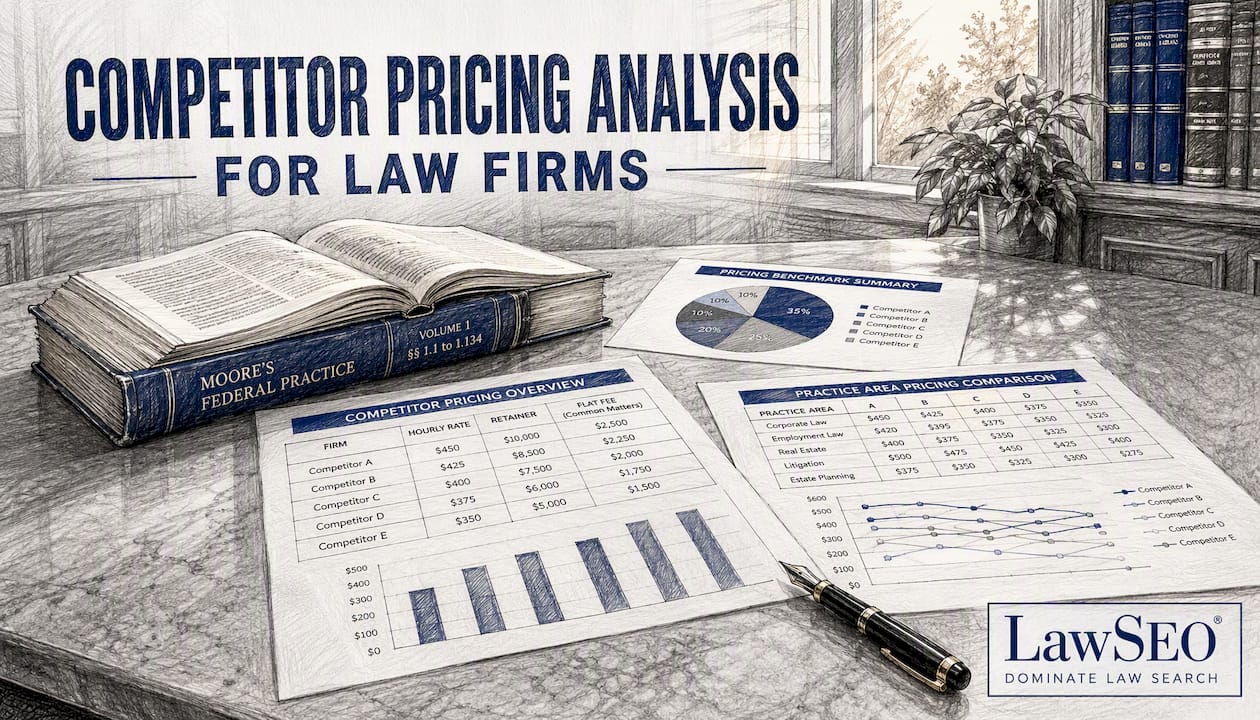
| Tier | Timeline | Deliverables | Rough Cost Range |
|---|---|---|---|
| Quick audit (DIY) | 1–2 days | Competitor list, pricing snapshot, top review themes | $0–$200 (tool subscriptions) |
| Standard audit (freelance-assisted) | 1–2 weeks | Full feature grid, SWOT per competitor, positioning map, action plan | $500–$2,500 |
| Deep audit (agency-led) | 4–8 weeks | Full evidence log, market sizing, channel analysis, experiment roadmap | $3,000–$15,000+ |
When hiring a freelancer or agency, ask for three things in their proposal: a sample evidence log showing how they source claims, a description of which tools they use and why, and at least one example of an action plan they produced from a previous analysis. Proposals that lead with deliverable counts rather than evidence quality tend to produce slide decks, not decisions.
FastStrat recommends quarterly updates for small businesses. A quick audit every 90 days costs far less than discovering a competitor’s pricing change six months after it happened.
Common mistakes that turn competitor analysis into noise
Most competitor analyses fail not because the analyst lacked data, but because the process produced opinion dressed as evidence.
- Listing too many competitors. A list of 20 rivals produces a spreadsheet no one updates. Cap it at seven, as Bank of America’s guidance suggests, and keep every entry tied to a real buyer decision.
- Opinion-based SWOT cells. “They have a weak brand” is not a SWOT entry. “Their Google rating dropped from 4.2 to 3.8 over the last six months based on 40 new reviews” is. Every cell needs a source.
- Static one-off audits. A competitor analysis completed once and filed away is a historical document, not a strategic tool. Treat it as a living document, as Salesforce advises, and schedule quarterly reviews.
- Headline-price comparisons. Published prices are often list prices. Actual transaction prices, bundled discounts, and contract terms matter more. Capture what is publicly verifiable and note what you cannot confirm.
- Ignoring non-consumption. If your ICP’s biggest competitor is inaction, your messaging needs to address the cost of doing nothing, not just the cost of choosing a rival.
- Skipping the evidence log. Without dated screenshots and source URLs, every claim in the analysis is unverifiable. Six months later, no one can tell whether a pricing observation is current or stale.
One ethical boundary applies to all of this: never access competitor systems without authorization, and never use deceptive means to gather information. Everything described in this guide is available through public sources, legal observation, and fair-competition norms.
Validation checks before finalizing any analysis:
- Screenshot every pricing page with the date visible in the browser or filename.
- Pull review quotes with dates, not just themes.
- Check the Wayback Machine (web.archive.org) for historical versions of competitor pages to verify when changes were made.
How Lawseo approaches competitor analysis for law firms
The methodology described in this guide applies across industries, but legal markets have specific characteristics that change how you weight the signals. Attorney marketing is governed by state bar rules, which means messaging claims, testimonials, and guarantees are constrained in ways that general business marketing is not. That constraint actually makes competitor analysis more valuable, not less, because the differentiation levers available to law firms are fewer and more precise.
At Lawseo, the competitor analysis process for law firms centers on three priorities that general-purpose frameworks often underweight.
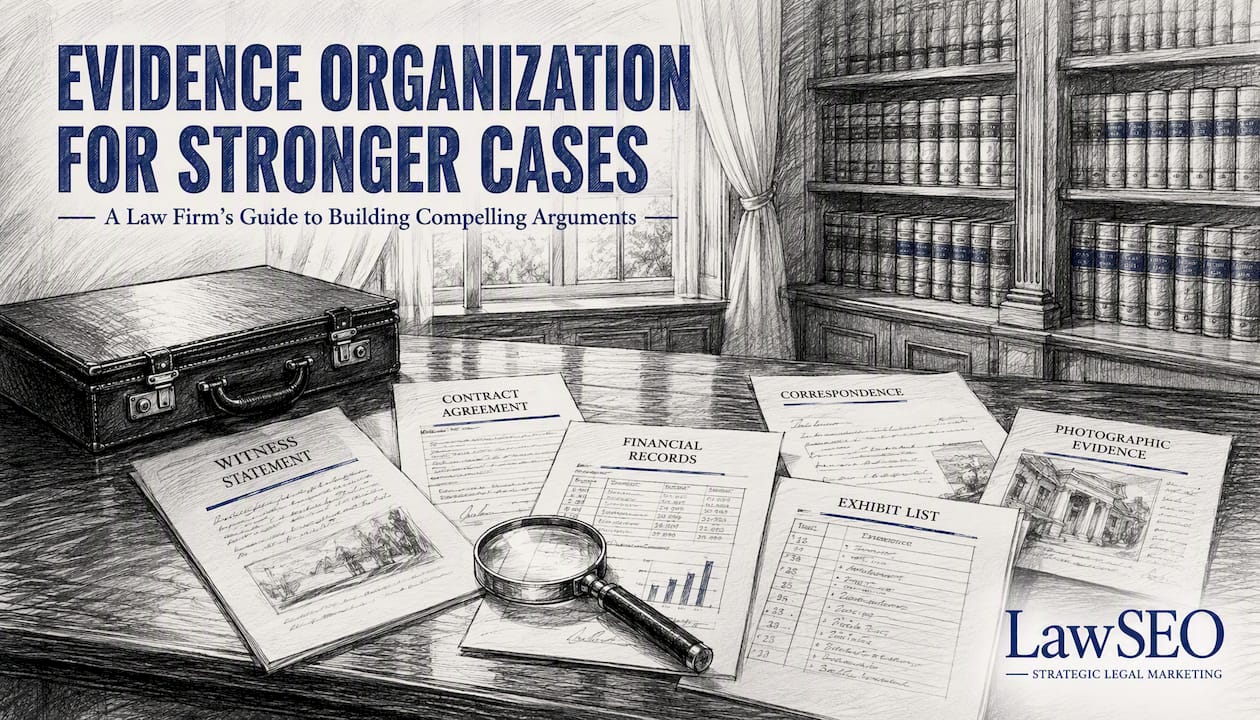
First, the evidence audit trail is non-negotiable. In legal marketing, a claim that cannot be sourced is a liability. Every SWOT cell, every pricing observation, and every review theme in a Lawseo analysis carries a dated source. This discipline also protects clients: if a competitor’s positioning shifts, the evidence log shows exactly when and how.
Second, experiments are conversion-focused from the start. The goal is not to understand competitors academically; it is to shift the buyer’s decision at the moment they are choosing between firms. That means experiments target the specific search queries, review platforms, and local directory signals that drive intake calls, not vanity metrics.
Third, geographic segmentation and exclusivity matter in ways that national brands do not face. A personal injury firm in Phoenix competes in a different market than one in Tucson, even if both operate under the same state bar. Lawseo’s exclusivity agreements mean the competitor analysis built for one client is never shared with or used against a competing firm in the same market.
For firms operating in multilingual or multicultural markets, competitor analysis also needs to account for how messaging translates across languages. A guide to translating legal marketing covers how market research intersects with translation decisions for firms serving non-English-speaking communities.
Lawseo’s competitor analysis services for law firms
Law firm competitor analysis requires more than a generic audit template. It requires understanding which signals drive intake calls in your specific practice area and geography, and knowing how to translate those signals into search visibility, content positioning, and local authority.
Lawseo delivers a structured competitor analysis as part of every client engagement: a full evidence-backed audit of three to seven competing firms, a feature and positioning grid, a prioritized experiment roadmap, and an ongoing monitoring cadence. In the first 30 to 60 days, clients receive a clear picture of where they stand relative to their market, which gaps represent the highest-value opportunities, and which experiments to run first. Every engagement includes an exclusivity agreement, so the intelligence gathered for your firm stays with your firm.
To see how this process applies to your practice area and market, visit Lawseo or review the step-by-step SEO implementation guide for law firms to understand what a full engagement looks like from day one.
Sources
The sources below are reliable starting points for data collection and methodology.
- How to Perform Competitor Analysis: A Step-by-Step Guide – Coursera
- Competitive Analysis: What Is It, How to Do It & Benefits | Salesforce
- Competitor Analysis for Small Business: Step-by-Step 2026
On tool selection: free tools (Google Search Console, Google Ads Transparency Center, Wayback Machine, Google Business Profile) cover most of what a small business needs for a first audit. Paid tools like Semrush or Ahrefs add depth for organic visibility tracking but are not required to produce a useful analysis. Whatever tools you use, capture evidence snapshots at the time of collection. A finding without a date is a finding you cannot defend six months later.