


Yelp works well as a starting point for finding local attorneys, especially in consumer-facing practice areas like family law, traffic defense, and small-business disputes, but it should never be the final word. Use it to build a shortlist, then verify every promising name against your state bar directory before you pick up the phone. The verdict is simple: search broadly, trust cautiously, verify always.
TL;DR:
- Verify lawyers’ license status and disciplinary records on your state bar directory, especially for high-stakes cases like felonies or business disputes.
- Use practice-specific search terms and sorting by recent reviews on Yelp and Google to identify actively engaged and reputable local attorneys.
- Cross-check Yelp ratings with professional credentials and experience details from legal-specific directories like Avvo or the state bar.
- Ask pointed questions about case experience, fees, communication, and timelines during your initial consultation to identify potential red flags.
- Focus your research on a small number of trusted sources, such as a review platform and the state bar, to avoid confusion and find the best match for your legal needs.
Which Review Platforms Matter When You’re Trying to Find a Lawyer Online
Yelp isn’t the only lawyer review site worth checking, and it isn’t the most authoritative one either. It’s just the one that shows up first because of how well its business profiles rank in Google’s local results. That visibility makes Yelp a common entry point for people typing “best lawyers near me” into a search bar, particularly in urban markets where consumer legal needs (landlord disputes, DUI defense, small claims) dominate the search volume.
Each platform in the lawyer-review ecosystem plays a different role:
- Yelp favors consumer-facing practice areas and rewards firms with strong local SEO, but its paid advertising costs range from several hundred to over a thousand dollars a month with inconsistent returns, which tells you something about how much weight to put on sponsored placement.
- Google Reviews ties directly into Maps search and is often the first thing a potential client sees before they ever click through to a firm’s website.
- Avvo builds legal-specific attorney profiles and requires reviewers to have actually hired or consulted with the lawyer, which gives its reviews clearer provenance than most general platforms.
- Martindale-Hubbell and Lawyers.com lean on peer reviews from other attorneys, useful for gauging professional reputation rather than client experience.
- State bar directories are the only source with authoritative license status and disciplinary records, and they let you filter by practice area and location.
Prefer a legal-specific directory or a state bar lookup whenever the stakes are high, like a felony charge or a business dissolution, because Yelp’s general-consumer format wasn’t built to capture that kind of complexity.
How to Use Yelp Effectively to Find and Compare Local Attorneys
Treat a Yelp search the same way you’d treat a first date: useful for screening, not for signing anything.
- Search with practice-area terms plus location. “Divorce lawyer 60614” beats “lawyer near me” because it filters out irrelevant results before you even start scrolling.
- Sort by newest reviews, not just highest rated. A five-star average built on reviews from 2019 tells you nothing about how the firm operates today.
- Check the profile basics. Does the firm list its practice areas clearly? Is there a working website and phone number? Has anyone from the firm responded to reviews, positive or negative?
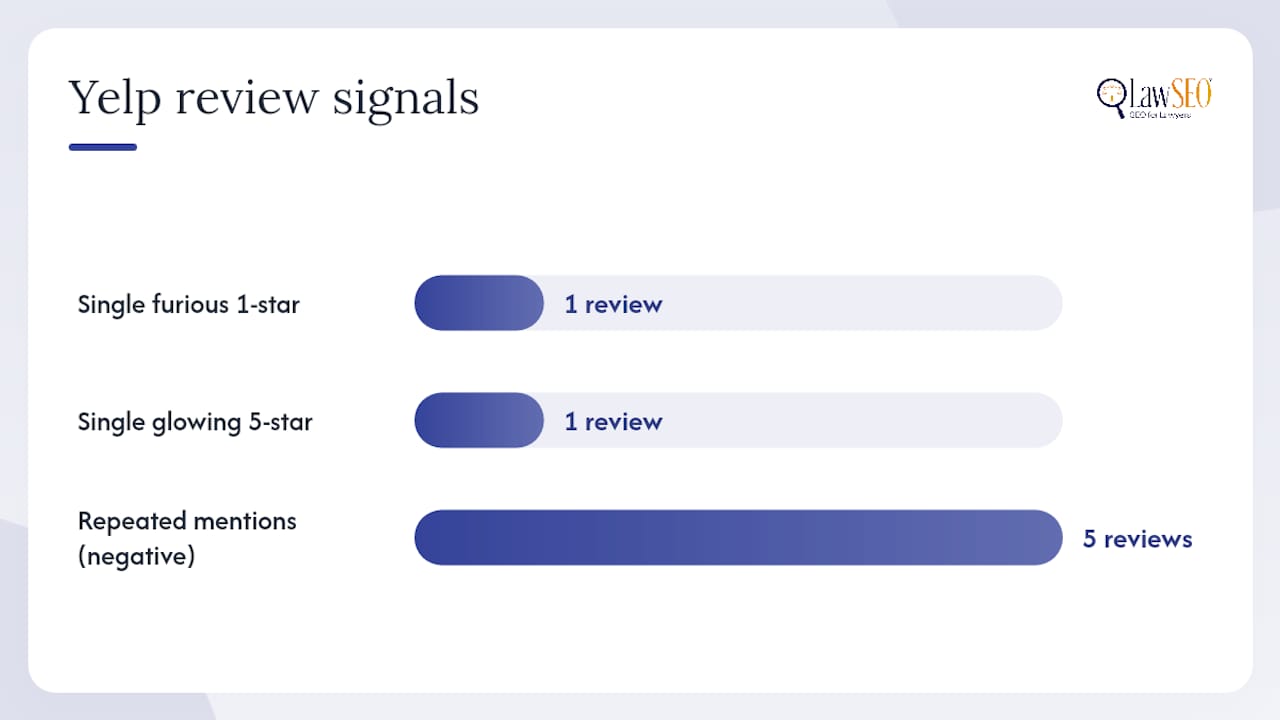
- Read for patterns, not outliers. One furious one-star rant or one suspiciously glowing five-star post tells you less than five reviews that all mention the same slow callback times.
- Cross-check dates against activity. A firm with no new reviews in two years may have shifted focus, downsized, or simply stopped engaging online.
Pro Tip: Open two browser tabs: one for the Yelp profile, one for your state bar’s attorney search. If a lawyer looks great on Yelp but doesn’t show up cleanly on the bar site, that’s your answer.
Yelp’s own filtering system can also work against you here. The platform runs suspected-fake reviews through an algorithm that sometimes catches legitimate feedback along with the spam, so a thin review count doesn’t automatically mean a thin client base.
How to Vet a Lawyer Beyond Star Ratings
A high Yelp rating tells you people liked working with a lawyer. It doesn’t tell you whether that lawyer is licensed in good standing, has handled a case like yours, or charges fees you can afford.
Start with the state bar directory for the lawyer’s state. These lookups show license status, years admitted, and any public disciplinary history, information no review platform can replicate because it comes from the licensing authority itself, not from client opinion.
At your first consultation, ask directly:
- How many cases like mine have you handled, and what were typical outcomes?
- What’s the realistic timeline, and what could extend it?
- What’s your fee structure, and is it in writing?
- Who on your team will actually handle my case day-to-day?
- How often will I hear from you, and through what channel?
Watch for warning signs the moment they surface. Guaranteed outcomes, vague answers about fee structure, and unexplained fee increases mentioned across multiple reviews are the three complaints that show up most often when a client relationship goes sideways. A lawyer worth hiring will walk you through the risks and obstacles in your case rather than promise a clean win.
Fee structures vary by practice type: contingency (a percentage of any settlement, common in personal injury), hourly, flat-fee (common for wills or simple filings), or retainer. Whatever the model, the agreement needs to be in writing, specifying percentages, expenses, and how any retained funds are handled. Skip this step and you’re negotiating blind if a dispute over billing comes up later.
Cross-Checking Reviews: Where to Look Next
Platforms don’t police reviews the same way, and that difference matters more than most people realize. Avvo requires reviewers to have actually hired or consulted the attorney, which narrows the pool but raises confidence in what’s left. Yelp applies automated filtering that can catch spam and legitimate posts alike, meaning a filtered review isn’t necessarily a fake one.
A practical order of operations:
- Start broad with Yelp and Google Reviews to build your shortlist.
- Move to Avvo or another legal-specific directory to check consultation-based reviews and credentials.
- Run a state bar lookup to confirm license status and check for discipline.
- Visit the firm’s website for practice area depth and staff bios.
- Ask for references if the case is complex enough to justify it.
When sources disagree, weight documented experience and clean disciplinary records over a stack of glowing but generic reviews. A four-star average with three detailed reviews describing similar case outcomes beats a five-star average built on one-line praise.
What Legal-Marketing Research Says About Choosing a Lawyer Well
Consumers who spread their search across a dozen directories usually end up more confused, not better informed. The more useful approach mirrors the 80/20 principle marketing consultants recommend to law firms themselves: focus on the small number of sources that reliably produce good matches, referrals, an optimized Google profile, and one or two review platforms, rather than chasing every site that shows up in search results.
Ask directly who your point of contact will be and what response time to expect. Firms that answer this clearly tend to be more organized once you’re a client.
A short checklist worth keeping after any consultation:
- Fee structure confirmed in writing
- Named point of contact identified
- Expected response window stated
- Experience with your specific case type confirmed
- Realistic timeline discussed, including possible delays
- Risks and obstacles explained plainly
Pro Tip: Save this checklist in your phone before your first consultation. Reading it off a screen in front of the lawyer signals you’re a prepared client, and prepared clients tend to get straighter answers.
A Publisher’s Note on Using Review Platforms to Choose Counsel
The clearest pattern in how people successfully hire lawyers isn’t which platform they used first. It’s whether they checked more than one source before committing. Candidates who get vetted across a review platform and a state bar lookup, and who get asked pointed questions at intake, tend to produce better-fitting matches than candidates chosen on star rating alone.
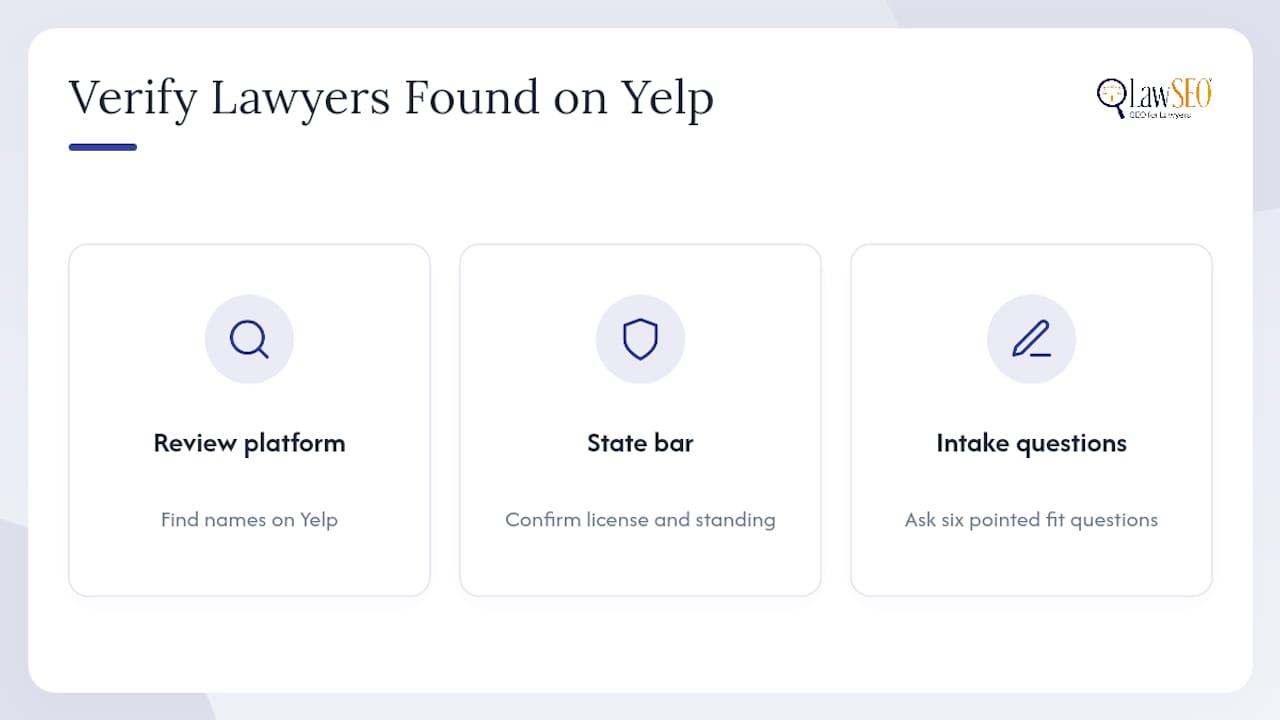
Use Yelp to find names. Use the state bar to confirm they’re real, licensed, and clean. Use the six intake questions to confirm they’re the right fit for your specific situation. None of those three steps replaces the others.
Some services help firms make their credentials, practice areas, and client feedback easier to find and verify online, which is the other half of this equation: a good lawyer with a thin, outdated, or hard-to-verify online presence loses clients to a worse lawyer with a stronger profile.
— TODD
If Your Firm’s Online Presence Isn’t Matching Your Reputation
If clients keep telling you they almost didn’t call because your Yelp profile looked outdated or your reviews weren’t showing up in Google search, that’s a visibility problem, not a service problem. Some companies focus on law firms and attorneys, building local SEO, review management, and profile optimization strategies that make sure actual client experience shows up where people are searching, including the newer AI-driven search tools that are starting to answer “best lawyers near me” queries directly.
If you’re spending hours each week responding to reviews manually, or if your Google Business Profile and Yelp listing tell two different stories about your firm, it’s worth a conversation. Explore Lawseo’s legal SEO strategies to see how firms improve both visibility and accuracy across the platforms clients actually check before they call.
Sources
- What should I ask before hiring a personal injury lawyer? — Nolo
- How to pick a lawyer — LegalClarity
- What are Avvo reviews? — Avvo support
- How to discover whether a lawyer is shady — Kiplinger