


Every law firm faces the challenge of standing out in a crowded digital space while upholding strict ethical standards. For American law firm marketing managers, building trust and credibility with potential clients starts with a clear understanding of legal content marketing. With a focus on creating valuable insights instead of traditional advertising, this approach helps firms demonstrate expertise, foster client loyalty, and improve search visibility—all while navigating the evolving demands of compliance and AI-driven optimization.
Table of Contents
- Defining Legal Content Marketing for Law Firms
- Major Types and Platforms for Legal Content
- How Legal Content Drives Search and Leads
- Ethical Rules and Compliance Requirements
- Risks, Common Mistakes, and How to Avoid Them
Key Takeaways
| Point | Details |
|---|---|
| Legal Content Marketing Focuses on Value | Unlike traditional advertising, it aims to provide valuable legal insights that help potential clients navigate complex legal issues. |
| Diverse Content Types Enhance Engagement | Utilizing various formats such as blogs, videos, and infographics can effectively showcase expertise and attract potential clients. |
| Ethical Compliance is Crucial | Law firms must adhere to strict ethical guidelines to maintain client trust and avoid professional penalties in their marketing efforts. |
| Strategic Content Distribution Maximizes Impact | Choosing the right platforms for content distribution ensures better audience targeting and increases the likelihood of lead generation. |
Defining Legal Content Marketing for Law Firms
Legal content marketing represents a strategic approach for law firms to communicate value and expertise to potential clients through targeted digital content. At its core, this marketing method goes beyond traditional advertising by creating valuable legal insights that genuinely help audiences understand complex legal challenges.
The primary objective of legal content marketing involves several key strategic goals:
- Establishing thought leadership within specific practice areas
- Building trust and credibility with potential clients
- Demonstrating deep understanding of client legal needs
- Improving online visibility through search-optimized content
- Generating high-quality leads through educational materials
Unlike traditional marketing approaches, legal content marketing focuses on providing substantive value. Law firms create materials that answer real client questions, address common legal concerns, and showcase their expertise without overtly promoting services. This approach transforms marketing from a sales pitch into a valuable resource that potential clients actively seek out.
Content types in legal marketing can include:
- Detailed practice area guides
- Explanatory blog posts about legal processes
- Case study analyses
- Video explanations of complex legal concepts
- Downloadable legal resource documents
Pro tip: Develop content that addresses your ideal client’s most pressing legal questions, focusing on solving problems rather than selling services.
By consistently producing high-quality, informative content, law firms can transform their marketing strategy from transactional to educational, ultimately building stronger connections with potential clients.
Major Types and Platforms for Legal Content
Legal content marketing encompasses a diverse range of digital and traditional platforms designed to engage potential clients and showcase legal expertise. Law firms now leverage multiple marketing channels to reach and educate their target audiences effectively.
The primary content types law firms utilize include:
- Blog posts and articles explaining legal concepts
- Educational ebooks and comprehensive guides
- Infographics visualizing complex legal information
- Video testimonials and case study presentations
- Interactive webinars and legal workshops
- Podcasts discussing industry trends
- Professional social media content
Modern legal marketing strategies prioritize digital platforms that offer precision targeting and measurable engagement. Digital platforms have become especially crucial, allowing law firms to distribute content across multiple channels:
- Law firm websites
- Social media networks
- Professional legal forums
- YouTube and video platforms
- Email marketing campaigns
- LinkedIn professional networks
Content distribution requires strategic planning to maximize reach and impact. Law firms must carefully select platforms that align with their target client demographics and practice area specializations.
Here’s a comparison of key digital platforms for legal content and their unique advantages:
| Platform Type | Audience Targeting Ability | Content Format Strength |
|---|---|---|
| Law Firm Website | Highly specific, branded | Detailed guides, resource centers |
| Social Media | Large, varied demographics | Short updates, visuals, video |
| Email Campaigns | Personalized, past leads | Newsletters, updates, offers |
| Video Platforms | Broad, visual-focused audience | Explainers, testimonials, webinars |
| Legal Forums/LinkedIn | Professionally curated | Thought pieces, Q&A, networking |
Successful legal content marketing transforms complex legal information into accessible, valuable resources for potential clients.
Emerging content formats are continuously reshaping legal marketing approaches. Interactive tools like online legal quizzes, automated consultation chatbots, and personalized legal assessment platforms are gaining significant traction in attracting potential clients.
Pro tip: Develop a multichannel content strategy that adapts your core message across different platforms while maintaining consistent brand voice and professional integrity.
By embracing diverse content types and platforms, law firms can effectively demonstrate expertise, build trust, and generate high-quality leads in an increasingly competitive digital landscape.

How Legal Content Drives Search and Leads
Legal content marketing has transformed how law firms attract and convert potential clients, with strategic digital content becoming a powerful lead generation tool. Sophisticated content strategies now drive significantly more qualified leads compared to traditional marketing approaches.
The key mechanisms through which legal content generates leads include:
- Improving search engine visibility
- Establishing thought leadership
- Addressing specific client pain points
- Demonstrating expertise without direct selling
- Building trust through educational resources
- Creating multiple client touchpoints
Search optimization plays a critical role in lead generation. Law firms that consistently produce high-quality, targeted content can expect substantial returns:
- SEO-optimized blogs generate 67% more leads
- Content marketing produces three times more leads than outbound marketing
- Educational ebooks convert 20% of downloads into clients
- Webinars can generate 20-40 qualified leads per event
Effective legal content transforms complex legal information into accessible, valuable resources that potential clients actively seek out.
Client engagement metrics reveal the profound impact of strategic content. Potential clients typically review three to five content pieces before initiating legal services, underscoring the importance of a comprehensive content strategy.
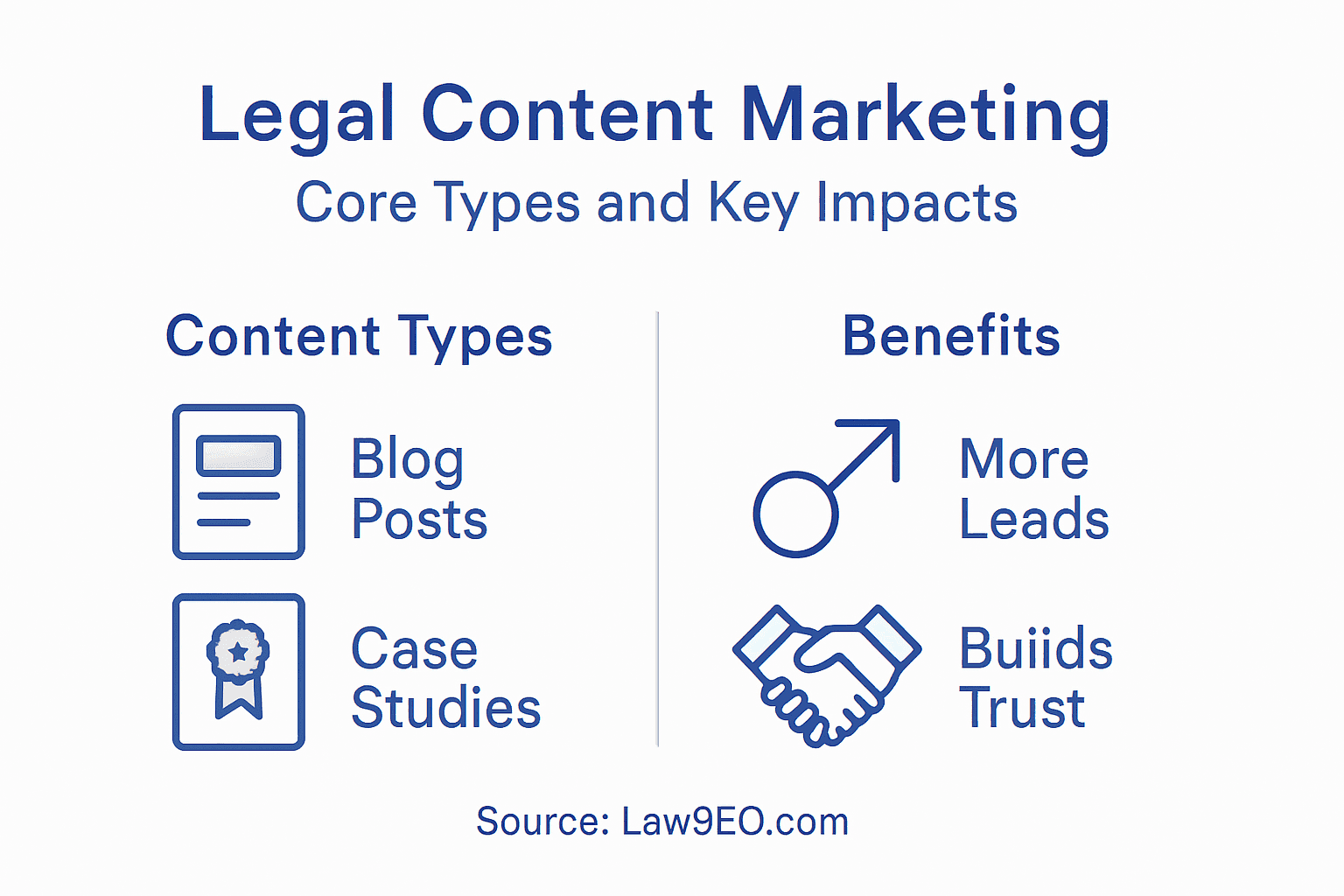
By understanding search intent and creating targeted, valuable content, law firms can systematically attract and nurture potential clients through their digital platforms.
Pro tip: Develop content that directly addresses your ideal client’s most pressing legal questions, focusing on solving problems rather than promoting services.
Successful legal content marketing requires a nuanced approach that balances informative depth, search optimization, and genuine client-focused value.
Ethical Rules and Compliance Requirements
Legal content marketing operates within a stringent regulatory framework designed to protect client interests and maintain professional standards. State bar regulations provide comprehensive guidelines that govern how law firms communicate and market their services.
Key ethical considerations for legal content marketing include:
- Maintaining complete truthfulness in all communications
- Avoiding misleading or guaranteed outcome statements
- Protecting client confidentiality
- Preventing unauthorized solicitation
- Ensuring transparent representation of legal services
- Adhering to professional conduct standards
Compliance requirements for legal marketing encompass multiple critical dimensions:
- Accuracy of professional credentials
- Clear disclaimer language
- Prohibition of comparative claims
- Restriction on testimonial representations
- Transparent fee communication
Ethical marketing transcends mere compliance—it represents a fundamental commitment to professional integrity and client trust.
Potential violations can result in significant consequences for law firms, including:
- Professional disciplinary actions
- Potential license suspension
- Monetary penalties
- Reputational damage
- Loss of client trust
Navigating these complex requirements demands a meticulous approach to content creation, ensuring that every piece of marketing material meets rigorous ethical standards.
Pro tip: Develop a comprehensive internal review process that vets all marketing content against state bar guidelines before publication.
Successful legal content marketing balances aggressive client acquisition strategies with unwavering ethical standards, recognizing that professional reputation is a law firm’s most valuable asset.
Risks, Common Mistakes, and How to Avoid Them
Legal content marketing demands extraordinary precision, with potential risks that can significantly impact a law firm’s reputation and professional standing. Ethical advertising pitfalls represent complex challenges that require meticulous strategic planning.
The most prevalent risks in legal content marketing include:
- Inadvertently providing unauthorized legal advice
- Breaching client confidentiality
- Making exaggerated or misleading claims
- Violating state bar advertising regulations
- Misrepresenting professional credentials
- Creating content that could be perceived as solicitation
Critical mistakes law firms frequently encounter involve:
- Oversharing specific case details
- Using testimonials without proper consent
- Making guaranteed outcome statements
- Failing to include necessary disclaimers
- Inconsistent messaging across platforms
Successful legal content marketing requires a proactive approach to risk management and continuous ethical education.
Mitigation strategies for legal content marketing risks involve implementing comprehensive review processes:
- Develop strict content approval workflows
- Conduct regular ethics training for marketing teams
- Create templates with pre-approved language
- Implement multi-level content review systems
- Maintain updated knowledge of state bar guidelines
Understanding these risks requires a nuanced approach that balances marketing effectiveness with professional responsibility.
Below is a summary of common legal content marketing risks and effective prevention measures:
| Main Risk | Real-World Impact | Prevention Strategy |
|---|---|---|
| Unauthorized legal advice | Regulatory fines, client misunderstandings | Add disclaimers, general language |
| Breach of confidentiality | Ethical violations, reputation damage | Anonymize details, internal review |
| Misleading claims | Bar actions, lost client trust | Fact-check, avoid outcome guarantees |
| Inconsistent cross-platform messaging | Brand confusion, decreased authority | Centralize content guidelines |
| Lack of compliance review | Increased regulatory exposure | Multi-step content approval process |
Pro tip: Establish a dedicated compliance review committee that includes both legal professionals and marketing experts to evaluate all content before publication.
Navigating the complex landscape of legal content marketing demands vigilance, creativity, and an unwavering commitment to ethical standards.
Elevate Your Legal Content Marketing with Proven SEO Expertise
The article highlights the crucial role of strategic legal content marketing in building trust, establishing thought leadership, and driving qualified leads. You understand the challenge of creating compliant, engaging content that genuinely addresses client pain points while navigating strict ethical guidelines. At the same time, standing out in search results and adapting to emerging AI-driven platforms requires specialized knowledge and precision.
LawSEO.com is designed specifically for law firms facing these complexities. With nearly three decades of founder-led expertise in legal SEO, we help you transform your content into a powerful lead generation engine. Our comprehensive services combine local SEO, authoritative content production, and advanced AI optimization to ensure your firm not only meets ethical standards but also dominates Google rankings and new search technologies. Explore how a tailored legal marketing strategy can solve your unique challenges and position your practice for growth.
Ready to turn your content into your strongest client acquisition tool? Visit LawSEO.com today to discover how our exclusive, law-focused marketing solutions can help you build trust, boost visibility, and attract the clients you want—starting now.
Frequently Asked Questions
What is legal content marketing?
Legal content marketing is a strategic approach that law firms use to communicate their expertise and value to potential clients through informative digital content. It involves creating valuable legal insights that help audiences navigate complex legal challenges.
Why is content marketing important for law firms?
Content marketing is important for law firms because it builds trust and credibility, establishes thought leadership, improves online visibility, and generates high-quality leads by providing educational materials that address client concerns.
What types of content can law firms create for marketing?
Law firms can create a variety of legal marketing content, including blog posts, practice area guides, case studies, explanatory videos, and downloadable resource documents, all aimed at educating potential clients and addressing their specific legal needs.
How does legal content drive search engine visibility?
Legal content drives search engine visibility by producing SEO-optimized materials that answer potential clients’ queries. High-quality, targeted content can significantly improve search rankings, encourage engagement, and attract more qualified leads for law firms.