

Most American law firms face a unique digital challenge, especially with over 80 percent of clients starting their search for legal help online. The pressure to stand out can lead to risky shortcuts, but ethical SEO sets a clear path for building credibility without crossing professional boundaries. Understanding how honest digital marketing protects both reputation and compliance will help your firm connect with clients while staying true to its legal values.

Table of Contents
- Defining Ethical SEO For Attorneys
- Bar Advertising Rules And SEO Compliance
- Transparent Content Strategies For Law Firms
- Ethical Link Building And Local SEO Tactics
- Avoiding Black-Hat Tactics And Penalties
Key Takeaways
| Point | Details |
|---|---|
| Ethical SEO Importance | Ethical SEO is vital for law firms to enhance digital visibility while adhering to professional integrity and transparency. |
| Compliance with Regulations | Attorneys must follow state bar associations’ advertising rules to ensure that all marketing materials are truthful and not misleading. |
| Content Transparency | Creating informative and accurate content builds trust with potential clients and meets ethical standards in legal marketing. |
| Avoiding Deceptive Practices | Law firms should steer clear of black-hat tactics, focusing instead on genuine value and ethical practices to avoid penalties and maintain credibility. |
Defining Ethical SEO for Attorneys
Ethical SEO represents a critical framework for law firms seeking digital visibility while maintaining professional integrity. At its core, ethical search engine optimization involves strategically improving online presence through transparent, honest practices that genuinely serve potential clients’ informational needs. Unlike manipulative techniques, ethical SEO prioritizes creating valuable content that accurately represents a law firm’s expertise and capabilities.
The fundamental principles of ethical SEO for attorneys center on truthful representation of legal services. This means avoiding misleading claims, accurately representing professional credentials, and ensuring all published online content provides genuine value. Legal professionals must be particularly careful not to blur professional boundaries or make unsubstantiated promises about potential case outcomes.
Key ethical considerations for law firm SEO include avoiding deceptive practices such as keyword stuffing, creating fake reviews, or misrepresenting professional specializations. Attorneys must ensure that their online marketing materials comply with state bar association guidelines, which often have strict rules about advertising and professional representation. Transparent communication, accurate credentials, and content that genuinely helps potential clients understand legal processes are the hallmarks of an ethical digital marketing approach.
Pro Tip: Content Integrity Check: Regularly audit your law firm’s online content to ensure all claims, credentials, and service descriptions are 100% accurate and can be substantiated through professional certifications or verifiable experience.
Ethical SEO Action Steps:
- Verify all professional credentials before online publication
- Use clear, honest language about legal services
- Provide substantive, informative content
- Avoid exaggerated claims or guaranteed outcomes
- Maintain transparency about firm capabilities
Bar Advertising Rules and SEO Compliance
State bar associations have developed comprehensive guidelines that directly impact how attorneys approach digital marketing and search engine optimization. Legal advertising regulations establish strict parameters for online communication, requiring law firms to maintain transparency, accuracy, and ethical standards in all digital marketing efforts. These rules are designed to protect potential clients from misleading information while ensuring professional integrity in legal marketing practices.
The complexity of bar advertising rules varies significantly across different jurisdictions, but several core principles remain consistent. Attorneys must avoid making comparative statements about their services, refrain from guaranteeing specific legal outcomes, and ensure all claims are verifiable and truthful. Some state bars, like the Florida Bar, are actively updating their guidelines to address emerging digital marketing techniques, recognizing the evolving landscape of online legal advertising.
Key compliance requirements for attorneys engaging in SEO include maintaining clear disclaimers, avoiding manipulative keyword strategies, and ensuring that all online content accurately represents the firm’s actual capabilities. This means steering clear of practices like keyword stuffing, creating misleading meta descriptions, or using deceptive page titles that do not reflect the genuine content. Law firms must carefully balance search engine optimization techniques with ethical marketing standards, prioritizing informative and transparent communication over aggressive ranking tactics.
Pro Tip: Compliance Checkpoint: Conduct a quarterly review of your law firm’s online content with a compliance expert to ensure all digital marketing materials meet current state bar advertising guidelines.
Critical SEO Compliance Checklist:
Use this table to understand how attorney SEO strategies align with state bar guidelines:
| SEO Element | State Bar Requirement | Best Practice for Compliance |
|---|---|---|
| Service Representation | Must be truthful, not misleading | Fact-check and verify credentials |
| Advertising Language | No unwarranted guarantees | Avoid absolute or comparative terms |
| Content Updates | Must reflect current expertise | Conduct regular content reviews |
| Keyword and Metadata Use | Cannot mislead search engines/users | Use accurately, align with content |
- Verify all professional credentials and claims
- Use clear, non-comparative language
- Avoid guarantees about legal outcomes
- Maintain transparent and accurate service descriptions
- Regularly update content to reflect current legal expertise
Transparent Content Strategies for Law Firms
Transparent content strategies represent a critical foundation for law firms seeking to build trust and credibility in the digital marketplace. Digital advertising regulations mandate that attorneys provide clear, honest, and comprehensive information about their services, ensuring potential clients receive accurate representations of legal capabilities and professional expertise.
Successful transparent content strategies require law firms to go beyond basic compliance, creating informative materials that genuinely serve potential clients’ needs. This means developing content that addresses common legal questions, explains complex legal processes in accessible language, and provides realistic expectations about potential case outcomes. Ethical online marketing practices demand that law firms disclose their marketing techniques, including how user data might be collected and utilized for targeted advertising.
Key elements of transparent content include providing verifiable professional credentials, clearly stating the firm’s areas of specialization, and avoiding any language that could be construed as misleading or guaranteeing specific results. Law firms must craft content that demonstrates expertise while maintaining strict ethical boundaries, using clear language that educates potential clients without making unrealistic promises. This approach not only satisfies regulatory requirements but also builds long-term trust with potential clients who appreciate honest, straightforward communication.

Pro Tip: Content Transparency Audit: Conduct a quarterly review of your online materials to ensure all content meets ethical standards, removes potential ambiguities, and provides clear, accurate information about your legal services.
Transparent Content Principles:
- Disclose all professional credentials
- Use clear, non-misleading language
- Provide realistic service descriptions
- Explain marketing and data collection practices
- Update content regularly to reflect current expertise
Ethical Link Building and Local SEO Tactics
Ethical link building represents a sophisticated approach for law firms to enhance their online credibility and visibility while maintaining professional standards. Implementing structured authority frameworks has become increasingly critical, as modern search algorithms prioritize genuine expertise and authoritative content over manipulative ranking techniques. Law firms must focus on generating high-quality, relevant backlinks that demonstrate genuine professional authority and provide substantive value to potential clients.
Successful local SEO tactics for attorneys require a nuanced strategy that goes beyond simple geographic targeting. This involves creating location-specific content that addresses genuine community legal needs, obtaining authoritative citations from reputable local professional organizations, and maintaining consistent business information across multiple online platforms. The goal is to establish a robust digital presence that reflects the firm’s actual expertise and commitment to serving local clients, rather than attempting to game search engine algorithms through artificial optimization techniques.
Key ethical link-building principles include pursuing backlinks from respected legal publications, professional associations, educational institutions, and legitimate community resources. Law firms should avoid purchasing links, participating in link exchange schemes, or creating low-quality content solely for link generation. Instead, the focus should be on producing genuinely informative content that naturally attracts high-quality backlinks from sources that recognize the firm’s authentic professional value and expertise.
Pro Tip: Authority Building Checkpoint: Develop a quarterly content strategy that focuses on creating in-depth, research-backed resources that attract organic, high-quality backlinks from respected professional networks.
Ethical Link Building Principles:
- Prioritize quality over quantity of backlinks
- Seek links from reputable professional sources
- Create genuinely valuable content
- Maintain transparency in linking practices
- Avoid manipulative link acquisition strategies
Avoiding Black-Hat Tactics and Penalties
Law firms must navigate the complex digital marketing landscape with extreme caution, understanding that black-hat SEO tactics can lead to severe professional consequences. The Florida Bar’s Ethics and Advertising Department rigorously reviews lawyer advertising to ensure compliance with ethical standards, making it critical for attorneys to understand and avoid deceptive online marketing practices that could compromise their professional reputation.
Common black-hat tactics that attorneys must strictly avoid include keyword stuffing, creating hidden text, using misleading metatags, and generating artificial backlinks. Specific warnings exist against using metatags or hidden text that could mislead search engines or imply false associations with other legal professionals. These practices not only risk search engine penalties but can also result in significant professional disciplinary actions that could damage a law firm’s credibility and legal standing.
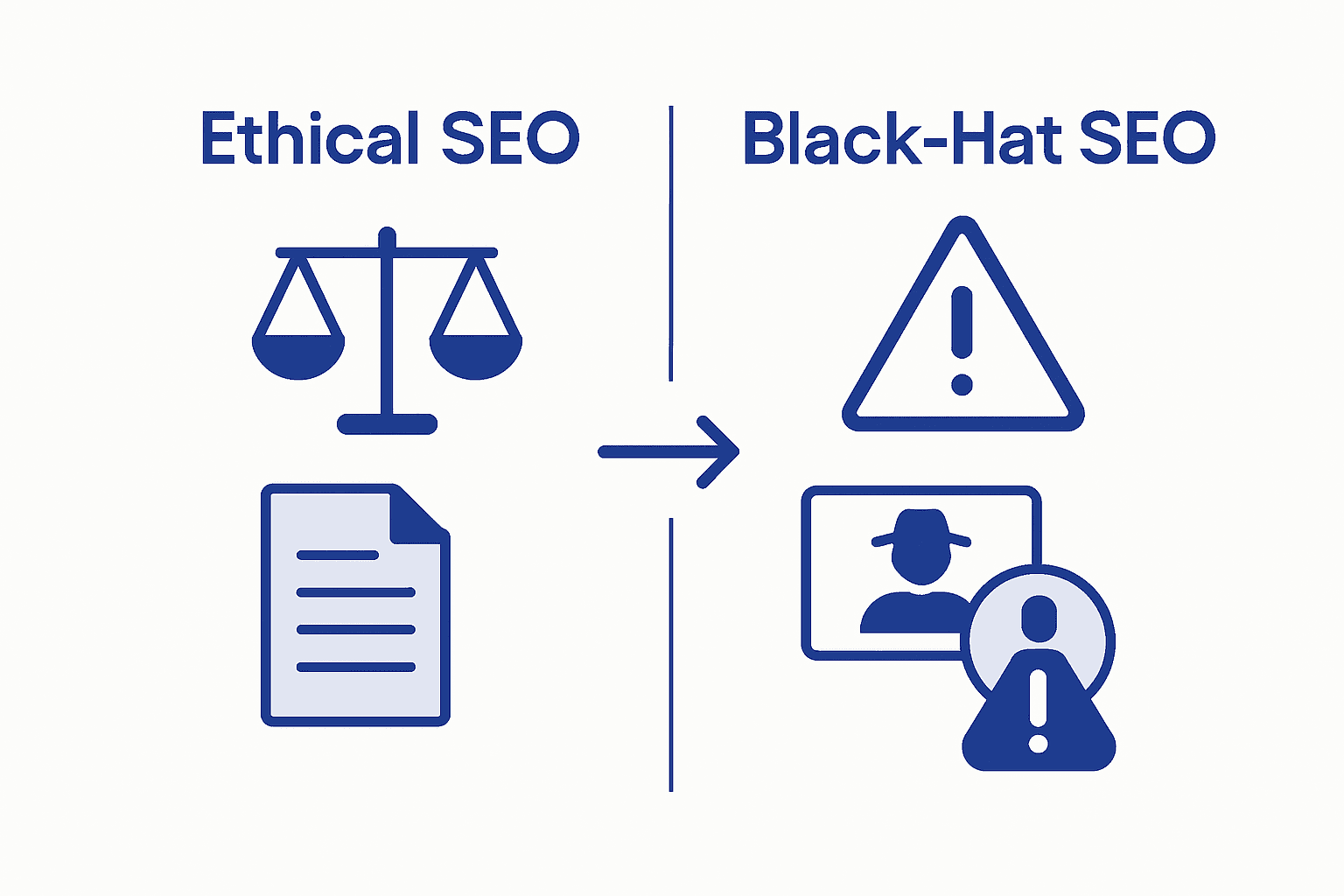
Ethical digital marketing for attorneys requires a commitment to transparency, authenticity, and genuine value creation. This means developing content that truly serves potential clients’ informational needs, obtaining backlinks through legitimate professional networking and high-quality content creation, and maintaining absolute honesty in all online representations. Law firms should focus on demonstrating their actual expertise, showcasing genuine client testimonials, and providing substantive legal insights that establish their professional authority without resorting to manipulative techniques.
Pro Tip: Compliance Checkpoint: Conduct a monthly audit of your digital marketing materials to ensure all online content meets professional ethical standards and accurately represents your law firm’s capabilities.
Black-Hat Tactics to Avoid:
Here’s a quick comparison of ethical vs. black-hat SEO methods for law firms:
| Aspect | Ethical SEO Practices | Black-Hat SEO Tactics |
|---|---|---|
| Approach | Transparent, client-focused | Manipulative, deceptive |
| Content Quality | Informative and accurate | Duplicate or misleading |
| Link Building | From reputable, relevant sites | Purchased or spammy links |
| Compliance Risk | Low—adheres to regulations | High—violates guidelines |
| Long-Term Impact | Builds trust and credibility | Risks penalties and bans |
- Keyword stuffing
- Hidden or misleading text
- Fake reviews or testimonials
- Purchasing low-quality backlinks
- Misrepresenting professional credentials
Elevate Your Law Firm’s Ethical SEO Strategy with Expert Guidance
Navigating ethical SEO challenges like truthful service representation and transparent marketing can be overwhelming for attorneys striving to build trust online. This article highlights key pain points such as compliance with state bar advertising rules, maintaining content transparency, and avoiding black-hat SEO tactics that risk penalties. At LawSEO.com, we specialize exclusively in legal marketing to help law firms meet these challenges head-on by crafting authoritative content, ethical link-building strategies, and AI-optimized campaigns that respect professional standards.
Don’t risk your firm’s reputation or search rankings by using outdated or unethical SEO methods. Partner with LawSEO.com to leverage our founder-led expertise and comprehensive services tailored to the legal sector. Our proven strategies will ensure your firm’s visibility grows through honest communication and compliance, driving more qualified leads today. Visit LawSEO.com to start building your firm’s trusted online presence now and explore how our local SEO and content production solutions can transform your client acquisition efforts.
Frequently Asked Questions
What is ethical SEO for attorneys?
Ethical SEO for attorneys involves using honest and transparent practices to improve online visibility while maintaining professional integrity. It focuses on creating valuable content that serves clients’ informational needs without employing deceptive techniques.
Why is compliance with state bar advertising rules important for attorneys?
Compliance with state bar advertising rules is crucial for attorneys to avoid misleading potential clients and to ensure professional integrity. These regulations help protect the public and maintain trust in legal services.
How can law firms ensure their online content is ethical and transparent?
Law firms can ensure ethical and transparent online content by verifying credentials, avoiding exaggerated claims, providing substantive information, and regularly auditing their online materials for accuracy and compliance with advertising guidelines.
What are the risks of using black-hat SEO tactics for attorneys?
Using black-hat SEO tactics can lead to severe penalties, including search engine bans and professional disciplinary actions. These manipulative practices compromise credibility and trust, damaging the law firm’s reputation and legal standing.