


Search competition among American law firms grows tougher by the day, leaving even the most reputable practices eager for a reliable way to rise above the digital noise. Building a solid SEO foundation is more than a technical task—it shapes your visibility, client trust, and growth potential. With a focus on comprehensive SEO audits and intelligent keyword strategies, you will uncover clear steps to strengthen your online presence and attract clients who are searching for your expertise.
Table of Contents
- Step 1: Assess Website SEO Foundation
- Step 2: Optimize Legal Content For Keywords
- Step 3: Strengthen Local And AI-Driven Visibility
- Step 4: Increase Authority With High-Quality Backlinks
- Step 5: Measure Improvements And Refine Strategy
Quick Summary
| Key Point | Explanation |
|---|---|
| 1. Conduct Regular SEO Audits | Regular audits help identify and resolve technical issues affecting site performance and visibility in search results. |
| 2. Optimize Keywords Effectively | Combining professional language with strategic keyword integration enhances SEO while making content accessible to potential clients. |
| 3. Strengthen Local and AI Visibility | Use local SEO and AI technologies to improve client engagement and search presence, making your firm more competitive. |
| 4. Build High-Quality Backlinks | Earning authoritative backlinks boosts your law firm’s credibility and improves search engine rankings significantly. |
| 5. Measure and Adjust Strategies Regularly | Constant tracking of SEO metrics ensures your strategies remain effective and adaptive to changes in search algorithms. |
Step 1: Assess website SEO foundation
Assessing your law firm’s website SEO foundation requires a systematic approach to understanding your current digital performance. This critical initial step helps identify potential barriers preventing your site from ranking effectively in search results.
Begin by using comprehensive SEO audit techniques to evaluate your website’s technical health. The assessment involves several key diagnostic areas:
- Crawl Error Analysis: Check for technical issues preventing search engines from properly indexing your pages
- Mobile Responsiveness: Verify your site functions seamlessly across different devices
- Page Speed Performance: Measure load times and optimize website infrastructure
- Metadata Accuracy: Review title tags, meta descriptions, and heading structures
- URL Structure: Ensure clean, descriptive URLs that communicate page content
To conduct a thorough assessment, leverage tools like Google Search Console, which provides direct insights into indexing status and potential technical problems. Pay special attention to your robots.txt configuration and XML sitemap, as these elements significantly influence how search engines discover and understand your website.
A comprehensive SEO foundation audit reveals hidden opportunities for improving your law firm’s online visibility and search rankings.
By systematically reviewing these technical elements, you establish a solid groundwork for advanced search optimization strategies.
Here’s how the main SEO technical areas affect law firm website performance:
| SEO Diagnostic Area | What It Evaluates | Potential Business Impact |
|---|---|---|
| Crawl Error Analysis | Indexing success & site access | Pages visible in search results |
| Mobile Responsiveness | Multi-device user experience | Keeps mobile visitors engaged |
| Page Speed Performance | How fast pages load | Reduces bounce rate, improves SEO |
| Metadata Accuracy | Relevance of site information | Boosts click-through from searches |
| URL Structure | Clarity of page web addresses | Enhances user trust and SEO signals |
Pro tip: Conduct this foundational SEO assessment quarterly to stay ahead of potential technical issues and maintain optimal search performance.
Step 2: Optimize legal content for keywords
Keyword optimization for law firm websites requires a strategic approach that balances professional language with search engine discoverability. Your goal is to create content that speaks directly to potential clients while ensuring maximum visibility in search results.
Start by understanding how keywords influence legal text discoverability. Effective keyword strategies involve selecting precise terms that reflect your practice areas and client needs. Consider these critical optimization techniques:
- Practice Area Keywords: Target specific legal services like “personal injury lawyer” or “business litigation attorney”
- Geographic Keywords: Include location-specific terms to attract local clients
- Client Intent Keywords: Focus on problem-solving phrases clients might search
- Long-Tail Keywords: Incorporate detailed, specific phrases that demonstrate expertise
- Natural Language Integration: Seamlessly blend keywords without compromising readability
Advanced optimization involves simplifying complex legal terminology to improve comprehension while maintaining professional standards. This approach not only enhances SEO performance but also makes your content more accessible to potential clients.
Effective keyword optimization transforms technical legal language into client-friendly content that ranks higher and attracts more qualified leads.
Pay special attention to strategic keyword placement in title tags, meta descriptions, and header structures to maximize your content’s search visibility.

Pro tip: Regularly update your keyword strategy by analyzing search trends and client inquiry patterns to stay ahead of evolving search behaviors.
Step 3: Strengthen local and AI-driven visibility
Enhancing your law firm’s digital presence requires a sophisticated approach that combines local search optimization with cutting-edge AI technologies. Your objective is to position your practice as both a geographically relevant and technologically advanced legal resource.
Technology is transforming local legal service delivery by breaking traditional geographic barriers. To maximize your visibility, implement these strategic techniques:
- Google Business Profile Optimization: Complete and regularly update your profile with accurate information
- Local Content Development: Create location-specific legal content addressing community needs
- AI-Enhanced Client Engagement: Integrate virtual consultation technologies
- Geotargeted Keyword Strategies: Incorporate city and region-specific legal terms
- Mobile-Friendly Design: Ensure seamless experience across all devices
Advanced firms are leveraging AI-powered tools to streamline document analysis and enhance client interactions. These technologies not only improve operational efficiency but also signal technological sophistication to potential clients and search algorithms.
Successful law firms integrate local relevance with technological innovation to stand out in an increasingly competitive digital marketplace.
Pay special attention to schema markup and structured data that help search engines understand your local legal services more precisely.
Here’s a comparison of traditional vs. AI-driven approaches for law firm digital visibility:
| Approach | Key Benefit | Limitation |
|---|---|---|
| Traditional Local SEO | Attracts nearby clients | May miss tech-savvy prospects |
| AI-Driven Visibility | Streamlines client intake | Requires tech investment |
Pro tip: Regularly audit your AI and local SEO strategies to stay ahead of emerging technological trends and search algorithm updates.
Step 4: Increase authority with high-quality backlinks
Building a robust backlink profile is crucial for establishing your law firm’s online credibility and improving search engine rankings. Your mission is to strategically acquire digital endorsements that signal expertise and trustworthiness to both search algorithms and potential clients.
High-quality backlinks serve as digital endorsements that dramatically enhance your website’s authority. Focus on these strategic backlink acquisition methods:
- Legal Directory Listings: Submit profiles to reputable legal directories
- Professional Association Links: Get listed on state bar and legal professional websites
- Academic and Institutional Connections: Secure backlinks from law schools and legal research institutions
- Guest Posting: Contribute authoritative articles to respected legal publications
- Client Testimonial Platforms: Encourage verified client reviews and references
Be vigilant about maintaining a clean backlink profile by regularly auditing and removing toxic or spammy links that could potentially harm your search rankings. Understanding the nuanced difference between valuable and harmful backlinks is key to your SEO success.
Strategic backlink acquisition transforms your law firm’s online presence from invisible to authoritative.
Utilize advanced SEO tools to analyze your current backlink landscape and identify high-value link-building opportunities.
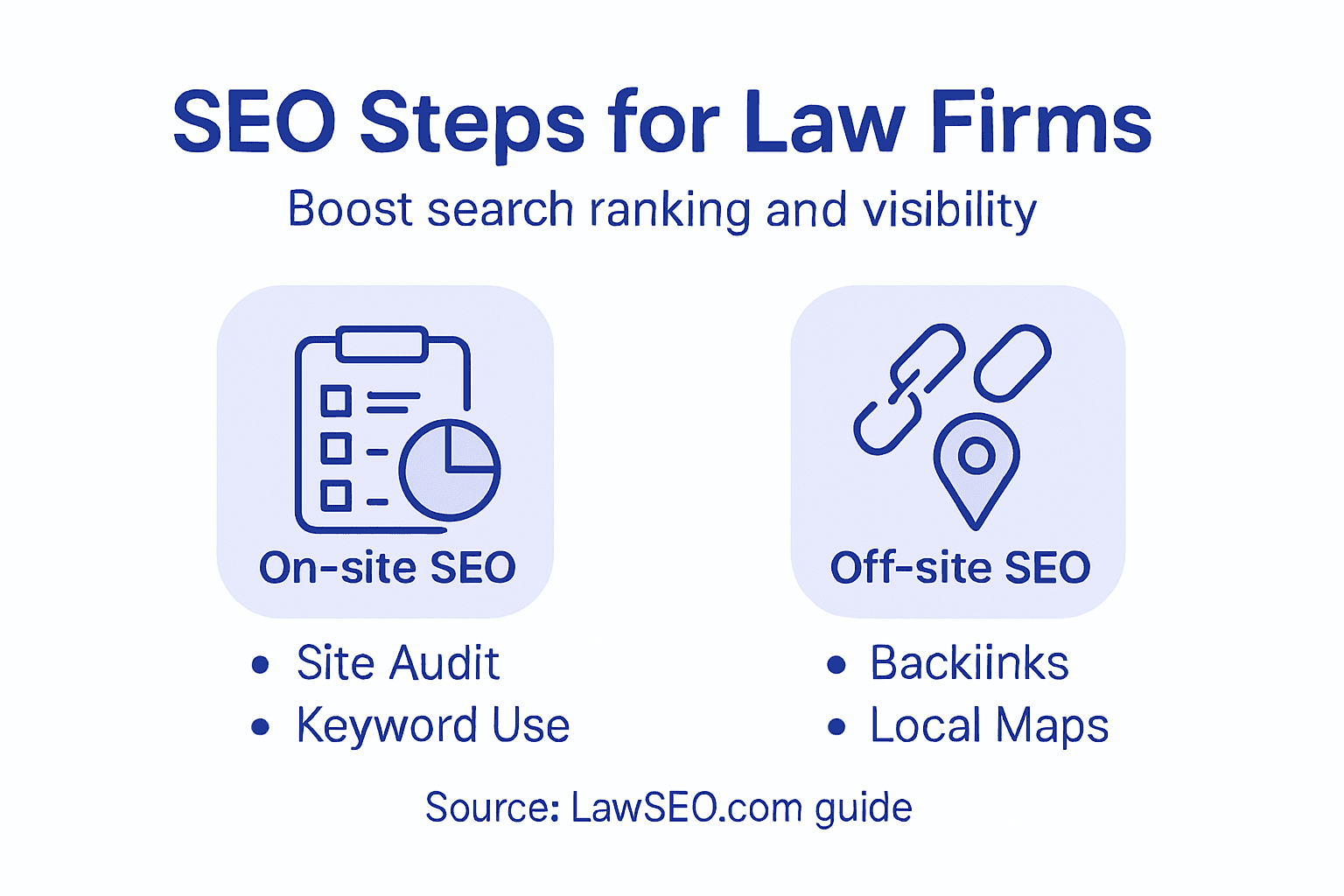
Pro tip: Develop a consistent tracking system to monitor your backlink quality and continuously refine your link-building strategy.
Step 5: Measure improvements and refine strategy
Tracking your law firm’s SEO performance is crucial for understanding the effectiveness of your digital marketing efforts and making data-driven strategic adjustments. Your goal is to transform raw metrics into actionable insights that continuously improve your online visibility.
Regular SEO audits provide comprehensive website health insights that reveal critical performance indicators. Implement these strategic measurement techniques:
- Keyword Ranking Analysis: Monitor your position for target legal service keywords
- Organic Traffic Tracking: Assess visitor volume and engagement metrics
- Conversion Rate Evaluation: Measure how website traffic translates into client inquiries
- Backlink Quality Assessment: Review the authority and relevance of incoming links
- Technical Performance Metrics: Check site speed, mobile responsiveness, and crawlability
Utilize tools like Google Analytics and Search Console to generate comprehensive reports that highlight both strengths and potential improvement areas in your SEO strategy. The key is not just collecting data but interpreting it to make strategic refinements.
Successful SEO is an ongoing process of measurement, analysis, and continuous optimization.
Establish a consistent review cycle to ensure your law firm’s digital marketing strategy remains adaptive and responsive to changing search algorithms and client behaviors.
Pro tip: Create a monthly SEO performance dashboard that consolidates key metrics, enabling quick visual assessment of your digital marketing progress.
Elevate Your Law Firm’s Google Rankings with Expert SEO Support
Struggling to break through the clutter and capture high Google rankings for your law firm is a common challenge. This article highlights the importance of building a strong SEO foundation, optimizing legal content with the right keywords, leveraging AI-driven visibility, and securing authoritative backlinks. If you feel overwhelmed by technical audits, keyword strategy, or the rapid changes AI brings to search, you are not alone. Many law practices share these pain points and the urgent need to position themselves ahead of competitors in both traditional and emerging search platforms.
LawSEO.com understands these challenges deeply. As a digital marketing firm devoted exclusively to lawyers, we specialize in unlocking your law firm’s online potential with proven strategies founded on nearly three decades of expert experience. Our founder-led team focuses on:
- Comprehensive SEO audits to spot and fix hidden issues
- Creating client-focused, keyword-optimized legal content
- Enhancing local and AI-powered visibility to drive qualified leads
- Building authoritative backlinks that boost your site’s trustworthiness
Ready to transform your Google rankings and attract more clients now Visit LawSEO.com to learn how our tailored services can help you achieve online dominance. Don’t let technical SEO challenges or evolving AI trends hold your firm back. Discover actionable solutions and schedule a personalized consultation today.
Frequently Asked Questions
How can I assess my law firm’s website SEO foundation?
Start by conducting a comprehensive SEO audit to evaluate key areas like crawl error analysis, mobile responsiveness, and page speed performance. Use tools to analyze technical health and identify opportunities for improvement within the next few weeks.
What are the best practices for optimizing legal content for keywords?
Focus on using specific practice area keywords, geographic keywords, and long-tail keywords that align with client intent. Regularly update your content based on search trends and integrate keywords naturally to improve your site’s visibility over the coming months.
How do I enhance my law firm’s local visibility?
Optimize your Google Business Profile by keeping it updated with accurate information and creating local content that addresses community legal needs. Start developing location-specific content within the next month to attract nearby clients effectively.
What strategies should I implement to build high-quality backlinks?
Focus on acquiring backlinks from reputable legal directories, professional associations, and guest posting on respected legal publications. Aim to secure a specific number of quality links each quarter to strengthen your site’s authority and improve rankings.
How can I measure the improvements in my law firm’s SEO?
Regularly track metrics such as keyword rankings, organic traffic, and conversion rates to assess SEO performance. Establish a monthly review cycle to analyze data and make informed adjustments to your strategy, aiming for continuous improvement.
What steps should I take to refine my SEO strategy?
After measuring outcomes, identify areas needing enhancement and adjust your approach accordingly. Conduct audits every quarter to stay proactive about maintaining optimal search performance and adapting to algorithm changes.