


Content updates are the mechanism by which a page stays accurate, relevant, and useful enough to rank, convert, and appear in AI-generated answers. When you update a page with substance, you realign it with current searcher intent, restore engagement signals, correct factual drift, and give Google’s systems fresh evidence that the page still deserves its position. The role of content updates is not cosmetic maintenance; it is active search performance management.
The primary mechanisms through which updates deliver value:
- Improved query alignment: Revised headings, body copy, and metadata match the language and intent of current searches.
- Restored engagement signals: Accurate, well-structured pages reduce bounce rates and increase time-on-page.
- Factual accuracy: Corrected data, updated citations, and current examples matter most for YMYL and legal content.
- AI and answer-engine readiness: Structured, authoritative content is more likely to be cited in AI-generated responses.
- Freshness signals for time-sensitive queries: Google’s Query Deserves Freshness (QDF) mechanism rewards recency for trending and time-sensitive topics, though it is often irrelevant for stable evergreen content.
Google’s Helpful Content guidance and its ranking systems both favor original, people-first content over manipulative freshness tactics, which means the quality of the update matters far more than its timing.
Key Takeaways
Signal-based content updates, focused on pages with proven demand and a clear gap to close, consistently outperform calendar-driven publishing schedules for both rankings and engagement.
| Point | Details |
|---|---|
| Use signal-based triggers | Update pages when Search Console shows ranking drops, CTR decline, or query drift, not on a fixed calendar. |
| Prioritize high-traffic declining pages | Pages with proven impressions and a ranking gap deliver the highest return on update effort. |
| Preserve the URL and proven sections | Keep the existing URL and protect high-performing passages to retain backlink equity and ranking signals. |
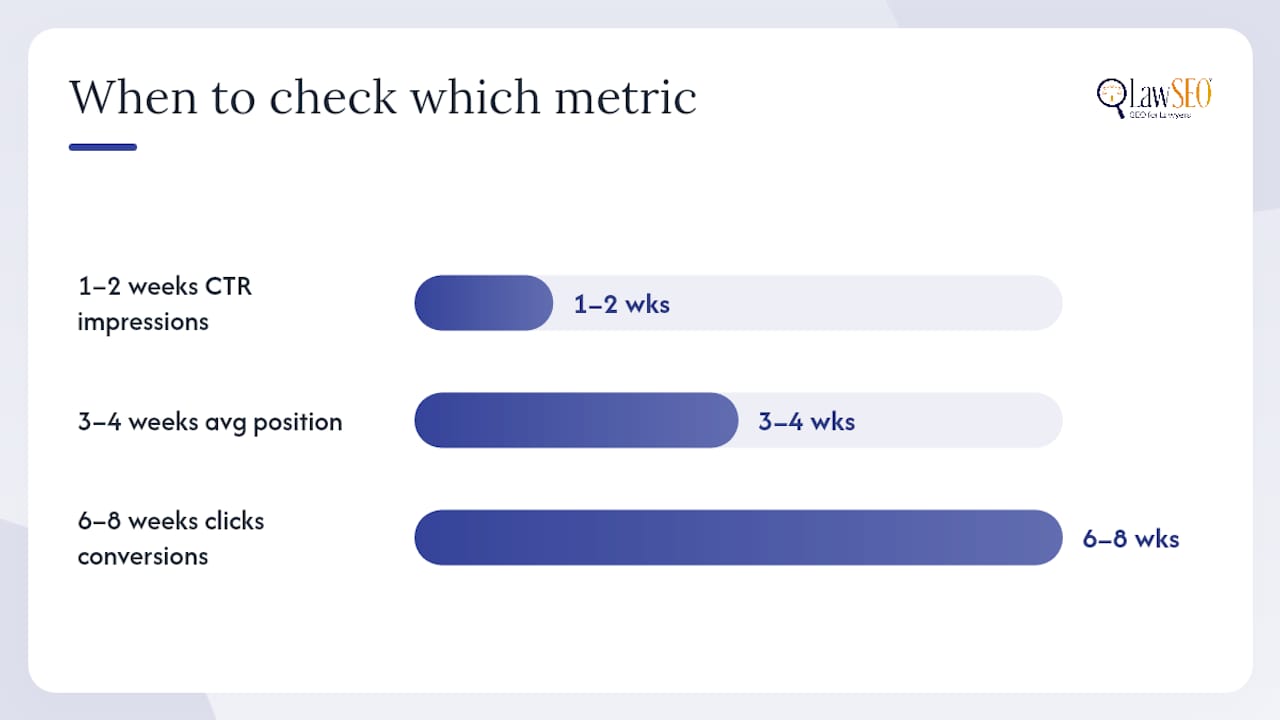
| Measure at 2, 4, and 8 weeks | Check CTR at two weeks, position at four weeks, and clicks plus conversions at eight weeks after publishing. |
| Apply EEAT signals on every update | Add or refresh author annotations, update citations, and revise schema markup to strengthen trust signals. |
What counts as a content update?
A content update is any edit that changes what a page communicates, how it communicates it, or how search systems interpret it. The term covers a wide spectrum.
Refresh refers to targeted edits within an existing structure: correcting a statistic, swapping an outdated screenshot, or tightening a paragraph. The page’s architecture stays intact.
Revamp goes further. You add new sections, replace weak examples with stronger ones, update images, and improve internal linking. The URL and core argument stay the same, but the page is meaningfully more useful after the work.
Rewrite means rebuilding the page from the ground up, usually because the topic, intent, or competitive environment has shifted enough that the existing structure cannot be salvaged. A rewrite may or may not keep the same URL, depending on whether the target query has changed.
Metadata-only updates (title tag, meta description, schema) are a distinct category. They can move CTR without touching body copy, but they do not improve page utility on their own.
The critical distinction is between cosmetic changes and substantive updates. Changing a publication date without editing the body is cosmetic. Google’s systems detect content diffs, and updating only a timestamp without substantive edits can be viewed as deceptive. Substantive updates change what the reader actually gets from the page.
How do content updates affect SEO and user engagement?
Updating a page with genuine improvements to its accuracy, structure, and intent alignment tends to produce measurable gains in organic visibility, click-through rate, and on-page engagement. The causal chain is direct: a better page earns better signals, and better signals support better rankings.
The mechanisms are specific:
Intent match: Search queries evolve. A page written in 2022 for “law firm SEO tips” may no longer match the angle, depth, or format that today’s searchers expect. Revising headings, restructuring the argument, and adding current examples realigns the page with the dominant intent.
Metadata and CTR: A revised title tag that reflects the current competitive SERP can lift CTR without any change in position. Higher CTR is itself a behavioral signal.
Factual currency: For legal, financial, and technical content, outdated facts are not just unhelpful; they are a trust liability. Correcting them removes a reason for users to leave and a reason for Google to demote.
Broken links and internal paths: A page with dead outbound links and no internal links from newer content looks neglected. Fixing both improves crawlability and distributes authority more effectively.
A large-scale analysis of 103,000 content refreshes by Raptive found that refreshed pages often outperformed matched controls, with meaningful updates to visible elements correlating with larger average gains. Lighter edits produced smaller effects. That finding reinforces a practical rule: the more substantive the change, the more likely it is to move metrics.
Updates will not help when the query is stable and evergreen, the page already matches intent well, or the only change is cosmetic. Fake freshness, such as updating a date without improving content, can backfire under Google’s helpful-content systems.
What types of content updates should you make?
Not every page needs the same depth of work. Matching the scope of the update to the actual problem is how you protect ranking assets while fixing what is broken.
-
Minor update (metadata, date, small factual edits). Correct a statistic, update a link, revise a title tag, or fix a broken image. Appropriate when the page ranks well, intent is still matched, and only a specific element has drifted. Risk is low; execution is fast.
-
Medium update (new section, additional examples, improved images, internal link additions). Add a section that addresses a related query the page currently misses, replace generic examples with specific ones, and improve visual clarity. Appropriate when the page has ranking potential but is losing ground to competitors with more complete coverage.
-
Major update or structural rewrite (>30% body rewrite, restructured headings, merged pages). Rebuild the argument, restructure the headings to match current intent, and consolidate thin or duplicate pages under a single authoritative URL. Appropriate when the page has drifted significantly from the target query, when a competitor has materially outpaced it, or when two pages are cannibalizing each other.
The governing rule across all three tiers: preserve ranking assets unless the topic or intent has materially changed. Proven passages, backlink-earning sections, and the URL itself are assets. Remove or redirect them only when there is a clear performance reason to do so.
When should you update a page?
The answer is not “every quarter” or “annually.” Calendar-based schedules waste resources on pages that do not need work and delay action on pages that do. Signal-based triggers are more reliable.
Priority triggers and what they imply:
- Ranking drop (position 5 to 15+): Check whether intent has shifted or a competitor has added depth you lack. Usually implies a medium or major update.
- CTR decline with stable impressions: The title or meta description no longer competes. A metadata-only update may be sufficient.
- Query drift: Search Console shows the page now ranks for queries it was not written for. Realign the content to the stronger opportunity.
- Factual or policy changes: A law changes, a statistic is superseded, or a tool is discontinued. Update immediately; accuracy is a trust signal.
- Broken links or missing media: Crawl-level issues that degrade user experience and crawlability. Fix on a rolling basis.
- Business priority shift: A practice area becomes more valuable. Invest in the corresponding pages regardless of current ranking.
Treating freshness as an execution problem means classifying pages by their freshness sensitivity before deciding how much to invest. A page about a statute that changed last year needs immediate attention. A page explaining what a contingency fee is probably does not.
Observation windows: After publishing an update, allow 2–4 weeks before drawing conclusions on ranking movement. CTR changes can appear within days; position changes typically take longer. Avoid making a second round of edits before the first has had time to register.
Pro Tip: Never update a page just to signal activity. If Search Console shows stable impressions, a healthy CTR, and no ranking decline, the page is working. Touching it without a specific signal-based reason risks disrupting what is already performing.
Step-by-step checklist for updating a page
Follow this sequence when executing an update. Skipping the diagnosis step is the most common reason updates fail to move metrics.
Phase 1: Diagnosis
- Export baseline data from Google Search Console: clicks, impressions, average position, and CTR for the target URL over the past 90 days.
- Note the primary query the page currently ranks for and compare it to the query it was written for.
- Pull analytics data: bounce rate, average session duration, and conversion events.
- Check backlinks to the URL; note any high-authority links that point to specific sections.
- Run a broken-link check on all outbound links.
Phase 2: Execution
- Factual accuracy first. Update statistics, dates, legal references, and cited sources. For legal content, confirm every claim against current statute or case law before publishing. Fix facts and sources first, then preserve useful material.
- Intent alignment. Revise the opening paragraph and H1 to reflect the dominant current intent. Check the top-ranking competitors for the target query and note any angles or subtopics your page misses.
- Headings and metadata. Update the title tag to reflect the revised angle. Rewrite the meta description if CTR has declined. Adjust H2 and H3 headings to match the revised structure.
- Images and media. Replace outdated screenshots, add descriptive alt text, and compress images for page speed.
- Internal links. Add links from newer, high-authority pages on your site to this page. Add outbound links from this page to relevant internal content. Proper internal link structure distributes authority and supports crawlability.
- Schema and structured data. Update or add schema markup (Article, FAQ, HowTo, LegalService) to improve AI and answer-engine visibility.
- Accessibility and page experience. Check heading hierarchy, color contrast, and mobile rendering.
- Gating checks for sensitive pages. For legal or medical content, route the revised draft through a subject-matter review before publishing. Document the approval.
- Publish and annotate. Add an annotation in Google Analytics and note the update date in your content management system.
Monitoring timeline:
| Window | What to check | Meaningful signal |
|---|---|---|
| 1–2 weeks | CTR, impressions | CTR lift of 10%+ on the revised title |
| 3–4 weeks | Average position | Movement of 3+ positions for target query |
| 6–8 weeks | Clicks, conversions | Sustained click growth; conversion rate stable or improved |
Pro Tip: Change only what the diagnosis identified as broken. Rewriting sections that are already performing well removes proven content and can destabilize rankings. Surgical edits outperform wholesale rewrites when the page’s core argument is still sound.
How do you measure the impact of a content update?
Start by measuring what changed. The metrics that matter most are clicks, impressions, average position, CTR, pages per session, bounce rate, and conversions. For law firm content, add lead form submissions and phone call tracking.
Key measurement practices:
- Capture a clean baseline before publishing. Export Search Console data for the URL covering at least 90 days. Screenshot the SERP to document competitor positions.
- Isolate the update’s effect. Avoid running sitewide technical changes, redesigns, or link-building campaigns simultaneously. Confounding variables make it impossible to attribute movement to the content change.
- Document every experiment. Note the date, the scope of the update, and the hypothesis. A simple spreadsheet is sufficient.
- Track AI visibility separately. If the page targets queries where AI overviews appear, check whether the page is cited in those overviews before and after the update.
| Window | Metric | What a meaningful signal looks like |
|---|---|---|
| 2 weeks | CTR | Lift of 10%+ versus 90-day baseline |
| 4 weeks | Average position | Improvement of 3+ positions for primary query |
| 8 weeks | Clicks and conversions | Sustained growth in clicks; conversion rate stable or higher |
Pro Tip: A CTR improvement with a flat position is a good signal, not a mixed one. It means the revised title or meta description is outperforming the old version at the same rank. Hold the position steady and let the CTR compound before making further changes.
The Raptive analysis found that meaningful updates to visible elements correlated with larger average gains, which supports measuring visible-element changes (title, headings, images) as a leading indicator of traffic movement.
Content update vs. content rewrite: how do you decide?
Keep the URL unless the primary query or intent has materially changed. That is the governing rule. A rewrite is a search-performance repair, not a cosmetic exercise, and it should never require a new URL unless the old one is genuinely misaligned with the new target.
When to revise in place:
- The page ranks for the right query but has lost ground to competitors.
- The intent is still matched but the content is thin, outdated, or missing key subtopics.
- The URL has backlinks worth preserving.
When to merge and redirect:
- Two pages target the same query and are cannibalizing each other.
- A thin page has no backlinks and minimal traffic; consolidate it into a stronger page and 301 redirect.
When to scrap and start new (rare):
- The original query is no longer relevant to the business.
- The URL has no backlinks, no ranking history, and the topic has fundamentally changed.
Safe steps during a rewrite:
- Export the current page’s top-performing sections before editing. Identify which passages earn backlinks or engagement.
- Keep proven passages intact. Rewrite weak sections; preserve strong ones.
- Maintain the URL. A practical SEO rewrite framework consistently recommends preserving the URL to protect backlink equity and ranking signals.
- Monitor for 6–8 weeks after publishing. If position drops sharply, compare the new version against the original and restore high-performing sections.
Which pages should you prioritize for updates?
Prioritize pages where demand exists and the content can be made demonstrably more useful. That combination produces the highest return on update effort.
A practical triage framework uses four variables: current traffic, conversion contribution, freshness sensitivity, and ease of update.
High priority: Pages with high impressions or historical traffic that have declined in ranking, pages covering topics where facts change frequently (legal statutes, tax rates, platform features), and pages that drive conversions but have a declining CTR. These pages have proven demand and a clear gap to close.

Medium priority: Stable pages that rank in positions 5–15 for valuable queries. They are not broken, but a medium update adding a new section or improving examples could push them into the top three. Proactive review before rankings drop is more efficient than reactive repair.
Low priority: Pages with low traffic, low conversion contribution, and no freshness sensitivity. Update these only when resources allow or when a business priority shifts.
Scoring example: Assign each candidate page a score from 1–3 on each variable (traffic, conversions, freshness sensitivity, ease of update). Pages scoring 10 or higher go into the next sprint. Pages scoring 6 or below go to the backlog. This keeps update work tied to measurable business outcomes rather than editorial instinct.
Schedule update sprints quarterly. Assign ownership, set a publication deadline, and document the baseline before work begins.
Common mistakes that cause rankings to drop after an update
Most post-update ranking drops trace back to a small set of preventable errors.
- Changing the URL without a redirect. Every backlink and ranking signal attached to the old URL is lost. Fix: keep the URL, or implement a 301 redirect immediately and monitor for crawl errors.
- Removing proven sections. Deleting content that earns backlinks or engagement removes ranking assets. Fix: audit the page’s top-performing sections before editing and preserve them.
- Fake freshness. Updating only the publication date without substantive edits. Google’s systems detect this and it can be viewed as deceptive. Fix: update the answer, not just the date.
- Poor QA on facts and links. Publishing with broken outbound links or incorrect statistics. Fix: run a link check and a factual review before publishing, especially for legal content.
- Ignoring intent drift. Rewriting the page for a query it no longer ranks for without checking what query it currently serves. Fix: pull Search Console data first and update for the query with the most impressions.
- Over-editing stable pages. Touching sections that are already performing well. Fix: fix facts and sources first, then stop when the diagnosis is resolved.
Troubleshooting when an update causes unexpected drops:
- Compare the live page against the pre-update version. Identify what was removed.
- Check that the URL is resolving correctly and that no redirect errors were introduced.
- Pull Search Console data for the URL and compare impressions and position for the primary query.
- If the drop is sharp and sustained after four weeks, restore the proven sections and re-publish. Monitor for another four weeks before making further changes.
How Lawseo applies EEAT principles to content updates
The method Lawseo uses follows a four-step sequence: classify pages by freshness sensitivity, preserve ranking assets, add author and evidence signals, then monitor.
Step 1: Classify. Before any editing begins, every page is assigned a freshness sensitivity rating. Legal content tied to statutes, case law, or regulatory guidance is rated high sensitivity. Evergreen educational content is rated low. High-sensitivity pages go into the update queue immediately when the underlying facts change; low-sensitivity pages are reviewed on a signal-based schedule.
Step 2: Preserve. The update process starts with an asset audit. Sections that earn backlinks, generate engagement, or contain original analysis are flagged as protected. Editors revise around them, not through them.
Step 3: Add author and evidence signals. For legal content, author annotations (attorney name, bar number, review date) are added or updated. Citations are checked against primary sources. Schema markup is updated to reflect the revised content and authorship. This directly supports EEAT by making expertise and authority visible to both readers and search systems. Lawseo’s founder, Todd R. Stager, personally reviews strategy for every client campaign, which means EEAT signals are applied at the campaign level, not left to individual editors.
Step 4: Monitor. Post-update tracking follows the 2/4/8-week windows described in the measurement section. Any page that drops more than five positions within four weeks triggers a review against the pre-update version.
For legal content specifically, conservative edits are the default. Every factual claim is verified against current statute or case law. Approval from a subject-matter attorney is required before publishing changes to practice area pages. Citation hygiene, meaning accurate, current, and linked sources, is non-negotiable. Updating legal content is not just an SEO task; it is a professional responsibility.
Pro Tip: After updating a page, publish a brief internal post or update note on a related high-authority page on your site and link to the refreshed content. This creates a fresh internal link signal and draws crawl attention to the updated URL without requiring any external outreach.
Why we prioritize updates over churn
Publishing new pages feels productive. It generates activity, fills a content calendar, and satisfies the instinct that more content equals more traffic. The signal-based evidence does not support that instinct.
A page that already ranks in position eight for a high-value query is closer to a conversion than a new page that starts with no ranking history. Investing two hours in a medium update to that existing page, adding a missing section, tightening the metadata, and fixing two broken links, is almost always a better use of resources than writing a new page from scratch.
The practical implication: before any new content is commissioned, the update queue should be reviewed. If a page already exists that covers the topic and has ranking history, update it. New pages are for genuinely new topics, not for topics the site already addresses with a page that needs work.
That discipline also protects the site from keyword cannibalization, which is what happens when two pages compete for the same query and split the signals that should be concentrated on one.
Sources
- Creating helpful, reliable, people-first content — Google Search Central
- We analyzed 103,000 content refreshes. Here’s what was most associated with Google traffic growth — Raptive
- Google Freshness Algorithm: What It Really Means for SEO — AYSA
- How to Update Website Content for SEO | Clickcentric