


Protecting confidential client data is more than just a technical concern for mid-size law firms across the United States. Law firm websites are prime targets for cyberattacks, with threats ranging from SQL injection to phishing and ransomware. For marketing directors, balancing strong website protection with search engine visibility makes website security a vital component of every legal SEO strategy. This article outlines how layered defenses and proactive planning help safeguard both your reputation and your rankings.
Table of Contents
- Defining Website Security For Legal SEO
- Types Of Threats Facing Law Firm Websites
- Essential Security Features For Legal Websites
- Ethical And Regulatory Compliance For Law Firms
- Risks Of Neglecting Website Security In SEO
Key Takeaways
| Point | Details |
|---|---|
| Legal Website Security is Essential | Law firm website security is not optional; it is crucial for protecting client data and maintaining professional credibility. |
| Understand Cyber Threats | Law firms must recognize and proactively defend against various cyber threats, including SQL injection and ransomware attacks. |
| Implement Robust Security Features | Essential security measures such as HTTPS encryption and strong authentication protocols are necessary to safeguard sensitive information. |
| Continuous Compliance Training | Regular training on ethical and regulatory compliance is vital to maintaining legal standards and protecting client relationships. |
Defining Website Security for Legal SEO
Website security represents a comprehensive strategy designed to protect law firm digital assets from cyber threats that could compromise client data, reputation, and search engine performance. Unlike generic web protection approaches, legal website security demands specialized protocols that safeguard sensitive client information while maintaining robust online visibility. Website security practices must address multiple layers of potential vulnerability, ensuring comprehensive protection for law firms operating in an increasingly digital landscape.
For legal professionals, website security extends far beyond traditional technical measures. It encompasses protecting confidential client data, preventing unauthorized access to case files, and maintaining the integrity of online legal communications. Cybercriminals increasingly target law firms because they possess high-value personal and financial information, making proactive security measures critical for maintaining client trust and professional credibility.
Key components of legal website security include:
- Encrypted data transmissions
- Secure client portal authentication
- Regular software and plugin updates
- Implementation of robust firewall systems
- Compliance with legal industry privacy standards
Comprehensive website security requires a multifaceted approach that integrates technical safeguards with strategic risk management. Law firms must view cybersecurity not as an optional enhancement but as a fundamental requirement for maintaining professional standards and client confidentiality.
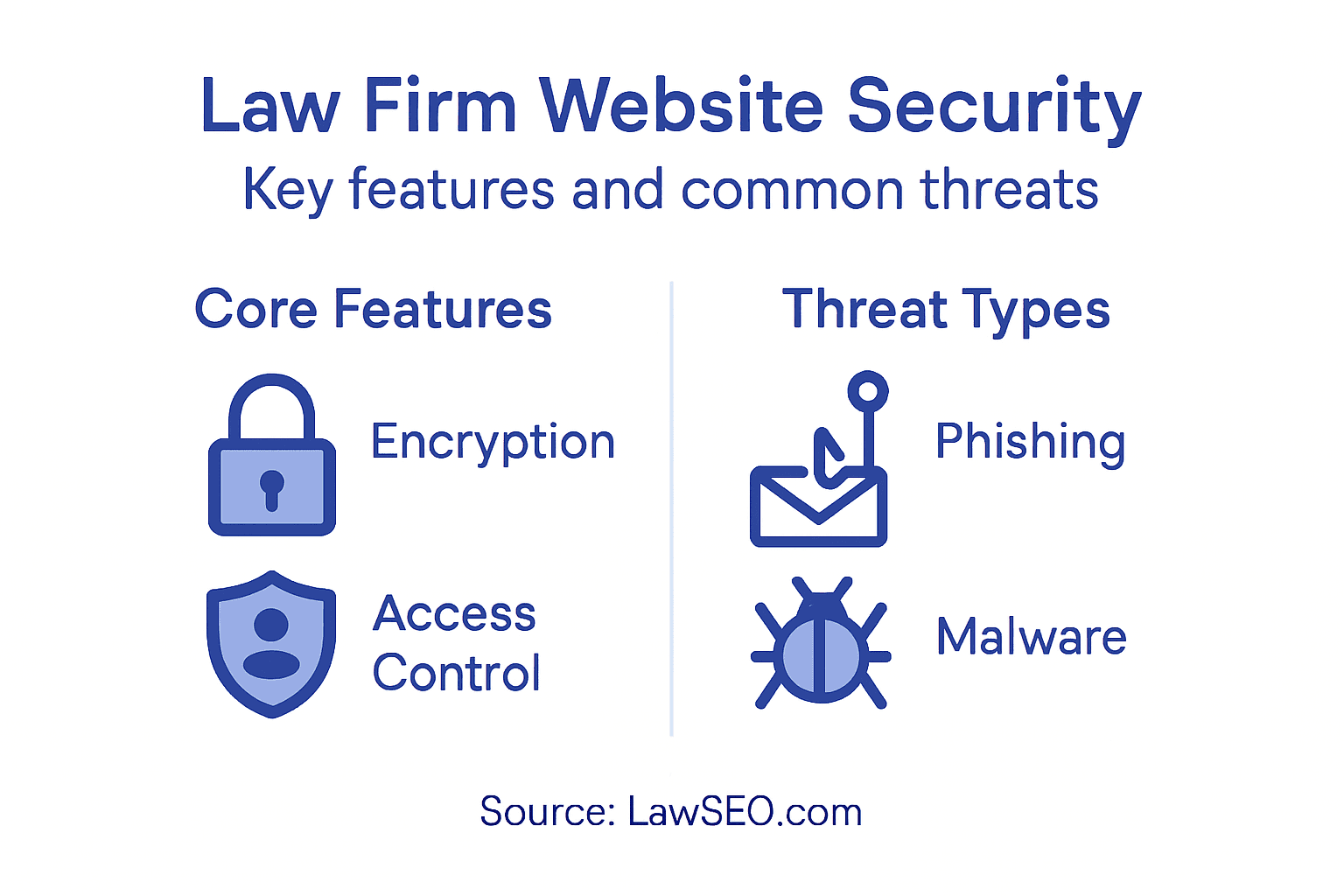
Pro tip: Conduct a quarterly comprehensive security audit of your law firm’s website, examining potential vulnerabilities and updating protective measures to stay ahead of emerging cyber threats.
Types of Threats Facing Law Firm Websites
Law firm websites represent high-value targets for cybercriminals due to the sensitive nature of legal information and potential financial rewards. Cyber threats targeting legal websites encompass a sophisticated array of attack vectors designed to exploit vulnerabilities in digital infrastructure, compromise confidential client data, and potentially disrupt professional operations.
The most prevalent cyber threats facing law firms include sophisticated attack methodologies such as:
- SQL Injection Attacks: Malicious code injections targeting database systems
- Phishing Schemes: Deceptive communications designed to steal login credentials
- Ransomware: Malware that encrypts critical data and demands payment
- Cross-Site Scripting (XSS): Attacks that inject malicious scripts into trusted websites
- Denial of Service (DoS): Overwhelm website infrastructure to disrupt operations
Insider threats present another significant risk dimension for law firms. Employees with authorized access can inadvertently or intentionally compromise system security through negligent or malicious actions. These risks might involve unauthorized data sharing, weak password practices, or deliberate information theft, underscoring the importance of comprehensive employee training and robust access control mechanisms.
Understanding these threats requires a proactive approach to cybersecurity that integrates technical safeguards, employee education, and continuous monitoring. Law firms must develop comprehensive defense strategies that anticipate and mitigate potential vulnerabilities before they can be exploited.
Here’s a comparison of common law firm website threats and their business impacts:
| Threat Type | Method Used | Potential Business Impact |
|---|---|---|
| SQL Injection | Exploit database queries | Client data exposure, website downtime |
| Phishing | Fraudulent communications | Credential theft, loss of client confidence |
| Ransomware | Data encryption attacks | Office disruption, costly recovery |
| Cross-Site Scripting | Website script manipulation | Defaced website, spread of malware |
| Insider Threat | Misuse of internal access | Data leaks, regulatory fines |
Pro tip: Implement a mandatory quarterly cybersecurity training program for all staff members, focusing on recognizing and reporting potential security threats in real-time.
Essential Security Features for Legal Websites
Law firm websites require robust, multilayered security architecture that goes beyond standard website protection protocols. Comprehensive security features must address the unique vulnerabilities inherent in legal digital platforms, where confidential client information represents an especially attractive target for cybercriminals.
Critical security features for legal websites include:
- HTTPS Encryption: Secure data transmission for all website communications
- Strong Authentication Protocols: Multi-factor authentication systems
- Content Security Policy (CSP): Preventing cross-site scripting attacks
- Regular Security Audits: Continuous vulnerability assessment
- Input Validation: Sanitizing user-submitted data to prevent injection attacks
- Role-Based Access Controls: Limiting system access based on user permissions
Professional legal practices must also implement secure communication channels that guarantee client confidentiality. This includes end-to-end encrypted email systems, secure client portals with advanced authentication, and robust data storage solutions that meet stringent legal and ethical standards for information protection.

Implementing these security features requires a proactive, comprehensive approach that integrates technological solutions with ongoing staff training and awareness programs. Law firms must view cybersecurity as an evolving discipline that demands continuous learning and adaptation.
Pro tip: Conduct comprehensive penetration testing at least twice annually, simulating sophisticated cyber attack scenarios to identify and address potential vulnerabilities before they can be exploited.
Below is a summary of how strong website security supports law firm reputation and growth:
| Security Practice | Reputation Benefit | Growth Advantage |
|---|---|---|
| Regular security audits | Demonstrates diligence | Enhances client trust |
| Secure client portal | Maintains confidentiality | Attracts new clients |
| Compliance with regulations | Prevents legal issues | Safeguards business continuity |
| Employee cyber training | Reduces error rates | Supports firm scalability |
Ethical and Regulatory Compliance for Law Firms
Law firms operate within a complex regulatory environment that demands meticulous attention to ethical standards and professional conduct. Legal ethics framework encompasses a comprehensive set of principles designed to protect client interests, maintain professional integrity, and uphold the fundamental responsibilities of legal practitioners across the United States.
Key ethical and regulatory compliance requirements for law firms include:
- Client Confidentiality: Protecting sensitive client information at all times
- Conflict of Interest Management: Identifying and mitigating potential professional conflicts
- Transparent Fee Structures: Clearly communicating billing practices and financial arrangements
- Professional Conduct Standards: Adhering to American Bar Association Model Rules
- Data Privacy Compliance: Protecting client data according to state and federal regulations
The regulatory landscape continues to evolve, with emerging compliance challenges presenting ongoing complexities for legal practices. Modern law firms must navigate increasingly sophisticated requirements, including new disclosure rules, enhanced data protection mandates, and more stringent ethical guidelines that reflect technological advancements and changing professional standards.
Successful compliance requires a proactive approach that integrates continuous education, robust internal policies, and a culture of ethical awareness. Law firms must view regulatory compliance not as a bureaucratic burden, but as a fundamental aspect of professional responsibility that directly impacts client trust and organizational reputation.
Pro tip: Develop a comprehensive compliance training program that includes quarterly updates on regulatory changes and interactive workshops to ensure all staff members understand current ethical requirements.
Risks of Neglecting Website Security in SEO
Law firms operating in the digital landscape face significant consequences when they overlook website security, particularly in terms of search engine optimization and online reputation management. SEO poisoning strategies represent a critical threat that can rapidly undermine a law firm’s digital presence and credibility.
The most substantial risks of neglecting website security include:
- Search Engine Blacklisting: Immediate removal from search results
- Reputation Damage: Permanent loss of client trust
- Traffic Diversion: Malicious redirects stealing potential client leads
- Data Breach Liabilities: Potential legal and financial penalties
- Competitive Disadvantage: Loss of search engine ranking and visibility
Vulnerability management requires understanding that security is not a one-time implementation but a continuous process. Attackers constantly evolve their techniques, targeting outdated software, misconfigured systems, and weak input validation protocols to exploit law firm websites. These intrusions can cause significant disruptions, including website downtime, data theft, and systematic erosion of search engine performance.
The financial and reputational consequences of security negligence extend far beyond immediate technical challenges. Law firms that fail to implement robust security measures risk losing client confidence, facing potential malpractice claims, and experiencing long-term damage to their professional standing in an increasingly digital legal marketplace.
Pro tip: Implement a quarterly comprehensive security assessment that includes vulnerability scanning, penetration testing, and immediate remediation of identified weaknesses.
Strengthen Your Law Firm’s Online Defense with Expert Legal SEO Solutions
Website security is a critical challenge for law firms seeking to protect sensitive client data while maintaining strong search engine rankings. Threats like ransomware, phishing, and SEO poisoning demand proactive attention to safeguard both your reputation and online visibility. Without a robust security strategy that includes encrypted transmissions, strong authentication, and regular audits, law firms risk devastating consequences such as search engine blacklisting and loss of client trust.
At LawSEO.com, we specialize exclusively in SEO for law firms, combining industry-leading marketing expertise with a deep understanding of these unique security challenges. Our founder-led team delivers comprehensive services including secure website optimization, content strategies designed for AI-driven platforms, and continuous protection against evolving cyber threats. Don’t let neglected website security undermine your firm’s growth and credibility. Partner with us to build an online presence that is not only visible but also trusted.
Take the first step to protect your firm from cyber risks and boost your search rankings with LawSEO.com. Explore how our specialized approach to legal marketing integrates advanced security awareness and growth strategies today.
Frequently Asked Questions
What are the main components of website security for law firms?
Key components of website security for law firms include encrypted data transmissions, secure client portal authentication, regular software updates, robust firewall systems, and compliance with legal industry privacy standards.
How do cyber threats impact law firms’ online presence?
Cyber threats can lead to search engine blacklisting, reputation damage, loss of client trust, and even legal liabilities due to data breaches, all of which can severely harm a law firm’s online visibility and credibility.
Why is employee training important for legal website security?
Employee training is crucial because insider threats can significantly compromise security. Proper training helps staff recognize potential security threats and adhere to secure practices, ultimately protecting sensitive client information.
What steps can law firms take to ensure compliance with legal and ethical standards?
Law firms can ensure compliance by focusing on client confidentiality, managing conflicts of interest, maintaining transparent fee structures, and implementing regular compliance training for all staff, along with adherence to professional conduct standards.