

AI-driven platforms like ChatGPT and Bing are reshaping how potential clients discover attorneys, generating 3-5x higher referral conversions than traditional organic search clicks. Answer engine optimization (AEO) has emerged as a distinct discipline in 2026, targeting AI-powered answer platforms rather than conventional search rankings. This shift matters because 60-75% of legal queries now result in zero-click answers, making traditional SEO metrics insufficient. This article explains how law firms can strategically leverage AEO to capture AI-driven referrals, differentiate from competitors using proprietary legal insights, and integrate these tactics with existing SEO efforts for maximum client acquisition impact.
Key takeaways
| Point | Details |
|---|---|
| AEO drives superior conversions | AI-driven referrals convert 3-5x better than traditional organic clicks for law firms |
| Distinct from traditional SEO | AEO targets direct answer snippets and AI citations rather than click-through rankings |
| Topical depth wins citations | Proprietary legal data and deep content outperform generic FAQs in earning AI visibility |
| Bing optimization is critical | Optimizing for Bing directly improves ChatGPT visibility and answer engine performance |
| Layered strategy maximizes reach | Integrating AEO with existing SEO creates comprehensive coverage across AI and traditional search |
What is answer engine optimization (AEO) and why it matters for law firms
Answer engine optimization (AEO) is the practice of optimizing content specifically for AI-powered answer platforms like ChatGPT, Bing AI, and Perplexity to earn direct answer snippets and citations. Unlike traditional SEO, which focuses on improving organic search rankings to drive clicks to your website, AEO targets direct answer snippets and citations that appear within AI responses. This fundamental difference reshapes how law firms approach content strategy in 2026.
The rise of AI in search has created a dramatic shift in user behavior. Legal queries increasingly result in zero-click answers, where users get their information directly from AI platforms without visiting law firm websites. This trend makes traditional click-based metrics inadequate for measuring marketing effectiveness. Law firms that ignore this shift risk becoming invisible to a growing segment of potential clients who rely on AI tools for legal information.
AEO effectiveness shows up in measurably different outcomes compared to traditional SEO. AI-driven referrals demonstrate significantly higher conversion rates because users arrive with specific intent after receiving preliminary answers from trusted AI platforms. These referrals represent warmer leads who have already filtered their questions through an AI interface.
Understanding the relationship between AEO and related concepts like general entity optimization (GEO) and AI information optimization (AIO) helps clarify strategic priorities. These approaches complement rather than replace each other. A comprehensive 2026 advanced SEO strategy guide integrates multiple layers of optimization to maximize visibility across different search environments.
Key metrics that demonstrate AEO’s effectiveness for law firms include:
- Referral conversion rates from AI platforms averaging 3-5x higher than organic search clicks
- Citation frequency in AI-generated answers for legal queries
- Zero-click search impression rates showing brand visibility without traditional clicks
- Keyword difficulty scores for queries where AI platforms provide direct answers
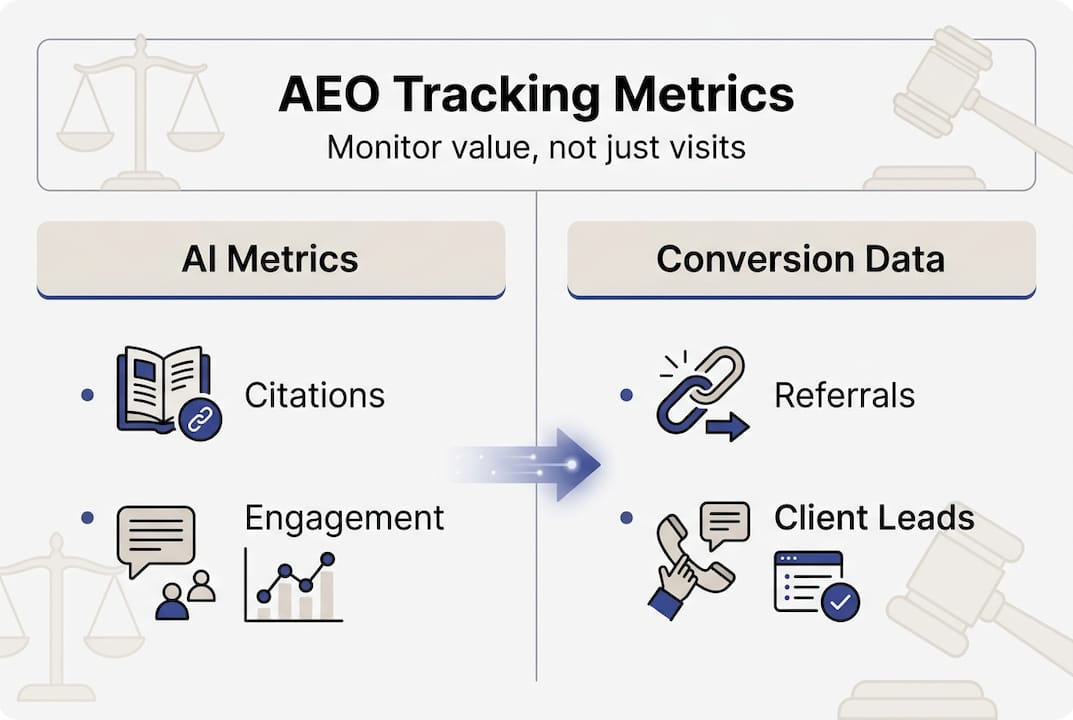
These metrics require different tracking approaches than traditional SEO analytics. Law firms need to monitor how often their content gets cited by AI platforms and measure the quality of referrals from these sources. The goal shifts from maximizing clicks to maximizing authoritative citations and high-intent referrals.
Proven AEO strategies for law firms in 2026
Implementing effective AEO requires a systematic approach tailored to how AI platforms evaluate and cite legal content. These five strategies have demonstrated measurable results for law firms optimizing for answer engines in 2026.
-
Target low to medium keyword difficulty queries with scores between 0-40% to increase your chances of earning AI citations. These queries represent opportunities where your firm can establish authority without competing against entrenched high-authority domains. Focusing on low-to-medium keyword difficulty increases citation probability because AI platforms prioritize clear, authoritative answers over domain strength alone.
-
Create deep topical content that goes beyond surface-level answers by incorporating original data or proprietary legal benchmarks. Generic FAQ pages that simply restate common knowledge fail to earn AI citations because they offer no unique value. Your firm’s case outcomes, settlement data, or procedural insights provide differentiation that AI platforms recognize as valuable.
-
Optimize specifically for Bing to boost ChatGPT visibility since Bing powers the backend for many answer engines. This means following Bing Webmaster Guidelines, submitting content through Bing’s indexing tools, and monitoring performance in Bing’s analytics. The connection between Bing optimization and ChatGPT citations is direct and measurable.
-
Structure content to earn direct snippets by providing clear, concise answers with trusted citations in the opening paragraphs. AI platforms favor content that directly addresses questions without requiring users to parse through lengthy introductions. Use question-based subheadings and answer formats that match how AI systems extract information.
-
Regularly audit and update content to stay ahead as AI algorithms evolve continuously throughout 2026. What earns citations today may become less effective as platforms refine their selection criteria. Monthly content reviews ensure your AI optimization guide for law firms strategies remain current.
Pro Tip: Leverage your firm’s proprietary legal data by documenting unique case insights, local court procedure variations, or settlement trend analysis that competitors cannot replicate. This differentiation dramatically increases citation probability because AI platforms prioritize original information over recycled content.
Integrating these strategies with your existing legal SEO proven strategies creates a comprehensive approach that captures both traditional search traffic and AI-driven referrals. The key is recognizing that AEO requires distinct tactics rather than simply applying SEO best practices to a new platform.
Comparing answer engine optimization (AEO) with traditional SEO for law firms
Understanding how AEO differs from traditional SEO helps law firms allocate resources effectively and set appropriate expectations for each approach. While some consider AEO a rebrand of existing SEO practices, distinct performance metrics and optimization targets reveal meaningful differences.
| Aspect | Traditional SEO | Answer Engine Optimization (AEO) |
|---|---|---|
| Primary Focus | Organic search rankings and click-through rates | Direct AI citations and zero-click answer visibility |
| Key Metrics | Rankings, organic traffic, click-through rate | Citation frequency, referral conversion rate, zero-click impressions |
| Optimization Target | Google search algorithms and ranking factors | AI platform answer selection and citation criteria |
| AI Involvement | Indirect through search algorithms | Direct through answer generation and source selection |
| Typical Outcome | Website visits from search results | Direct answers with attributed citations or high-intent referrals |
| Content Depth | Varies by keyword competition | Requires deep topical coverage with original insights |
Traditional SEO focuses on maximizing visibility in search engine results pages to drive clicks to your website. Success is measured by rankings, organic traffic volume, and the percentage of searchers who click through to your site. The goal is getting potential clients to visit your website where they can learn about your services and convert into leads.
AEO aims to earn citations within AI-generated answers, making your firm the authoritative source for specific legal information. Success is measured by how often AI platforms cite your content, the quality of referrals when users do click through, and your visibility in zero-click answer scenarios. The goal is becoming the trusted source that AI platforms reference when answering legal queries.
Both approaches offer distinct benefits for law firms. Traditional SEO provides:
- Broad visibility across multiple search queries and topics
- Direct traffic to service pages and conversion-optimized landing pages
- Established measurement tools and historical performance data
- Control over the user experience once visitors reach your site
AEO delivers complementary advantages:
- Higher conversion rates from referrals who arrive with specific intent
- Authority positioning as the cited expert source
- Visibility in zero-click scenarios where traditional SEO captures no traffic
- Competitive differentiation through proprietary insights and data
Pro Tip: Use AEO to supplement rather than replace your advanced SEO strategy guide for lawyers by targeting different stages of the client journey. Traditional SEO captures broad awareness searches while AEO targets specific question-based queries where potential clients need authoritative answers.
The limitations of each approach highlight why integration matters. Traditional SEO struggles in zero-click environments where users get answers without visiting websites. AEO may generate fewer total impressions but delivers higher-quality referrals. Combining both creates a layered strategy that maximizes reach across traditional and AI-driven search environments.
Your content strategy should reflect these differences by creating pieces optimized specifically for each channel. Some content targets traditional search rankings with comprehensive service pages and location-based optimization. Other content targets AI citations with deep, data-driven answers to specific legal questions. This dual approach ensures visibility regardless of how potential clients search for legal information.
Measuring success and future trends in legal answer engine optimization
Tracking AEO performance requires different metrics than traditional SEO analytics. Law firms need to monitor AI-specific indicators that reveal citation frequency, referral quality, and zero-click visibility. These measurements help you understand whether your AEO investments generate meaningful returns.
| Metric | 2026 Benchmark | Measurement Approach | Strategic Importance |
|---|---|---|---|
| AI Citation Growth | 87% year-over-year increase | Track mentions in ChatGPT, Perplexity, Bing AI responses | Indicates content authority and topical relevance |
| Zero-Click Search Rate | 60-75% of legal queries | Monitor impression data without clicks in analytics | Shows brand visibility in answer-only scenarios |
| Referral Conversion Multiple | 3-5x higher than organic SEO | Compare conversion rates by traffic source | Validates AEO ROI and lead quality |
| Target Keyword Difficulty | 0-40% range optimal | Analyze difficulty scores for cited queries | Guides content topic selection for maximum citation probability |
Legal firms experienced 87% growth in AI citations on platforms like ChatGPT and Reddit throughout 2025, with this trend accelerating in 2026. This dramatic increase reflects both growing AI platform usage and improving content optimization strategies. Firms that track these citations gain insight into which topics and content formats earn the most AI visibility.
Tracking AI-driven referral traffic requires configuring analytics to distinguish between traditional organic search and AI platform referrals. Set up UTM parameters for links that appear in AI responses or use referral source tracking to identify traffic from ChatGPT, Perplexity, and similar platforms. Compare conversion rates between these sources and traditional organic search to validate the quality advantage of AI referrals.
Recommended tools and approaches for monitoring AEO impact include:
- Bing Webmaster Tools for tracking content performance in Bing’s index, which directly affects ChatGPT citations
- Custom analytics segments isolating AI platform referrals from traditional search traffic
- Citation monitoring tools that track when AI platforms reference your content
- Conversion tracking by traffic source to measure referral quality differences
- Zero-click impression data showing brand visibility without website visits
Future AI search trends will intensify the importance of AEO for law firms. The percentage of zero-click searches continues rising as AI platforms provide more complete answers without requiring users to visit source websites. This shift makes citation-based visibility increasingly critical for maintaining brand awareness and authority positioning.
The growing sophistication of AI platforms means they increasingly distinguish between generic content and genuinely valuable insights. Firms that invest in creating original legal data, proprietary research, and deep topical content will capture disproportionate citation share. Generic FAQ pages and surface-level content will become progressively less visible as AI platforms prioritize unique value.
Regular content iteration is essential because AI algorithms evolve rapidly throughout 2026. What earns citations today may become less effective as platforms refine their selection criteria. Monthly reviews of your AI optimization guide for law firms content ensure you adapt to these changes and maintain citation frequency.
The integration of AEO with traditional SEO creates a comprehensive marketing approach that captures clients across multiple discovery channels. Firms that master both disciplines position themselves for sustained growth regardless of how search technology evolves. The key is recognizing that these approaches complement rather than compete with each other.
Boost your law firm’s growth with expert legal SEO and AI optimization
Implementing effective AEO strategies alongside traditional SEO requires specialized expertise in legal marketing and evolving AI platforms. LawSEO.com offers comprehensive resources and proven strategies specifically designed for attorneys and law firms navigating the 2026 search landscape. Our legal SEO proven strategies guide provides actionable tactics for outranking competitors and converting more clients through integrated optimization approaches.
Explore our AI optimization guide for law firms to learn specific techniques for earning citations from ChatGPT, Bing AI, and emerging answer engines. This resource includes detailed implementation steps, measurement frameworks, and content strategies that have generated measurable results for legal practices. Our 2026 advanced SEO strategy guide shows how to layer traditional and AI-focused optimization for maximum visibility across all search channels.
FAQ
What types of legal content perform best for answer engine optimization?
Concise, clear answers to specific legal questions combined with original data or proprietary insights perform best for AEO. Content that targets low-to-medium keyword difficulty questions and directly addresses client pain points stands out to AI platforms. Deep topical coverage that goes beyond generic information increases citation probability significantly.
How does answer engine optimization differ from traditional SEO for law firms?
AEO focuses on earning direct AI citations and zero-click answers, while SEO aims for organic search rankings and clicks to your website. They serve complementary purposes, with AEO enhancing visibility in AI-driven searches alongside traditional SEO. The metrics, optimization targets, and content strategies differ substantially between the two approaches.
What are the best tools to track answer engine optimization success?
Tools that monitor AI referral traffic and zero-click search metrics, including Bing Webmaster Tools and AI analytics platforms, are essential for measuring AEO impact. Combining traditional SEO tools with AI-focused insights offers the most complete measurement of optimization effectiveness. Custom analytics segments that isolate AI platform referrals provide the clearest view of AEO ROI.
How can law firms avoid generic content traps in AEO?
Avoid generic FAQs that lack specificity by focusing on deep, original content with proprietary legal data and unique case insights. Topical depth and distinctive perspectives increase chances of AI citation dramatically. Document your firm’s unique experiences, local procedure variations, and settlement trends that competitors cannot replicate to differentiate your content effectively.