


Law firms invest heavily in traditional SEO but often struggle to secure brand mentions in AI Overviews, the new frontier of search visibility. As AI-driven search platforms like Google’s AI Overview and ChatGPT become primary research tools for prospective clients, appearing in these summaries can dramatically increase your firm’s authority and lead generation. This guide provides actionable strategies to position your law firm for AI Overview inclusion, covering technical preparation, content optimization, authority building, and performance measurement to help you capture this emerging visibility channel.
Key Takeaways
| Point | Details |
|---|---|
| AI Overview readiness | Make sure your site is crawlable and indexable and meets EEAT standards so AI systems can access and evaluate your content. |
| Snippet ready content | Structure pages with clear headings, concise Q and A, and bullet lists to improve AI extraction. |
| EEAT emphasis | Show Experience, Expertise, Authority, and Trustworthiness through detailed bios, credentials, and credible sources. |
| Schema and authority | Implement article, FAQ, organization, and local business schema to help AI understand content and reinforce authority signals. |
Preparing your legal website for AI Overview brand mentions
Before your law firm can appear in AI Overviews, your website must meet specific technical and content requirements that AI systems use to evaluate source quality. AI Overviews select sources using SEO signals like indexability, E-E-A-T, topical relevance, content clarity, and factual accuracy, with no special markup required beyond standard best practices. Your first priority is ensuring Google can access and understand your content without barriers.
Start by auditing your site’s crawlability. Check your robots.txt file and meta tags to confirm you’re not accidentally blocking Googlebot from critical practice area pages or blog content. Many law firms inadvertently use noindex tags on valuable content, eliminating any chance of AI inclusion. Your sitemap should be current and submitted to Google Search Console, with all important pages indexed and free from crawl errors.
Next, optimize your content for snippet eligibility, which directly influences AI Overview selection. Structure your pages with clear hierarchies using descriptive headings. Include concise, direct answers to common legal questions in your first paragraph or in dedicated FAQ sections. Use formatting elements that AI systems favor:
- Tables comparing legal options or processes
- Bulleted lists outlining steps or requirements
- Numbered sequences for procedural guidance
- Short paragraphs with focused topic sentences
Demonstrating E-E-A-T (Experience, Expertise, Authoritativeness, Trustworthiness) is non-negotiable for legal content. Add detailed author bios highlighting attorney credentials, bar admissions, and relevant case experience. Link to authoritative legal sources like court decisions, statutes, and government resources to support factual claims. Display trust signals prominently: bar association memberships, client testimonials, case results, and professional recognitions.

Implement schema markup strategically across your site. Article schema helps AI systems understand your content structure and authorship. FAQ schema makes your Q&A content more accessible to AI extraction. Organization schema clarifies your firm’s identity, location, and contact information. Local business schema reinforces geographic relevance for location-specific queries. These structured data elements don’t guarantee AI inclusion, but they remove ambiguity that might otherwise disqualify your content.
Pro Tip: Create a dedicated AI optimization guide for law firms resource page that consolidates your technical preparations, making it easier to audit and maintain AI-readiness over time.
Building content clusters and expert authority for AI mentions
Once your technical foundation is solid, focus on creating strategic content that positions your firm as the authoritative source in your practice areas. For law firms, build topic clusters around practice areas, use question-based headers, ensure entity clarity via consistent profiles and directories, and focus on PR and expert mentions for authority. This approach signals topical depth that AI systems reward when selecting sources.
Start by mapping your core practice areas into comprehensive topic clusters. For a personal injury firm, your primary cluster might center on car accidents, with supporting content addressing:
- Immediate post-accident steps and documentation
- Insurance claim processes and negotiation tactics
- Statute of limitations by state and case type
- Common settlement ranges and valuation factors
- When to hire an attorney versus handling claims independently
Each piece of cluster content should interlink naturally, creating a web of expertise that demonstrates comprehensive knowledge. AI systems recognize these interconnected content networks as indicators of subject matter authority, increasing the likelihood your firm will be cited when generating overviews on related queries.
Structure every article with question-based H2 and H3 headers that directly match how potential clients search. Instead of generic headings like “Our Approach,” use specific questions: “What damages can I recover after a truck accident?” or “How long do I have to file a wrongful death claim in Texas?” These question headers serve dual purposes. They make your content scannable for human readers while providing AI systems with clear semantic signals about what each section addresses.
Maintain absolute consistency in your entity information across every online presence. Your firm name, address, phone number, and website URL should match exactly on your Google Business Profile, legal directories like Avvo and Justia, social media profiles, and your own website footer. Inconsistencies confuse AI systems trying to verify your firm’s identity and authority. Create a master document with your canonical entity information and audit all profiles quarterly to ensure alignment.
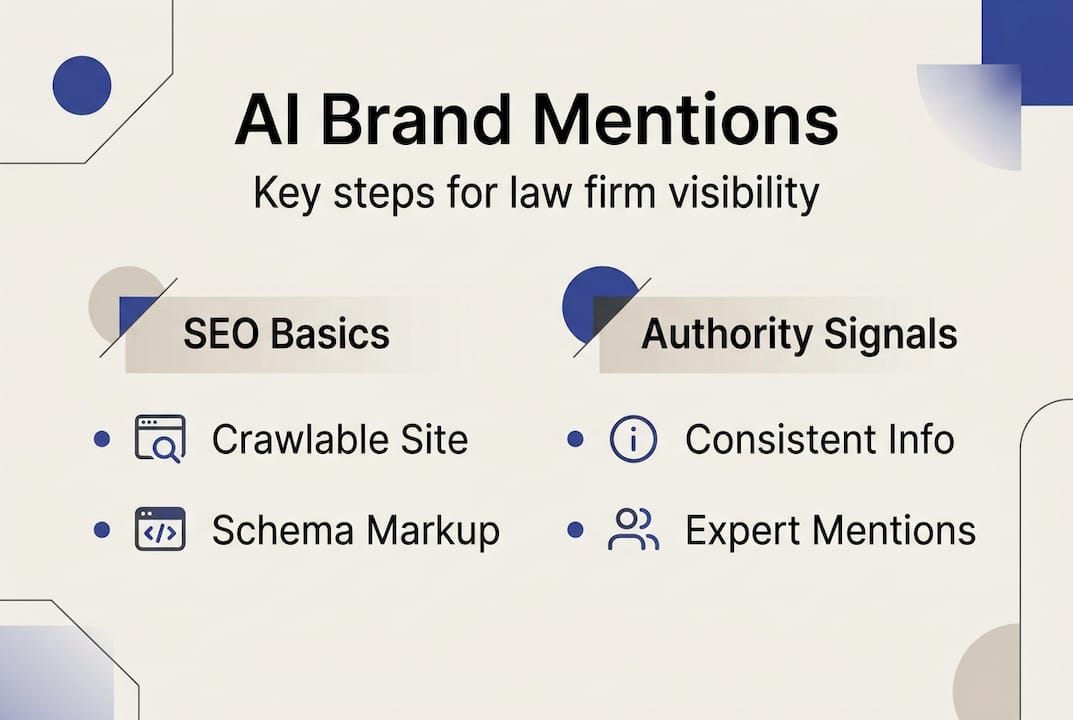
Leverage public relations and expert mentions to amplify your authority signals beyond your own domain. Contribute guest articles to legal publications and industry blogs. Seek speaking opportunities at legal conferences and local business events. Respond to journalist queries through platforms like HARO (Help a Reporter Out) to earn media citations. When reputable third-party sites mention your firm or quote your attorneys, AI systems interpret these signals as validation of your expertise.
For firms serving specific geographic markets, optimize content for local intent without sacrificing depth. Include city and state names naturally in headers and body content when discussing jurisdiction-specific laws or procedures. Create location pages that go beyond basic NAP (name, address, phone) information to address unique legal considerations in each market you serve. A DUI defense firm might explain how Texas DWI penalties differ from those in neighboring states, demonstrating localized expertise that AI systems can surface for regional queries.
Pro Tip: Review legal SEO ranking factors annually to ensure your content strategy aligns with evolving AI selection criteria and maintains competitive advantage in your practice areas.
Avoiding common pitfalls and ensuring compliance in AI-driven brand mentions
Even well-optimized law firms can sabotage their AI visibility through preventable mistakes and compliance oversights. Avoid blocking snippets or Googlebot, don’t focus only on head terms, regulatory risks for law firms include inaccurate AI summaries from poor content, and use enterprise AI tools to avoid data leaks. Understanding these pitfalls helps you maintain eligibility while protecting your firm from legal and ethical risks.
Never implement technical blocks that prevent snippet extraction or Googlebot access to your most valuable content. Some firms mistakenly use the “max-snippet:0” meta tag or “nosnippet” directive thinking it protects proprietary information. This completely eliminates your content from AI Overview consideration. If specific pages contain genuinely sensitive information, keep them behind authentication rather than publishing them openly with snippet blocks.
Avoid the common trap of targeting only high-volume head keywords like “personal injury lawyer” or “divorce attorney.” These broad terms rarely trigger AI Overviews with brand mentions because competition is intense and queries lack specificity. Instead, target long-tail sub-questions that potential clients actually ask: “Can I sue for emotional distress after a car accident?” or “How is child custody determined when parents live in different states?” These specific queries are more likely to generate AI Overviews that cite authoritative sources.
Regulatory compliance takes on new dimensions in AI-driven marketing. Inaccurate or misleading content on your website can be extracted and amplified by AI systems, potentially reaching thousands of prospective clients with incorrect legal information. This creates professional liability exposure and potential bar complaints. Every factual claim about laws, procedures, or case outcomes must be current, accurate, and properly contextualized. Implement a quarterly content audit process to identify and update outdated information before AI systems perpetuate errors.
When using AI tools internally for content creation or client communication, choose enterprise-grade platforms with robust data security. Free or consumer-level AI tools often lack proper safeguards against data leakage. Inputting client information, case details, or confidential strategies into unsecured AI systems can violate attorney-client privilege and confidentiality obligations. Establish clear firm policies about which AI tools are approved for use and what information can never be entered into any AI system.
“The intersection of AI technology and legal ethics requires law firms to be more vigilant than ever about content accuracy, data security, and client confidentiality. A single compliance failure amplified by AI systems can cause reputational damage that takes years to repair.”
Regularly audit your content for these specific compliance risks:
- Guarantees or promises about case outcomes
- Outdated statutes or case law citations
- Misleading comparisons to other firms
- Testimonials that violate state bar rules
- Unsubstantiated claims about success rates
By proactively addressing these pitfalls, you protect your firm while maintaining the content quality and accessibility that AI systems require for brand mentions. The AI optimization guide provides detailed checklists for ongoing compliance monitoring as AI technology evolves.
Measuring success and maximizing results from AI Overview brand mentions
After implementing AI optimization strategies, you need systematic measurement to understand what’s working and where to invest additional resources. Law firms achieved 108.7% increases in qualified clicks, 648% growth in ChatGPT traffic, and significant case signings from AI Overview visibility. These results demonstrate the tangible business impact of AI-driven brand mentions when properly tracked and optimized.
Start by establishing baseline metrics before your AI optimization efforts intensify. Track your current organic traffic sources, conversion rates, and lead quality in Google Analytics. Note which practice areas generate the most inquiries and what content drives the highest engagement. This baseline allows you to isolate the specific impact of AI visibility improvements from general SEO growth.
Focus on these key performance indicators specific to AI-driven visibility:
- Qualified click volume from AI Overview impressions
- Impression relevance scores for targeted practice area queries
- Traffic originating from AI platforms like ChatGPT and Perplexity
- Time on site and pages per session for AI-referred visitors
- Conversion rates from AI traffic versus traditional organic search
Google Search Console provides valuable data about AI Overview performance, though you may need to infer some metrics from query patterns and click behavior. Look for increases in impressions and clicks for question-based queries that typically trigger AI Overviews. Compare your average position for these queries over time. Rising positions combined with stable or growing click-through rates suggest your content is being featured more prominently in AI-generated summaries.
| Metric | Before AI Optimization | After 6 Months | Change |
|---|---|---|---|
| AI-triggered query impressions | 2,400/month | 8,900/month | +271% |
| Qualified clicks from AI queries | 180/month | 520/month | +189% |
| ChatGPT referral traffic | 45/month | 290/month | +544% |
| Consultation requests from AI traffic | 8/month | 23/month | +188% |
| Average consultation value | $3,200 | $3,200 | 0% |
Use these data-driven insights to refine your content strategy continuously. If certain practice area clusters generate disproportionate AI visibility, expand those topics with additional supporting content. If specific question formats consistently appear in AI Overviews that mention your firm, create more content using similar structures. If particular external citations or expert mentions correlate with increased AI selection, pursue more opportunities in those channels.
Leverage AI mentions to nurture leads through targeted marketing workflows. When prospects arrive from AI-generated summaries, they’ve already consumed authoritative information positioning your firm as an expert. Create dedicated landing pages or email sequences that acknowledge this research behavior and provide logical next steps: case evaluation forms, consultation scheduling, or downloadable guides that deepen engagement.
Continuously test and adjust your strategies as AI systems evolve. Google regularly updates how AI Overviews select and display sources. New AI platforms emerge with different selection criteria. Stay informed about these changes through industry publications, SEO forums, and direct experimentation. Allocate 10 to 15 percent of your content budget to testing new formats, topics, or optimization techniques that might improve AI visibility.
Pro Tip: Set up custom segments in Google Analytics to isolate AI-referred traffic for deeper analysis of user behavior, conversion paths, and lifetime value compared to other acquisition channels.
The most successful law firms treat AI visibility as an ongoing optimization process rather than a one-time project. By systematically measuring results and reinvesting in high-performing strategies, you can expand your AI-driven brand presence while competitors struggle to understand this new visibility channel. Regular consultation with specialists who focus on AI optimization for law firms ensures you stay ahead of algorithm changes and emerging opportunities.
Enhance your law firm’s AI brand impact with expert SEO services
Navigating AI Overview optimization while managing a law practice requires specialized expertise and dedicated resources. LawSeo.com focuses exclusively on SEO and AI optimization for law firms, helping you capture AI Overview brand mentions that drive qualified leads. Our team understands the unique ethical considerations and competitive dynamics of legal marketing, ensuring your strategies comply with bar regulations while maximizing visibility. Whether you need comprehensive SEO for lawyers or specialized AI search optimization for law firms, we provide the strategic guidance and execution to position your practice at the forefront of AI-driven search. Get expert support tailored to your practice areas and market with proven methodologies documented in our master AI optimization guide.
Frequently asked questions
What are AI Overview brand mentions and why do they matter?
AI Overview brand mentions occur when AI systems like Google’s AI Overview or ChatGPT cite your law firm’s content when generating summaries for user queries. These mentions dramatically enhance your digital authority by positioning your firm as a trusted source that AI platforms recommend. Unlike traditional search results that require active clicking, AI Overviews present your expertise directly in the summary, increasing brand exposure and perceived credibility among prospective clients researching legal services.
How can law firms prepare their websites to qualify for AI Overview mentions?
Ensure your website is fully crawlable with no noindex tags or robots.txt blocks on important content, then optimize pages for snippet eligibility using tables, lists, and concise answers to common questions. Demonstrate E-E-A-T by adding detailed author bios, linking to authoritative legal sources, and displaying trust signals like bar memberships and case results. Implement schema markup for articles, FAQs, and your organization to help AI systems understand your content structure and expertise.
What common mistakes should legal marketers avoid when targeting AI visibility?
Blocking Googlebot or preventing snippet extraction eliminates your content from AI consideration entirely, while focusing only on high-volume generic keywords misses the specific long-tail queries that actually trigger AI Overviews with brand mentions. Ignoring compliance risks is particularly dangerous for law firms, as inaccurate AI-amplified content can create professional liability exposure and bar complaints. Using non-secure AI tools for content creation or client communication can violate confidentiality obligations and leak sensitive information.
How do law firms measure success after gaining AI Overview brand mentions?
Track qualified clicks from AI-triggered queries in Google Search Console, monitor impression growth for question-based searches, and measure traffic increases from AI platforms like ChatGPT using referral data in Google Analytics. Compare conversion rates and lead quality from AI-referred visitors against traditional organic search traffic to understand relative value. Use these insights to identify high-performing content clusters and question formats worth expanding, then refine your AI-targeted SEO strategies based on which practice areas generate the most valuable AI visibility.