


TL;DR:
- Local SEO increases law firms’ visibility in geographic search results and attracts high-intent clients.
- Positive reviews, accurate listings, and compliance with ethics are vital for trustworthy local SEO.
- Consistent, ongoing local SEO efforts over months are essential for sustainable growth and competitive advantage.
Competing for legal clients in your city is harder than it has ever been. Prospective clients search Google for attorneys before they call anyone, and if your firm does not appear in the top local results, those leads go straight to a competitor. Local SEO, which means optimizing your online presence to rank in geographically relevant searches, gives law firms a measurable, repeatable way to get in front of the right people at exactly the right moment. This article breaks down the top benefits of local SEO for law firms, backed by data, and offers practical strategies you can act on today.
Key Takeaways
| Point | Details |
|---|---|
| Boosts local discovery | Local SEO makes your law firm more visible to clients searching in your area. |
| Builds client trust | Strong reviews and accurate listings increase clicks and inquiries from qualified leads. |
| Targets high-intent clients | Local SEO draws people who are ready to hire legal services near them. |
| Protects your reputation | Following legal marketing ethics keeps your growth sustainable and risk-free. |
Increase your law firm’s local visibility
Local visibility in the legal context means appearing prominently when someone in your city or region searches for terms like “divorce attorney near me” or “personal injury lawyer in Chicago.” Google evaluates dozens of signals to decide which firms to show in the local map pack and organic results. The firms that control those signals consistently win the clicks.
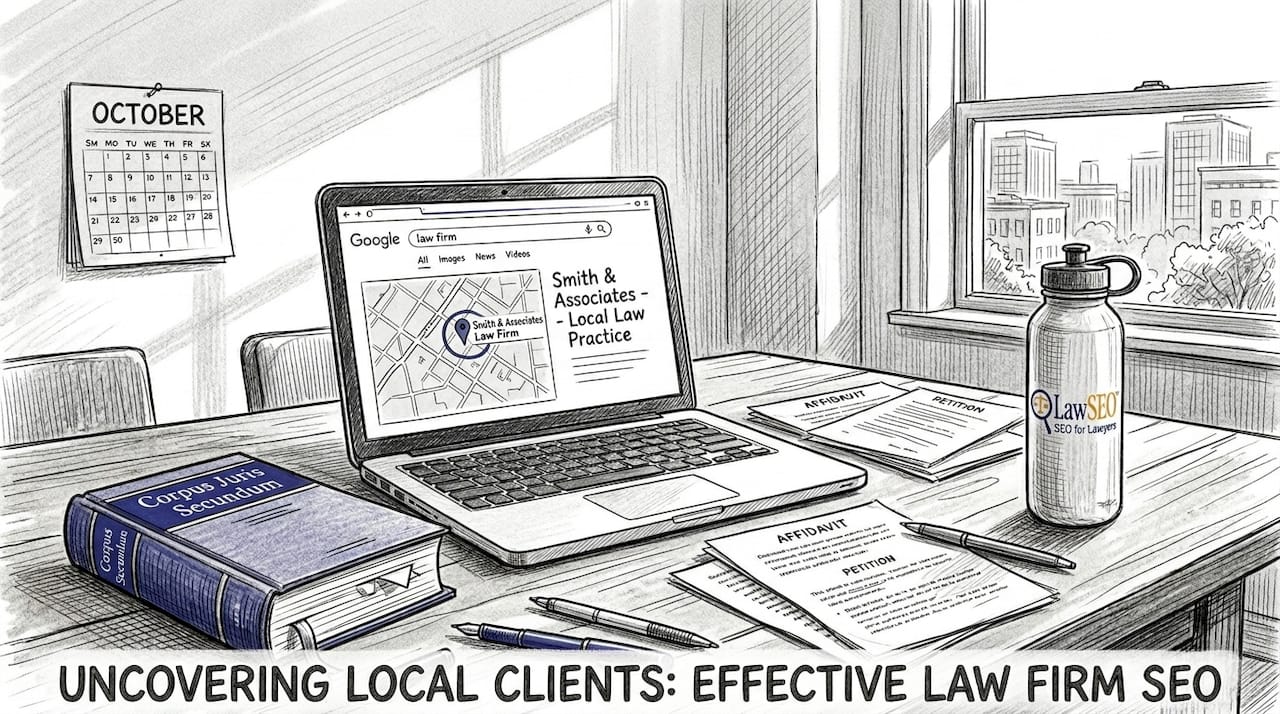
One of the most foundational signals is NAP consistency. NAP stands for Name, Address, and Phone number. When your firm’s contact details appear identically across every online directory, Google gains confidence that your business is legitimate and accurately located. NAP consistency across 60+ directories boosts local rankings by 35%, which is a meaningful competitive edge in dense legal markets.
Your Google Business Profile (GBP) is the single most important local SEO asset you control. A complete, accurate GBP listing determines whether you appear in the local map pack, which sits above organic results and captures a disproportionate share of clicks. Key elements to optimize include:
- Business name: Use your real firm name, not a keyword-stuffed version.
- Primary category: Select the most specific legal category available.
- Service areas: List every city or county your firm serves.
- Business hours: Keep these current, especially around holidays.
- Photos: Upload high-quality images of your office, team, and attorneys.
- Services section: Describe each practice area clearly and accurately.
Beyond Google, directories like Avvo, FindLaw, Justia, and Yelp carry significant weight for law firms. Use a local SEO checklist to audit every major directory and correct any discrepancies in your firm’s information.
To boost Google rankings further, embed location-specific keywords naturally in your website’s title tags, meta descriptions, and page content. A page titled “Family Law Attorney in Austin, TX” will outperform a generic page titled “Our Services” in local search every time.
Pro Tip: Never add practice area keywords to your Google Business Profile name. Doing so violates Google’s guidelines and can result in your listing being suspended, wiping out your local visibility overnight.
Understanding local SEO ranking factors helps you prioritize where to invest time and budget. Proximity, relevance, and prominence are the three pillars Google uses, and each one is actionable with the right strategy.
Build trust and drive more client inquiries
Once you’ve improved visibility, earning client trust is the next game-changer. Potential clients searching for legal help are often in stressful situations. They want an attorney they can trust before they ever pick up the phone. Local SEO directly influences that trust through online reviews and accurate business information.
Reviews are the digital equivalent of word-of-mouth referrals. A firm with dozens of detailed, positive reviews signals credibility and competence to both Google and prospective clients. The data is clear: firms with 50 or more reviews receive 71% more clicks than those with fewer reviews. That is not a marginal difference. It is the gap between a thriving intake pipeline and a quiet phone.
| Number of reviews | Estimated click rate increase |
|---|---|
| 1 to 10 reviews | Baseline |
| 11 to 25 reviews | Up to 20% increase |
| 26 to 50 reviews | Up to 45% increase |
| 50+ reviews | Up to 71% increase |
Quality matters as much as quantity. Reviews that mention specific practice areas, attorney names, and positive outcomes carry more weight with both Google’s algorithm and human readers. A review that says “Attorney Smith helped me navigate a complex custody dispute with professionalism” is far more persuasive than a generic five-star rating with no text.
“Review management is not optional for law firms competing locally. Consistent, authentic client feedback is one of the strongest trust signals you can send to both Google and prospective clients.” — Legal marketing practitioners consistently emphasize this point when advising firms on local growth.
Accurate listings also function as trust signals. When a client finds your firm on Google, then sees the same address and phone number on Avvo and Yelp, that consistency reinforces legitimacy. Inconsistencies, even minor ones like “St.” versus “Street,” can undermine confidence.
Explore the benefits of Google Local SEO in more detail to understand how each element of your profile contributes to inquiry rates. And if you have not yet optimized your listing, setting up your Google Business Profile correctly from the start saves significant cleanup work later.
To build your review volume ethically and efficiently:
- Ask satisfied clients for reviews shortly after case resolution.
- Send a direct link to your Google review page via email or text.
- Respond professionally to every review, positive or negative.
- Never offer gifts, discounts, or any incentive in exchange for a review.
Attract high-intent, local leads
Trust leads to more actions, but how do you ensure those actions come from the right clients? That is where targeting high-intent, local leads becomes essential. Local searchers are not casually browsing. Someone searching “workers compensation attorney near me” has a specific legal problem and is ready to act. Local SEO positions your firm directly in front of that person.
High-intent keywords are location-specific and practice-area-specific. Ranking for “attorney” is nearly impossible and largely useless. Ranking for “truck accident lawyer in Dallas” or “estate planning attorney in Scottsdale” is achievable and highly valuable. These searches signal purchase intent, which means the person is far more likely to call your firm than someone who clicked a general legal information article.
Hyper-local content is one of the most underused strategies in law firm marketing. Creating pages or blog posts that target specific neighborhoods, suburbs, or counties within your market extends your reach and captures searches that broader content misses. Effective hyper-local content strategies include:
- Neighborhood-specific landing pages (e.g., “DUI attorney serving Buckhead, Atlanta”)
- Blog posts addressing local legal news or court decisions
- FAQ pages tailored to state-specific laws and procedures
- Case study content referencing local courts and outcomes
Here is a straightforward process for building a local content plan:
- Identify your top five practice areas and list the cities or counties you serve.
- Research location-specific keywords using tools like Google Search Console or Semrush.
- Create a dedicated page for each practice area and location combination.
- Publish supporting blog content that addresses common client questions in your area.
- Update content quarterly to reflect changes in local law or court procedures.
For a deeper look at how this approach drives unlocking client growth for law firms, the connection between content strategy and lead quality becomes clear quickly.
Pro Tip: Track your local SEO success by monitoring phone calls and form submissions, not just keyword rankings. Rankings tell you where you appear. Calls and forms tell you whether that appearance is converting into real business.
Stay compliant: local SEO and legal ethics
Achieving more leads means nothing if your firm puts its ethics standing at risk. Law firm marketing is governed by ABA Model Rules and individual state bar regulations, and local SEO tactics that work for other industries can cross ethical lines for attorneys.
Law firms must balance SEO with ABA ethics rules, and the firms that build their local presence on authentic, experience-driven signals (what Google calls E-E-A-T: Experience, Expertise, Authoritativeness, and Trustworthiness) are the ones that sustain rankings without compliance risk.
Common ethical pitfalls in local SEO for law firms include:
- Keyword-stuffed business names: Adding terms like “Best Injury Lawyer” to your GBP name violates both Google’s rules and bar guidelines on misleading claims.
- Virtual office addresses: Listing an address where your firm has no genuine presence is deceptive and violates bar rules on accurate advertising.
- Incentivized reviews: Offering anything of value in exchange for a review violates both Google’s policies and most state bar ethics rules.
- Unsubstantiated superlatives: Claims like “top-rated” or “best” require verifiable support or must be avoided entirely.
| Practice | Compliant | Risky |
|---|---|---|
| Business name | Firm’s legal name only | Adding keywords or rankings |
| Review solicitation | Asking satisfied clients | Offering incentives |
| Office address | Physical office location | Virtual or shared address |
| Advertising claims | Verifiable, factual statements | “Best,” “top,” “#1” without proof |
| Content | Informational, practice-area focused | Guaranteeing case outcomes |
Review your Google Business Profile rules carefully before making any changes to your listing. Use the local SEO compliance checklist to audit your current practices against both Google’s guidelines and your state bar’s advertising rules.
Pro Tip: Create a simple internal checklist for your team covering review request language, profile update approvals, and content review before publication. A few minutes of internal review prevents months of reputation damage.
Why most law firms undervalue local SEO—and how to get ahead
Here is an uncomfortable observation: most law firms treat local SEO as a one-time setup task rather than an ongoing growth strategy. They claim their Google Business Profile, gather a handful of reviews, and then move on. Months later, they wonder why a competitor with a newer website is ranking above them.
The firms that win locally are the ones that measure what actually matters. Rankings feel satisfying to report, but they do not pay salaries. Phone calls and form submissions do. Shifting your measurement focus to real lead volume changes how you allocate budget and effort.
Timeline expectations also matter. Expect 3 to 6 months for meaningful results in less competitive markets, and 6 to 12 months or more where competition is intense, with a monthly budget of $500 to $2,000 for a single-location firm. Firms that abandon the strategy at month two because they do not see immediate results are essentially handing market share to competitors who stay the course.
Authenticity is the differentiator that most firms overlook. Real reviews from real clients, content written from genuine legal experience, and a profile that accurately represents your practice are harder to replicate than any technical tactic. Build on those foundations and track local SEO client growth through the metrics that reflect actual business impact.
Maximize your law firm’s growth with expert local SEO support
Local SEO is no longer optional for law firms that want to compete for clients in their market. It is the foundation of a modern legal marketing strategy, connecting your firm with high-intent searchers at the exact moment they need legal help. But executing it correctly, staying compliant, and sustaining results over time requires specialized knowledge.
At LawSEO.com, we work exclusively with attorneys and law firms. See how legal SEO works for firms like yours, explore proven law firm marketing strategies that drive real inquiries, and request a free SEO audit for attorneys to identify exactly where your local presence needs improvement. Your next client is already searching. Make sure they find you.
Frequently asked questions
What is the fastest way for a law firm to improve local SEO?
Update your Google Business Profile with accurate information, ensure NAP consistency across all major directories, and actively request reviews from satisfied clients. These three actions produce the fastest measurable gains.
How long does it take to see results from local SEO for law firms?
Results typically appear within 3 to 6 months in less competitive markets and 6 to 12 months or longer in high-competition areas. Consistent effort and realistic expectations are essential.
Are law firms allowed to offer incentives for reviews?
No. Bar ethics rules prohibit offering anything of value in exchange for a review, and Google’s own policies independently ban the practice as well.
What are common local SEO mistakes for law firms?
The most frequent mistakes include keyword-stuffed business names, listing virtual office addresses, and allowing directory information to become outdated or inconsistent across platforms.
Is local SEO worth the investment for small law firms?
Yes. Local SEO targets high-intent clients who are actively searching for legal help in your area, which typically results in lower client acquisition costs and higher conversion rates compared to broad digital advertising.