


Law firm partners often face a familiar challenge: attracting high-quality clients in a competitive digital world. With most people turning to the internet to find legal help, your firm’s online visibility can make the difference between a steady case pipeline and missed opportunities. By understanding social media platforms and law firm SEO, you can transform your practice’s reach, build trust, and connect with prospective American clients looking for legal guidance.
Table of Contents
- Defining Social Media and Law Firm SEO
- Key Social Media Platforms for Attorneys
- Integrating SEO With Social Strategies
- Ethical Guidelines and Compliance Issues
- Measuring ROI and Avoiding Pitfalls
Key Takeaways
| Point | Details |
|---|---|
| Importance of SEO | Law firm SEO is crucial for enhancing online visibility and ensuring potential clients can find legal services through search engines. |
| Social Media Engagement | Attorneys should leverage social media platforms to showcase expertise, engage with potential clients, and build professional credibility. |
| Content Strategy | Developing a content strategy that repurposes legal material across various channels boosts engagement and supports SEO initiatives. |
| Ethical Considerations | Lawyers must adhere to ethical guidelines in digital marketing to protect client confidentiality and maintain professional standards. |
Defining Social Media and Law Firm SEO
Social media and law firm SEO represent strategic digital marketing approaches designed to enhance online visibility and attract potential legal clients. At its core, digital marketing for law firms involves creating an interconnected online presence that builds trust, demonstrates expertise, and makes legal services accessible to those seeking representation.
Law firm SEO specifically focuses on optimizing a law practice’s digital footprint to appear prominently in search results when potential clients seek legal assistance. This encompasses technical website optimization, content strategy, and strategic placement across digital platforms. Social media platforms serve as critical channels for law firms to showcase their professional expertise, share valuable legal insights, and establish meaningful connections with potential clients through targeted, informative content.
Understanding social media’s landscape requires recognizing its fundamental nature as an internet-based communication method where users create communities and share content. Popular platforms like Facebook, LinkedIn, X (Twitter), and YouTube provide law firms unique opportunities to demonstrate thought leadership, share case studies, and humanize their legal practice. These platforms are not just broadcasting tools but interactive spaces where attorneys can engage directly with potential clients, answer legal questions, and build professional credibility.
Pro tip: Develop a consistent social media strategy that balances professional insights with approachable, human-centered content to transform your online presence from mere digital advertising to a trust-building platform.
Key Social Media Platforms for Attorneys
Attorneys must strategically leverage social media platforms for effective digital communication to expand their professional reach and attract potential clients. Understanding the unique characteristics of each platform allows lawyers to develop targeted engagement strategies that showcase their expertise and build meaningful professional connections.
LinkedIn stands out as the premier professional networking platform for attorneys. With its business-focused environment, lawyers can share thought leadership articles, professional achievements, and legal insights that demonstrate credibility. The platform’s robust professional networking features enable direct connections with potential clients, referral sources, and other legal professionals. Many attorneys use LinkedIn to publish long-form content, participate in professional groups, and highlight their specialized practice areas.
Facebook and X (Twitter) offer different approaches to legal professional marketing. Facebook provides opportunities for community engagement, allowing attorneys to share informative content, client testimonials, and practice area highlights. X enables rapid, concise communication of legal updates, commentary on current legal trends, and quick interactions with followers. YouTube emerges as a powerful platform for attorneys to create educational video content, explaining complex legal concepts, sharing case insights, and providing valuable legal advice that builds trust and demonstrates expertise.
Pro tip: Develop platform-specific content strategies that align with each social media channel’s unique audience and communication style, ensuring your legal brand remains professional yet approachable.
Here is a comparison of key social media platforms and how they help attorneys advance their practices:
| Platform | Audience Focus | Best Content Types | Legal Practice Value |
|---|---|---|---|
| Professionals, businesses | Articles, professional news | Thought leadership, networking | |
| General public, communities | Testimonials, guides, news | Community outreach, brand building | |
| X (Twitter) | Real-time, broad audience | Legal updates, brief tips | Trend engagement, client interaction |
| YouTube | General audience, learners | Educational videos, Q&A | Trust-building, explainers |
Integrating SEO With Social Strategies
Law firms must understand how to optimize digital marketing strategies that seamlessly blend search engine optimization with social media engagement. This integration creates a powerful synergy that amplifies online visibility, drives client acquisition, and establishes a firm’s digital authority across multiple platforms.

The foundation of successful integration lies in creating high-quality, relevant content that serves dual purposes. Keyword-rich content developed for websites can be strategically repurposed across social media channels, extending its reach and reinforcing search engine rankings. Blog posts, legal insights, case studies, and practice area explanations can be transformed into bite-sized social media posts, infographics, and short-form videos that attract potential clients while simultaneously supporting SEO efforts through increased engagement and link-building opportunities.
Technical SEO considerations play a crucial role in social media strategy effectiveness. Ensuring website performance, mobile responsiveness, and fast loading speeds not only improve search rankings but also enhance the user experience when potential clients click through from social media platforms. Cross-platform content distribution allows law firms to create a comprehensive digital ecosystem where social media acts as a catalyst for driving traffic, building brand awareness, and supporting overall search engine optimization objectives.
Pro tip: Create a content repurposing workflow that transforms long-form legal content into multiple social media formats, maximizing reach and maintaining consistent messaging across digital channels.
Ethical Guidelines and Compliance Issues
Attorneys must carefully navigate the complex landscape of legal ethics in online communication, ensuring their social media and digital marketing strategies remain fundamentally aligned with professional responsibility standards. The digital realm presents unique challenges that demand meticulous attention to ethical guidelines and regulatory compliance.
Client Confidentiality emerges as a paramount concern in social media engagement. Lawyers must implement robust protocols to protect sensitive information, avoiding any inadvertent disclosure of client details or case-specific information. This requires comprehensive staff training, clear social media policies, and strict content review processes that prevent potential ethical breaches. Professional communications must maintain boundaries, ensuring that social media interactions do not compromise attorney-client privilege or violate professional conduct rules.
The North Carolina Bar’s formal ethics opinion underscores the critical importance of technological competence and ethical conduct in digital communication. Misrepresentation risks are particularly significant, with attorneys needing to ensure all online content remains truthful, transparent, and compliant with professional advertising regulations. This includes verifying the accuracy of claims, avoiding misleading statements, and maintaining a clear distinction between educational content and direct solicitation.
Pro tip: Develop a comprehensive social media compliance checklist that includes legal review, confidentiality checks, and ethical screening for all digital content before publication.
Measuring ROI and Avoiding Pitfalls
Law firms must develop sophisticated strategies for accurately measuring marketing investment returns, understanding that digital marketing success extends far beyond simple numerical metrics. Comprehensive ROI analysis requires a nuanced approach that captures both quantitative and qualitative dimensions of client acquisition and engagement.
Key Performance Indicators (KPIs) play a critical role in evaluating social media and SEO effectiveness. Attorneys should track metrics such as website traffic, conversion rates, client inquiries generated, cost per lead, and actual client retention from digital marketing channels. This multifaceted approach prevents overreliance on single metrics and provides a more holistic understanding of marketing performance. Tracking unique phone numbers, custom landing pages, and referral source analytics can help distinguish between different marketing channel contributions and isolate the most effective strategies.
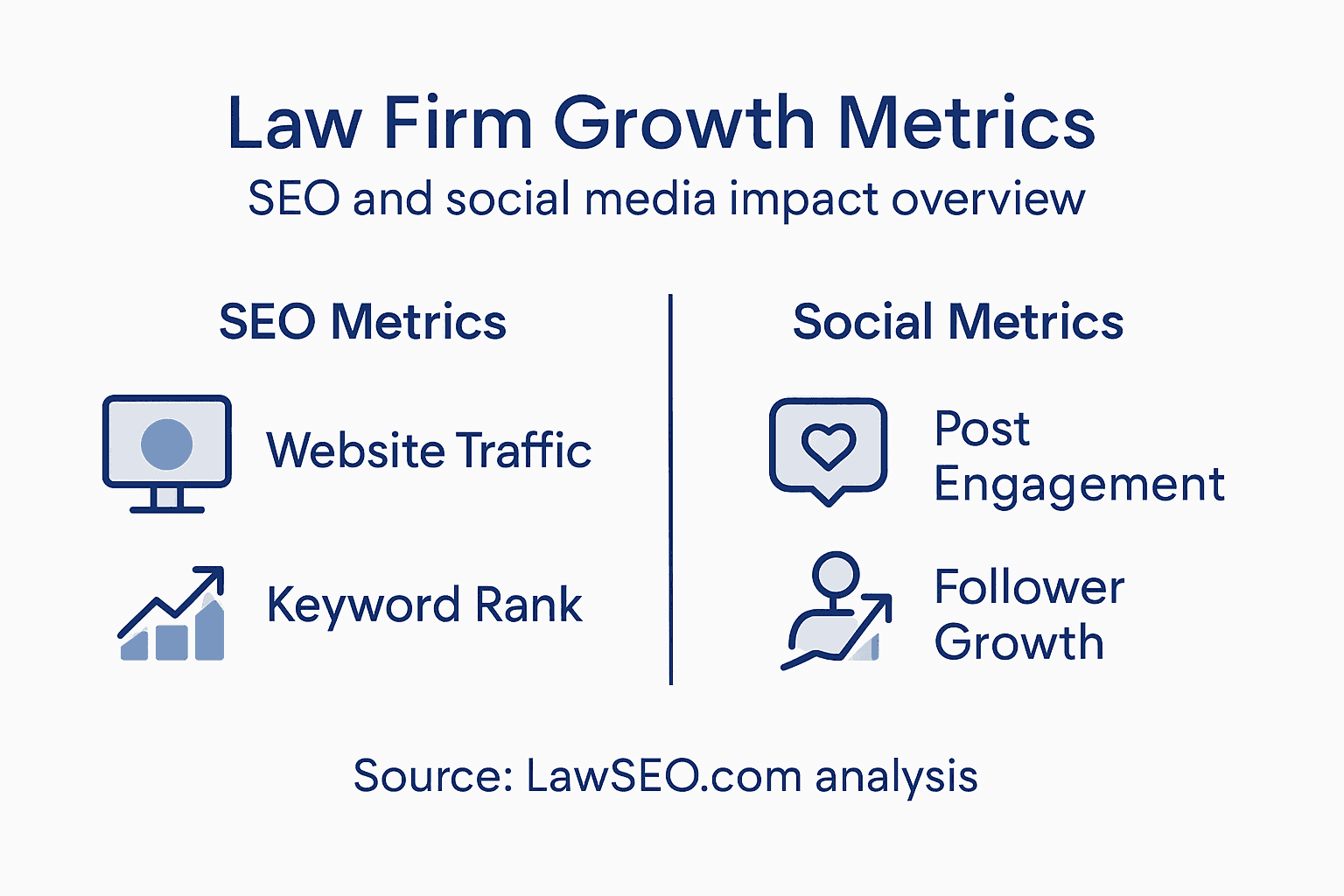
The following table summarizes essential metrics for evaluating digital marketing ROI for law firms:
| Metric | What It Measures | Why It Matters |
|---|---|---|
| Website Traffic | Number of site visitors | Gauges visibility and reach |
| Conversion Rate | Visitors taking desired actions | Measures content effectiveness |
| Cost Per Lead | Spending per client inquiry | Assesses marketing efficiency |
| Client Retention Rate | Repeat and ongoing client work | Reveals long-term relationship value |
The complexities of ROI measurement demand rigorous analytical frameworks. Research cautions against misattribution and oversimplified evaluations that might lead to misguided strategic decisions. Digital marketing investments require careful longitudinal tracking, recognizing that client acquisition often involves multiple touchpoints and interactions across different platforms. Law firms must develop sophisticated attribution models that understand the interconnected nature of digital marketing efforts, avoiding the trap of crediting only the final interaction in a client’s decision-making journey.
Pro tip: Implement a comprehensive tracking system that captures multi-channel interactions and assigns weighted values to different marketing touchpoints, providing a more accurate representation of your digital marketing effectiveness.
Elevate Your Law Firm’s Social Media and SEO Strategy Today
The article highlights the challenge law firms face in integrating effective social media engagement with strong SEO practices to drive client growth and build trust online. If you are struggling to create keyword-rich content that balances ethical compliance while maximizing search visibility, or if measuring the real ROI of your efforts feels overwhelming, you are not alone. Many attorneys need a proven approach that respects professional standards and leverages emerging digital tools like AI-driven search to reach the right clients at the right time.
At LawSEO.com, we specialize exclusively in digital marketing for law firms. Our founder-led team understands the unique ethical considerations and competitive landscape you face. We combine expert SEO, targeted social media strategies, and cutting-edge AI content optimization to help your law firm dominate search results, connect authentically with prospective clients, and convert interest into action. Don’t let the complexity of digital marketing hold you back from growing your practice.
Ready to transform your online presence with proven legal SEO and social media solutions? Visit LawSEO.com now to learn how our personalized strategies can elevate your client acquisition efforts and deliver measurable returns. Your firm’s future growth starts with taking action today.
Frequently Asked Questions
How can social media help law firms attract new clients?
Social media allows law firms to showcase their expertise, share valuable legal insights, and engage with potential clients. By posting informative content and participating in discussions, firms can build trust and credibility within their target audience.
What role does SEO play in a law firm’s digital marketing strategy?
SEO enhances a law firm’s online visibility by optimizing their website to rank higher in search results. This includes using relevant keywords and creating quality content that potential clients are searching for, ultimately driving more organic traffic to the firm’s website.
What types of content should lawyers share on social media?
Lawyers can share a variety of content including informative articles, case studies, client testimonials, educational videos, and updates on legal trends. This diverse content helps to engage potential clients and establish the firm as a thought leader in the legal field.
How can law firms measure the effectiveness of their social media and SEO strategies?
Law firms can measure effectiveness through key performance indicators like website traffic, conversion rates, cost per lead, and client retention rates. By analyzing these metrics, firms can assess which strategies are driving client engagement and adjust their marketing efforts accordingly.