

Properly optimized images can reduce your law firm website’s load time by up to 50%, directly improving search rankings and client conversions. Slow websites lose potential clients every second they wait. This guide delivers practical image optimization strategies tailored specifically for law firms, covering technical compression methods, SEO metadata best practices, accessibility compliance, and emerging AI search optimization to help you attract more clients and dominate local legal search results.
Table of Contents
- Introduction To Image Optimization For Lawyers
- Technical Image Optimization For Law Firms
- SEO Metadata And Accessibility Best Practices
- Common Misconceptions About Image SEO For Lawyers
- Advanced Image SEO Techniques And AI Search Optimization
- Branding And Client Engagement Through Optimized Images
- Implementation Roadmap For Law Firms
- Boost Your Law Firm’s SEO With Expert Image Optimization
- Frequently Asked Questions
Key takeaways
| Point | Details |
|---|---|
| Technical optimization boosts speed and rankings | Optimizing image file size directly improves website loading times, which enhances user experience and positively affects search engine rankings for law firm websites. |
| SEO metadata requires precision | Descriptive alt text and strategic filenames using relevant legal keywords improve visibility without keyword stuffing penalties. |
| Avoid common SEO mistakes | Keyword stuffing in alt text harms rankings and reduces accessibility, making concise, relevant descriptions essential. |
| AI search demands structured data | Structured data implementation can increase click-through rates by up to 30% and helps law firms appear in AI-generated answers. |
| Optimized images strengthen branding | Consistent visual branding through optimized images builds trust and helps differentiate law firms in competitive markets. |
Introduction to image optimization for lawyers
Image optimization is the process of compressing, formatting, and tagging images to improve website performance and search engine rankings. For law firms competing in crowded local markets, this technical practice directly reduces page load time, which lowers bounce rates and increases client engagement on your website.
Accessibility compliance through proper alt text ensures clients with disabilities can navigate your site, meeting legal requirements while expanding your potential client base. Law firms face unique challenges including ethical marketing compliance, intense local SEO competition, and the need to balance professional image quality with lightning-fast load speeds.
Key benefits for law firms include:
- Better search rankings that put your practice ahead of competitors
- Faster site speed that keeps potential clients engaged
- Enhanced client trust through professional, accessible imagery
- Higher conversion rates from visitors to consultations
- Compliance with accessibility regulations protecting clients with disabilities
Your website images represent significant opportunities for SEO gains if handled correctly. Images account for 50 to 60% of total webpage size and can increase loading times dramatically if left unoptimized. Every second of delay costs you potential clients who expect instant access to legal information.
Technical image optimization for law firms
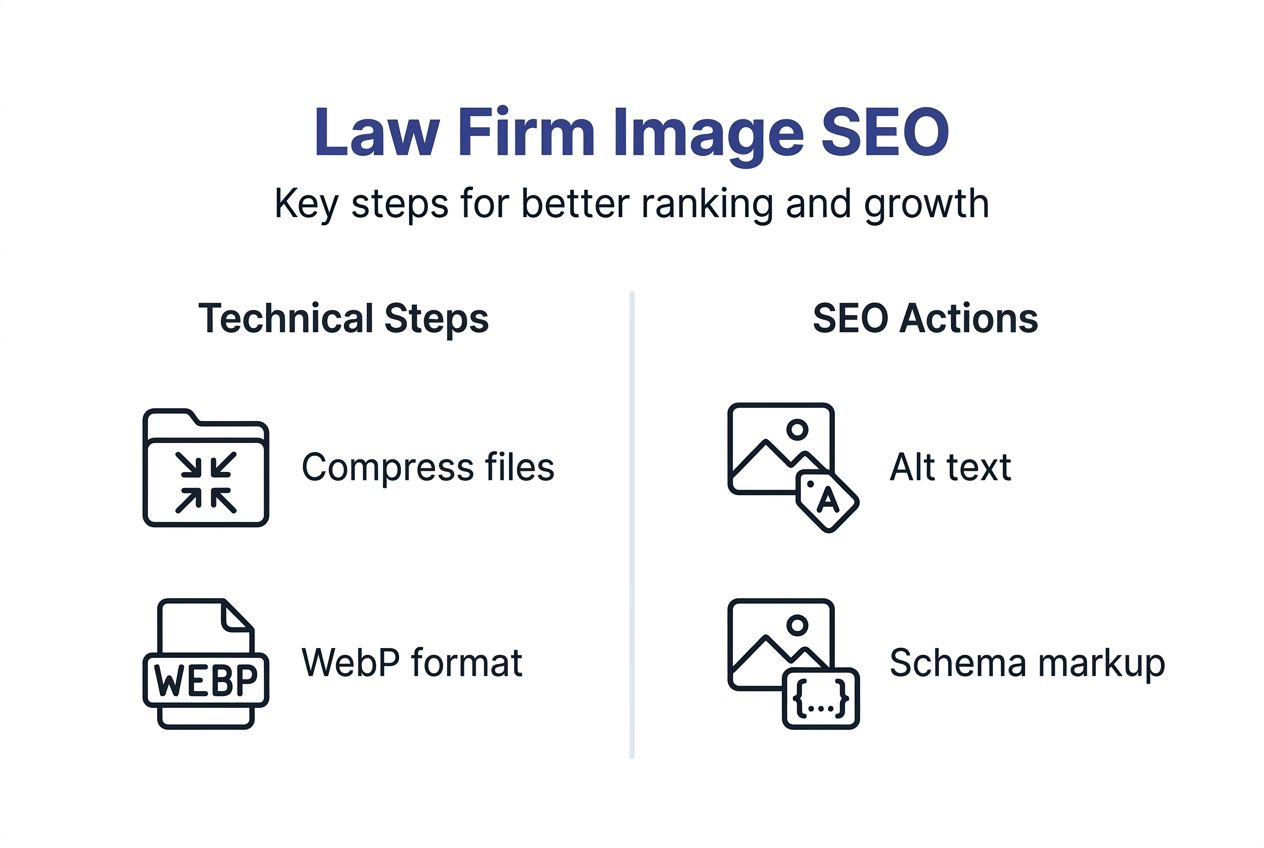
Compression techniques reduce file size without visible quality loss, making your law firm website load faster while maintaining the professional appearance clients expect. Modern compression tools analyze each image and remove unnecessary data that browsers don’t display, cutting file sizes by 70% or more without affecting visual quality.
Using WebP image format over traditional JPEG or PNG reduces image file size by approximately 25 to 35% without quality loss, making it ideal for law firm website images. This modern format delivers sharper images at smaller sizes, directly improving your website speed for law firms and boosting search rankings.
Large uncompressed images dramatically increase page load time and bounce rates, costing you clients who leave before your content appears. When potential clients search for legal help, they expect immediate answers, not waiting for oversized images to load.
Practical optimization strategies include:
- Compress existing images using tools like TinyPNG, Squoosh, or ImageOptim before uploading
- Convert all images to WebP format with JPEG or PNG fallbacks for older browsers
- Implement lazy loading so images load only when visitors scroll to them
- Use responsive images that serve different sizes based on device screen width
- Enable browser caching so returning visitors load images instantly
- Optimize thumbnail images separately since they appear throughout your site
Pro Tip: Audit your site quarterly to identify and replace large or outdated image files, maintaining optimal performance as you add new content and practice area pages.
Most content management systems offer plugins that automatically compress and convert images during upload. For WordPress sites, plugins like ShortPixel or Smush handle optimization without requiring technical expertise. These tools integrate seamlessly with your workflow, ensuring every new image meets performance standards.
Mobile users represent over 60% of legal website traffic in 2026. Responsive images ensure smartphone visitors receive appropriately sized files rather than desktop versions that waste bandwidth and slow loading. This optimization particularly benefits local SEO since mobile searchers often need immediate legal help.

SEO metadata and accessibility best practices
Alt text provides search engines and screen readers with image descriptions, serving dual purposes of improving SEO rankings and ensuring accessibility for clients with visual impairments. Effective alt text uses concise, descriptive language that includes relevant legal keywords naturally without stuffing.
For example, instead of “lawyer image 1,” use “Chicago personal injury attorney consulting client in modern office.” This description helps search engines understand context while assisting visually impaired visitors.
Image filename conventions matter significantly for SEO. Rename files before uploading using descriptive names with hyphens between words, such as “estate-planning-lawyer-consultation.jpg” rather than “IMG_4782.jpg.” Include practice area and location keywords naturally within filenames to strengthen local search signals.
Strategic metadata elements include:
- Alt text: 125 characters or fewer, describing image content and context with natural keyword inclusion
- Filenames: Descriptive phrases using hyphens, incorporating practice area and location
- Captions: Visible text below images that provides context and improves user experience
- Title attributes: Additional descriptive text that appears on hover, though less critical for SEO
Structured data markup using Schema.org vocabulary enhances how search engines and AI systems interpret your images. Law firms employing structured data around images improve search engines’ understanding, helping images appear in rich snippets and enhancing click-through rates. ImageObject schema tells Google exactly what each image represents, increasing chances of appearing in visual search results.
Legal accessibility regulations, including the Americans with Disabilities Act, mandate proper alt text for websites serving the public. Beyond legal compliance, accessible images expand your potential client base and demonstrate your firm’s commitment to serving all community members. This ethical approach aligns with ethical SEO for attorneys practices that build long-term trust.
Contextual text surrounding images reinforces their relevance to search engines. Place images near related content and reference them within your text naturally. This context helps search algorithms understand image purpose and improves topical relevance for target keywords.
Common misconceptions about image SEO for lawyers
Many law firms believe stuffing alt text with keywords improves SEO rankings. Overuse harms rankings and reduces accessibility, making concise, relevant alt text best practice. Search engines penalize keyword stuffing while screen readers deliver poor experiences to visually impaired users, damaging both SEO and accessibility.
Another misconception suggests large uncompressed images appear more professional and therefore drive better client engagement. Reality contradicts this belief since slow-loading high-resolution images increase bounce rates before visitors see your content. Professional appearance comes from appropriate resolution and proper formatting, not excessive file sizes.
Some attorneys think image SEO begins and ends with alt text. Effective optimization extends far beyond alt text to include compression, modern formats like WebP, structured data implementation, strategic placement, and contextual relevance. Each element contributes to overall performance and search visibility.
Common false beliefs include:
- Visual appeal alone drives engagement without considering SEO technical factors
- All image formats perform equally well for law firm websites
- Once optimized, images never need updating or maintenance
- Stock photos require no optimization since they come professionally produced
- Image SEO doesn’t matter for local law firm search rankings
The emerging importance of AI-driven search results requires optimizing images for generative AI platforms like ChatGPT, Perplexity, and Google’s AI Overviews. These systems rely heavily on structured data and proper metadata to feature law firm images in AI-generated answers. Ignoring this evolution means missing opportunities as potential clients increasingly use AI tools for legal research.
Some firms believe ethical marketing rules prohibit effective image optimization. Following ethical SEO for attorneys guidelines actually complements proper image optimization. Ethical compliance means using truthful, non-misleading images with accurate descriptions, not avoiding optimization altogether.
Stock photography requires the same optimization attention as custom images. Even professionally produced stock photos typically arrive in formats and sizes unsuitable for web use without compression and formatting adjustments.
Advanced image SEO techniques and AI search optimization
AI-driven search platforms use image metadata, structured data, and contextual signals to understand and rank visual content differently than traditional search engines. These systems analyze relationships between images, surrounding text, and structured markup to determine relevance for conversational queries.
Traditional image SEO focuses primarily on file size, alt text, and basic HTML attributes. AI-focused optimization requires deeper structured data implementation, semantic relationship mapping, and preparation for voice-based legal queries where images support spoken answers.
| Factor | Traditional SEO | AI Search Optimization |
|---|---|---|
| Primary signals | Alt text, filename, file size | Structured data, semantic context, entity relationships |
| Format priority | JPEG, PNG optimization | WebP, AVIF with comprehensive metadata |
| Metadata approach | Basic alt text and title | Schema.org ImageObject, detailed descriptions |
| Context importance | Moderate | Critical for understanding query intent |
| Voice search relevance | Limited | High, images support spoken answers |
Implementing Schema.org ImageObject markup helps AI systems understand what your images represent and how they relate to legal topics. This structured data includes properties like image subject, creator, copyright holder, and detailed descriptions that go beyond simple alt text.
Optimizing for voice and conversational queries means considering how potential clients phrase legal questions naturally. When someone asks an AI assistant about local divorce lawyers, properly structured images can appear alongside your firm’s information in the AI-generated response. This visibility positions your practice as the authoritative answer to AI search optimization for law firms queries.
Successful law firms implementing AI-focused strategies report increased visibility in ChatGPT citations, Google AI Overviews, and Perplexity answers. These appearances drive qualified traffic from users who trust AI-generated recommendations. The key lies in comprehensive metadata that helps AI systems confidently recommend your firm.
Advanced techniques include:
- JSON-LD structured data implementation for all significant images
- Entity relationship mapping connecting images to attorney profiles and practice areas
- Semantic HTML5 elements like figure and figcaption for contextual clarity
- Open Graph and Twitter Card optimization for social media visibility
- Image sitemaps submitted through Google Search Console
As AI search continues evolving, early adopters gain competitive advantages. Positioning your firm’s images for AI discovery now establishes authority before competitors recognize the opportunity. This proactive approach aligns with advanced SEO strategies for lawyers that anticipate rather than react to search landscape changes.
Branding and client engagement through optimized images
Visual consistency across your website builds brand recognition and establishes professional credibility that influences potential clients’ hiring decisions. When every image reflects consistent styling, color schemes, and quality standards, visitors subconsciously perceive your firm as organized and trustworthy.
SEO-optimized images reinforce brand identity while meeting technical performance requirements. Professional legal photography showing your actual team, office, and community involvement creates authentic connections that stock photos cannot match. These genuine images, properly optimized, load quickly while building the emotional trust that converts visitors into clients.
Legal-specific graphic elements like infographics explaining complex legal processes demonstrate expertise while keeping visitors engaged. When optimized correctly, these visual resources rank independently in image search, attracting potential clients researching legal topics before they’re ready to hire an attorney.
Client recall improves dramatically with memorable, high-quality imagery. Potential clients comparing multiple law firms remember those with distinctive, professional visual presentations. This recognition advantage translates directly to consultation requests when decision time arrives.
Key branding considerations include:
- Consistent color palettes matching your firm’s brand guidelines
- Professional photography showing real attorneys and staff, not stock models
- Custom graphics and infographics explaining practice area processes
- Local imagery demonstrating community connections and geographic focus
- Headshots with uniform backgrounds and lighting for attorney profiles
Pro Tip: Schedule annual photography updates to keep your visual brand current and compliant with ethical marketing standards, maintaining client confidence through fresh, accurate representation of your team.
Images influence client engagement metrics that search engines use for ranking signals. Compelling visuals increase time on page, reduce bounce rates, and encourage social sharing, all of which boost Google rankings through improved user experience signals.
Balancing aesthetics with technical optimization requires selecting appropriate resolution and compression levels. Your images should appear crisp on high-resolution displays while maintaining small file sizes. Modern compression tools preserve visual quality while achieving dramatic size reductions.
Integrating optimized images throughout your on-page SEO for lawyers strategy creates cohesive user experiences. Strategic image placement breaks up text, illustrates complex concepts, and provides visual relief that keeps potential clients engaged with your content.
Implementation roadmap for law firms
Follow this systematic approach to transform your law firm website’s image optimization:
-
Audit existing images for current file sizes, formats, alt text completeness, and loading performance using tools like Google PageSpeed Insights or GTmetrix to establish baseline metrics.
-
Convert and compress all images using WebP format with appropriate quality settings, maintaining visual appeal while achieving 60 to 80% file size reductions compared to original JPEG or PNG files.
-
Write concise alt text and rename filenames incorporating relevant legal keywords, practice areas, and location terms naturally without keyword stuffing that triggers penalties.
-
Implement structured data markup using Schema.org ImageObject vocabulary for significant images, helping search engines and AI systems understand content context and relevance.
-
Review all images for branding consistency, professional quality, and compliance with state bar ethical marketing rules, replacing stock photos with authentic firm imagery where appropriate.
-
Track performance metrics including page load speed, image search traffic, overall organic traffic growth, and client engagement indicators like time on page and bounce rate.
-
Establish ongoing monitoring processes with quarterly audits identifying new optimization opportunities as you add content, ensuring maintained performance standards over time.
Google Search Console’s Core Web Vitals report reveals how image optimization affects user experience metrics that directly influence rankings. Largest Contentful Paint (LCP) often depends primarily on image loading speed, making optimization critical for passing Core Web Vitals thresholds.
Create optimization guidelines for staff members who add website content, ensuring consistency across your entire site. These internal standards should specify required formats, maximum file sizes, alt text templates, and filename conventions.
As legal marketing trends evolve and new image formats emerge, periodic reviews keep your site competitive. AVIF format, while not yet universally supported, offers even better compression than WebP and deserves consideration for future implementation.
Document your optimization process and results to demonstrate ROI from these technical improvements. Tracking metrics over time reveals correlations between image optimization and business outcomes like increased consultation requests. This data justifies ongoing investment in legal SEO strategies for law firms that include comprehensive image optimization.
Boost your law firm’s SEO with expert image optimization
Implementing comprehensive image optimization requires technical expertise and ongoing attention that busy law practices often struggle to maintain. LawSEO.com specializes exclusively in legal SEO, understanding the unique ethical considerations and competitive challenges law firms face.
Our team ensures your images meet both technical performance standards and legal marketing compliance requirements. We implement proven legal SEO strategies including advanced image optimization, structured data implementation, and AI search preparation that positions your firm ahead of competitors.
With over 29 years of SEO experience, our founder personally reviews every client strategy, ensuring your optimization aligns with current best practices and emerging search trends. Explore our comprehensive SEO for lawyers services and discover how ethical SEO services can transform your online visibility while maintaining professional standards.
Frequently asked questions
What is the best image format for law firm websites?
WebP format is recommended as it offers significant file size reduction without quality loss, improving load speed and SEO performance. Fallbacks like optimized JPEG or PNG ensure compatibility when browsers don’t support WebP, providing universal accessibility across all devices and platforms.
How can law firms write effective alt text for images?
Use clear, descriptive language relevant to the legal content and keywords without overstuffing or forcing unnatural phrases. Keep descriptions concise at 125 characters or fewer to help screen readers deliver good experiences while improving search engine understanding of image context and relevance.
Why is image optimization important for law firm SEO?
Optimized images speed up website loading, reduce bounce rates, and improve search rankings by meeting Core Web Vitals performance standards. They enhance user experience and client engagement essential for converting website visitors into consultation requests, directly impacting your firm’s client acquisition success.
How do images impact AI-powered search results for lawyers?
Images with structured data help AI systems understand and feature law firm visuals in generated answers and rich snippets. Proper metadata and modern formats increase chances of visibility in voice search and conversational AI legal queries, positioning your firm as the authoritative answer AI platforms recommend to users.
What legal ethics considerations apply to image use in legal marketing?
Avoid false or misleading images, maintain client confidentiality, and comply with state bar marketing rules governing attorney advertising. Use images that reflect professionalism and truthfulness to uphold client trust and ethical SEO for attorneys standards, ensuring your marketing builds rather than damages your professional reputation.