


Remarketing can reliably boost qualified leads for law firms, but only when it runs as privacy-first, ethically compliant brand reinforcement rather than aggressive solicitation. The tactic works because legal decisions take weeks or months, and staying visible during that window beats letting a warm prospect drift to a competitor. Follow ABA and state bar advertising rules, build audiences from first-party data, cap ad frequency, and give every visitor a clear opt-out.
TL;DR:
- Remarketing is most effective for long research cycle practice areas like estate planning or personal injury, especially when landing pages convert well organically.
- Compliance requires removing guaranteed result language, including required contact details, keeping ad copies stored, and obtaining pre-approval before launch.
- Building audiences from first-party data, hashed CRM contacts, or contextual placements ensures privacy-respecting, effective remarketing that aligns with bar rules.
- Audience segmentation based on visitor intent and page read improves relevance and ROI, with specific messaging strategies for high, medium, and low intent visitors.
- Regularly reviewing KPIs such as cost per lead, lift over cold traffic, and lead conversion rate helps measure ROI while maintaining privacy and compliance standards.
Why Remarketing Helps Law Firms Win More Cases
Most legal matters don’t convert on the first visit. Someone researching a divorce, a DUI defense, or a workers’ compensation claim typically reads several pages, closes the tab, and comes back days later, if they come back at all. Remarketing keeps a firm’s name in front of that person during the gap, and because the audience already knows the brand, cost per lead usually runs lower than cold prospecting.
Remarketing tends to outperform fresh acquisition traffic in a few specific conditions:
- The practice area has a long research phase (estate planning, immigration, personal injury) rather than an urgent same-day need.
- The firm’s landing pages already convert reasonably well organically, so retargeted traffic reinforces an existing funnel instead of propping up a broken one.
- Lifetime case value is high enough to justify sustained ad spend across a multi-week decision cycle.
Skip it, or scale it back, when monthly site traffic is thin, when landing pages have obvious friction, or when a state’s advertising rules narrow what a practice area can say in an ad. Pumping budget into remarketing before fixing a weak page just amplifies the drop-off. For firms weighing where remarketing fits against SEO and content, integrated marketing strategies tend to outperform any single channel run in isolation.
What Ethics Rules Actually Require for Legal Ads
Retargeting counts as advertising under bar rules, not solicitation, provided it isn’t narrowly aimed at an identifiable individual based on a specific incident. That distinction is the whole ballgame. A New York City Bar ethics opinion concluded that generic retargeting ads following a site visitor around the web are permissible advertising, but recommended firms retain copies of ads and keep disclosures current.
Two ABA Model Rules govern the substance. Rule 7.1 bars false or misleading statements about services, which rules out “guaranteed results” language in any ad creative. Rule 7.2 permits advertising but sets conditions, including required contact information in certain jurisdictions and limits on paying for referrals.
Operational checklist for every remarketing campaign:
- Remove absolute or outcome-guaranteeing language from headlines and descriptions.
- Include the firm’s required contact information where the jurisdiction mandates it.
- Retain screenshots or exports of every ad version and its run dates.
- Route new ad copy through a pre-approval step before it goes live.
Scholarly analysis of ad-tech practices in legal marketing flags a real fiduciary tension: the same targeting precision that makes remarketing effective can also feel invasive to a prospective client, a concern University of Florida law review scholarship argues current professional rules don’t fully anticipate.
Firms that treat that tension seriously, rather than dismissing it, tend to build campaigns that survive bar scrutiny.
How Do You Build Compliant Remarketing Audiences?
Third-party cookies are unreliable enough now that any remarketing strategy built solely on them is already behind. The fix is building audiences from data the firm actually owns.
- Capture first-party contacts intentionally. Gated guides, intake forms, and newsletter signups all generate emails and phone numbers you can hash and upload as custom audiences on Google and Meta, without ever handing raw PII to a platform.
- Use hashed CRM matching for existing contacts. Match your case management system’s contact list against ad platforms using one-way hashing, which lets you retarget without exposing identifiable client data to a third party.
- Shift to contextual and owned-media sequencing where cookies fall short. Contextual placements tied to legal content topics, paired with retargeting through your own email list, replace much of what third-party cookie tracking used to do.
- Check platform policy before launch. Google and Meta both require certification for legal-services advertisers in some categories, and both offer privacy-respecting audience tools that beat pulling lists from outside data brokers.
- Write creative that educates instead of pressures. Short explainer videos, FAQ-style ad copy, and a soft “schedule a free consultation” close outperform urgency language (“call now before it’s too late”) that reads as manipulative and risks running afoul of Rule 7.1.
Pro Tip: Build one hashed audience per practice-area intake form, not one giant “all site visitors” list. A visitor who filled out a bankruptcy form should never see a car-accident ad; the mismatch alone tanks click-through and looks careless to anyone who notices.
How Should You Segment Audiences by Practice Area?
Serving the same generic “hire our firm” ad to every past visitor wastes money and can come across as tone-deaf to someone still deciding whether they even need a lawyer. Segmenting by intent and by the specific page a visitor read fixes both problems.
A workable three-tier structure:
- High intent: visitors who reached a consultation or contact page, or spent several minutes on a specific practice-area page. Show them a direct consultation offer.
- Medium intent: visitors who read one or two blog posts on a topic like child custody or wrongful termination. Show them an explainer video or client-rights FAQ.
- Low intent: visitors who bounced off the homepage in under 15 seconds. Show them general brand awareness creative, not a hard offer.
A four-step sequence that respects this works well across most practice areas: introduce the firm’s relevant experience (days 1 to 3), follow with an explainer addressing the visitor’s likely question (days 4 to 10), add credibility content like case results summaries where bar rules allow (days 11 to 18), then close with a direct consultation offer (days 19 onward). Bankruptcy prospects need reassurance and process clarity; personal injury prospects need urgency balanced with empathy. Messaging that ignores which page someone actually visited breaks the relevance the whole strategy depends on.
What Should You Track to Measure Remarketing ROI?
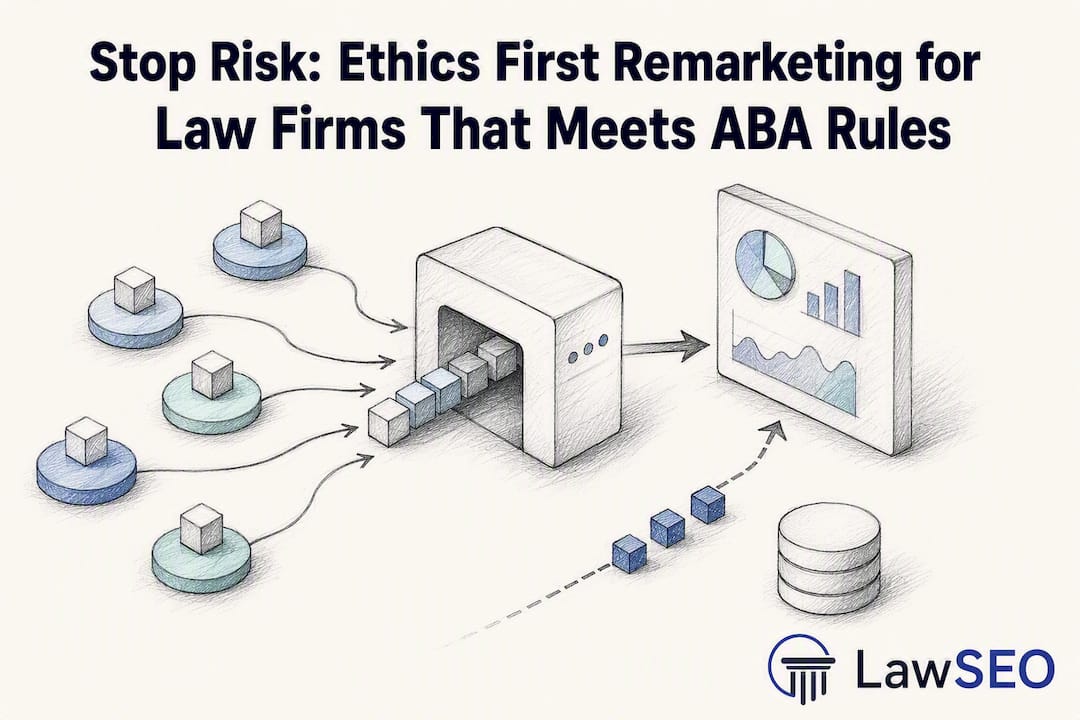
Measurement has to happen without exposing individual client data to ad platforms, which means leaning on aggregated conversions and server-side tagging rather than pixel-based tracking that ships raw visitor data to third parties. GA4’s server-side tagging option, paired with hashed CRM uploads, gives most firms enough signal without the privacy exposure.
Retention and frequency settings matter as much as the metrics themselves:
Four KPIs deserve regular review: cost per qualified lead, incremental lift over cold-traffic campaigns, lead-to-client conversion rate, and ad-level engagement (click-through and video completion). Incremental lift is the one most firms skip, and it’s the one that tells you whether remarketing is actually adding leads or just re-claiming credit for people who would have called anyway.
When Should a Law Firm Skip Remarketing?
Remarketing needs a baseline of traffic and a working funnel to justify the spend. Below roughly 500 monthly visits, audience pools get too small to segment meaningfully, and the campaign ends up recycling the same handful of impressions.
Run this quick audit before launching or renewing any remarketing campaign:
- Check the pixel and tag setup for accuracy and confirm it fires only on intended pages.
- Review the privacy policy and cookie notice to confirm they disclose remarketing and retargeting, not just general analytics.
- Exclude converted leads from active audiences so signed clients stop seeing ads for services they already retained.
- Re-read every active ad for guarantee language, incident-specific references, or anything that reads more like solicitation than advertising.
- Confirm retention and frequency settings haven’t drifted since launch.
Red flags that warrant an immediate pause: ad copy referencing a specific accident or arrest, audiences built from anything other than the firm’s own site visitors or CRM contacts, or a cookie notice that hasn’t been updated to mention retargeting. A current privacy policy built for law firm sites closes most of that gap in one pass.
Why Compliance-First Remarketing Beats the Generic Playbook
Most remarketing advice online comes from general digital marketing sources that never mention bar rules at all. That gap is where firms get into trouble. Lawseo approaches remarketing the way a specialist should: every campaign gets reviewed against ABA Model Rule 7.1 and 7.2 before it launches, not after a bar complaint forces a rewrite.
That review process reflects Todd R. Stager’s 29-plus years in SEO and legal marketing, applied to every client campaign rather than delegated to a junior account manager. Firms that outsource remarketing to a legal-specialist agency usually do it for one of three reasons: internal marketing teams lack bandwidth to run compliance review on every ad, the firm wants to scale across Google, Meta, and LinkedIn simultaneously without three separate learning curves, or leadership wants founder-level oversight rather than a rotating point of contact. As AI-driven search tools increasingly shape how prospects discover firms before they ever see a retargeted ad, pairing remarketing with AI search optimization closes the loop between first discovery and final decision.
— TODD
Get Remarketing Built Into a Compliant Growth Plan
Running remarketing well means juggling audience segmentation, ad platform policy, and bar advertising rules at the same time, which is exactly where most in-house marketing teams run short on hours. Managed remarketing can be integrated into broader legal SEO retainers, including first-party audience construction, compliance sign-off on each ad version, and cross-platform execution across major advertising platforms handled under a single point of contact. Every campaign can benefit from expert review before launch to ensure compliance and effectiveness.
If your firm has limited internal bandwidth for ad review, wants to scale remarketing faster without adding legal risk, or would rather have founder-led oversight than a rotating account manager, explore Lawseo’s full service list and request a campaign review to see where your current setup stands.
This article is general information, not a substitute for advice from a qualified lawyer. Consult a qualified legal professional about your own circumstances before acting on anything here.
Sources
- Rule 7.1: Communication Concerning a Lawyer’s Services (Comment) — American Bar Association
- Ad Tech & the Future of Legal Ethics — University of Florida Law Scholarship Repository
- Are Those Ads That Follow You Everywhere You Go On-Line Ethical? City Bar Ethics Opinion Says Yes
FAQ
Is Remarketing Considered Solicitation Under Bar Rules?
Generally no. A New York City Bar opinion found that retargeting counts as advertising, not solicitation, as long as it isn’t narrowly targeted at an identifiable person based on a specific incident.
What’s the Ideal Ad Frequency Cap for Legal Remarketing?
Most campaigns should cap impressions at 3 to 5 per week per user to avoid the fatigue and “stalking” impression that drives complaints and hurts brand perception.
How Long Should a Retargeting Audience Retention Window Be?
A 7 to 30 day window works for most practice areas, long enough to catch a returning researcher without targeting someone on stale, no-longer-relevant intent.
Can Law Firms Use Third-Party Cookies for Remarketing Today?
Reliance on third-party cookies alone is a weak strategy now; first-party audiences built from intake forms, hashed CRM matches, and contextual placements are the more durable approach.
Does Lawseo Offer Managed Remarketing Services for Law Firms?
Yes. Lawseo builds remarketing into its broader SEO and paid advertising retainers, with compliance review and cross-platform execution handled under founder-led oversight; pricing is available on request through its services page.