


TL;DR:
- A well-structured intake process enhances client satisfaction, compliance, and conversion rates.
- Conflict checks must be completed before providing legal advice to avoid malpractice and ethical violations.
- Automating intake workflows minimizes errors, speeds up processing, and transforms intake into a competitive advantage.
A missed conflict check. A prospect who never heard back. A new client who felt confused and undervalued from the very first call. These are not rare occurrences in law firms that treat intake as an afterthought. Poor intake processes frustrate potential clients, expose your firm to malpractice risk, and quietly drain staff resources. The good news is that a well-structured client intake process solves all three problems at once. It improves client satisfaction, keeps you compliant, and converts more inquiries into paying clients. This guide walks you through every stage of building that process, from preparation and execution to quality verification and expert strategy.
Key Takeaways
| Point | Details |
|---|---|
| Early conflict checks | Always perform conflict checks before offering legal advice to avoid malpractice risks. |
| Automate intake workflows | Using technology streamlines data collection, follow-up, and compliance in your client intake. |
| Standardize processes | Consistent procedures reduce errors, improve client satisfaction, and help your firm stand out. |
| Prioritize privacy | Establish clear privacy protocols from the start to ensure client data security and regulatory compliance. |
Understanding the client intake process
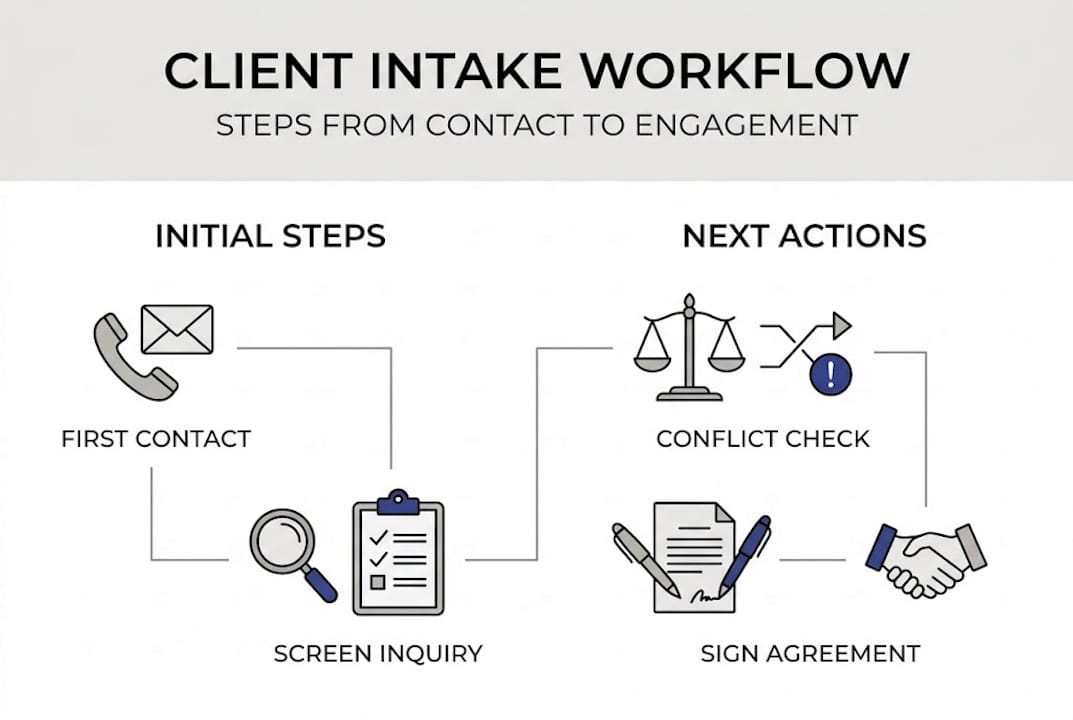
Client intake is the structured workflow that takes a potential client from their very first contact with your firm through screening, conflict checking, and formal engagement. It is not simply answering the phone or filling out a form. Done correctly, it is a disciplined system that protects your firm legally, serves clients professionally, and supports sustainable growth.
Why does intake matter so much? Consider what is at stake at each touchpoint. A disorganized intake process can lead to missed deadlines, incomplete case information, and ethical violations. A streamlined one does the opposite.
Key reasons why intake is mission-critical:
- Reduces malpractice risk by ensuring all required checks are completed before representation begins
- Improves client satisfaction by creating a professional, responsive first impression
- Increases conversion rates by moving qualified prospects through the process efficiently
- Maintains compliance with state bar rules and federal privacy regulations
- Supports client lead nurturing by keeping prospects engaged during evaluation
The table below summarizes the core objectives of a strong intake process and their direct operational benefits.
| Intake objective | Operational benefit |
|---|---|
| Conflict of interest check | Prevents malpractice and ethical violations |
| Structured data collection | Reduces errors and speeds up case setup |
| Clear engagement criteria | Improves case selection and profitability |
| Automated follow-up | Increases conversion from inquiry to client |
| Privacy compliance | Protects firm and client data |
One objective stands above the rest in terms of legal risk: the conflict check. This is not optional, and the timing is not flexible.
Per ABA Model Rules 1.7, 1.9, and 1.10, conflict checks must be completed before providing any legal advice, covering current clients, former clients, adversaries, and related entities.
Building this check into your intake workflow from day one is non-negotiable. Your website features for law firms can also support early data collection that feeds directly into the conflict check system.
Preparation: What you need before you start
Understanding the process sets the stage for gathering the right tools and ensuring compliance before you meet any new client. Preparation is where most firms either build a strong foundation or set themselves up for recurring problems.
Before you process a single new inquiry, your firm needs:
- Standardized intake forms tailored to each practice area
- A client information checklist covering contact details, matter type, opposing parties, and referral source
- A conflict check system, whether software-based or a structured manual process
- A CRM (customer relationship management) platform or dedicated legal intake software
- Clearly defined staff roles for intake, including who collects data, who runs conflict checks, and who communicates decisions
- Written privacy protocols that align with your state’s rules and federal standards
One of the most important decisions you will make is whether to manage intake manually or use automation. The comparison below makes the tradeoffs clear.
| Feature | Manual intake | Automated intake |
|---|---|---|
| Time per inquiry | 20 to 40 minutes | 5 to 10 minutes |
| Error rate | Higher, human-dependent | Lower, system-enforced |
| Conflict check integration | Separate, often delayed | Real-time or near real-time |
| Follow-up consistency | Inconsistent | Scheduled and reliable |
| Scalability | Limited by staff capacity | Scales with inquiry volume |
Privacy compliance deserves special attention at this stage. Collecting client data without proper protocols in place creates liability before a case even begins. Reviewing your privacy compliance for intake requirements early prevents costly corrections later.
Technology also opens the door to smarter intake. AI chatbots for intake can handle initial inquiries around the clock, collect preliminary information, and route prospects to the right staff member, all without adding to your team’s workload.
Pro Tip: Assign one dedicated staff member as your intake coordinator. This person owns the process, monitors compliance, and ensures every inquiry is handled consistently. Without clear ownership, intake quality degrades quickly.
Note that ABA Model Rules 1.7, 1.9, and 1.10 require conflict checks before legal advice is given, which means your system must be ready to run those checks before any substantive conversation takes place.
Step-by-step: The client intake workflow
With all prerequisites in place, it is time to walk through exactly how to process a new client from first contact to engagement. Each step builds on the last, and skipping any one of them creates gaps that cost you clients or expose you to risk.
The five core steps of a law firm client intake workflow:
-
Initial inquiry capture. Whether the contact comes through your website, phone, email, or chat, every inquiry must be logged immediately. Use a standardized intake form or CRM entry to record the prospect’s name, contact information, matter type, and how they found your firm. Speed matters here. Studies consistently show that response time is one of the top factors prospects use to evaluate a firm.
-
Information gathering. Schedule a brief intake call or send a digital questionnaire to collect the details needed for conflict checking and case evaluation. This includes full names of all parties involved, the nature of the legal issue, relevant dates, and any prior legal representation. Thoroughness at this step prevents delays later.
-
Conflict check. This step is mandatory and time-sensitive. Per ABA Model Rules 1.7, 1.9, and 1.10, conflict checks must be completed before providing any legal advice. Run the check against your current client database, former client records, adverse parties, and related entities. Document the results.
-
Engagement assessment. Once the conflict check clears, evaluate whether the matter fits your firm’s practice areas, capacity, and risk tolerance. This is where you decide to accept, refer, or decline. Communicate the decision promptly and professionally. Understanding client intent at this stage helps you tailor your response and improve conversion.
-
Client onboarding. For accepted matters, send the engagement letter, fee agreement, and any required disclosures. Collect signatures, set up the client file, and schedule the initial consultation. Confirm next steps clearly so the client knows what to expect.
Pro Tip: Automate follow-up reminders at steps 2 and 5. Prospects who do not complete intake forms within 24 hours often disengage. A single automated reminder email can recover a significant portion of those leads.
Quality checkpoints to maintain consistency:
- All inquiries logged within one hour of receipt
- Intake forms completed before any substantive discussion
- Conflict check documented and signed off before advice is given
- Engagement decision communicated within 48 hours
- Onboarding materials sent and confirmed within 24 hours of acceptance
Using lead nurturing techniques between steps also keeps prospects engaged while your team completes internal reviews.
Common pitfalls and how to avoid them
Even with robust workflows, some challenges remain. Here is what to watch for and how to address each one directly.
The most common intake pitfalls in law firms:
- Late or missing conflict checks. This is the single most dangerous mistake. A conflict discovered after advice is given can trigger malpractice claims and bar complaints. Automate the trigger so a conflict check is initiated the moment intake data is collected.
- Incomplete data collection. Forms that are too short or too vague leave gaps that slow down case setup. Standardize forms by practice area and make key fields required.
- Privacy errors. Storing client data in unsecured email threads or shared drives creates compliance exposure. Use encrypted platforms and enforce data handling protocols from day one.
- Lack of follow-up. Many firms lose qualified prospects simply because no one followed up after the initial inquiry. Automated email sequences and intake chatbots can close this gap reliably.
- Inconsistent client communication. Prospects who receive different information from different staff members lose confidence quickly. Standardize scripts and response templates for common scenarios.
A missed conflict check is not just an administrative error. It can expose your firm to a malpractice claim, a bar complaint, or forced disqualification from a case. The ABA Model Rules are clear: this check must happen before legal advice is provided, without exception.
The solutions to most of these pitfalls share a common thread: systematize and automate wherever possible. Manual processes depend on individual behavior, which is inconsistent by nature. Technology removes that variability and enforces compliance at scale.
A new perspective: Make intake your competitive advantage
Most law firms treat client intake as an administrative obligation. It is the paperwork before the real work begins. That framing is a missed opportunity, and it is worth reconsidering.
Think about what intake actually is from the client’s perspective. It is their first real experience with your firm. The speed of your response, the clarity of your questions, and the professionalism of your follow-up all communicate something about how you will handle their case. Firms that understand this use intake as a deliberate first impression, not just a compliance checkpoint.
We have seen firms gain a measurable competitive edge simply by mapping their intake process to client satisfaction metrics. When a firm reduced its average response time from 6 hours to under 30 minutes and standardized its onboarding communication, referral rates increased noticeably within two quarters. That is not a compliance outcome. That is a marketing outcome.
Reframing intake as part of your lead nurturing insight strategy changes how you invest in it. It stops being a cost center and starts being a conversion engine. The firms that recognize this early will build a client experience that competitors cannot easily replicate.
Optimize your client intake—and your visibility
A well-built intake process converts more inquiries into clients. But if prospects cannot find your firm in the first place, even the best intake workflow sits idle. That is where LawSEO’s law firm solutions connect the two sides of growth. LawSEO works exclusively with attorneys and law firms, combining intake-friendly website design with advanced SEO strategies that drive qualified traffic directly to your intake funnel. If you want to understand how your current digital presence compares to the competition, the top SEO platforms comparison is a strong starting point. More visibility means more inquiries. Better intake means more of those inquiries become clients.
Frequently asked questions
What is a client intake process for law firms?
It is a structured workflow for moving potential clients from initial contact through screening and engagement, ensuring both compliance and operational efficiency at every step.
When should conflict checks be done during intake?
Conflict checks must be completed before giving any legal advice and before formally engaging a new client, as required by ABA Model Rules 1.7, 1.9, and 1.10.
How can technology improve the law firm intake process?
Automation tools reduce human error, accelerate response times, and enforce compliance steps consistently, which improves both conversion rates and risk management.
What are common mistakes in client intake?
The most frequent mistakes include missing or delayed conflict checks under ABA rules, failing to collect complete case data, and not following up with prospects after the initial inquiry.