


Many attorneys assume online lead generation is simple and risk-free, but the reality is far more complex. Generating qualified leads online requires careful navigation of legal advertising rules, state-specific restrictions, and ethical boundaries that separate permissible marketing from prohibited solicitation. The stakes are high: violations can result in disciplinary action, while compliant strategies combining SEO and AI-driven platforms deliver sustainable client acquisition. This guide breaks down the legal framework, effective strategies, and best practices to help you generate leads confidently and compliantly.
Key Takeaways
| Point | Details |
|---|---|
| Advertising vs solicitation | The line between permissible advertising and prohibited solicitation determines your lead generation risk and protects your practice. |
| Inbound SEO safety | Inbound marketing using SEO and AI driven intake tools attracts prospects who initiate contact, aligning with advertising rules rather than solicitation. |
| State rule variations | State specific waiting periods and blackout rules require tailoring lead gen strategies to each jurisdiction. |
| SEO outperforms PPC | SEO generates higher conversions and lower ongoing costs than PPC, with studies showing 7.5% conversions versus 2.2% for PPC. |
Understanding the legal framework for online lead generation
Navigating online lead generation starts with understanding ABA Model Rules 7.1-7.5, which define the boundary between permissible advertising and prohibited solicitation. The distinction is crucial: advertising involves general communication to potential clients, while solicitation typically means live person-to-person contact initiated for pecuniary gain. Most states prohibit direct solicitation of prospective clients who haven’t requested contact, but advertising through websites, content marketing, and search engines remains permissible when truthful and not misleading.
State-specific variations add complexity to this framework. Texas recently updated its barratry statutes, affecting how attorneys can respond to accident victims. California enforces a 30-day blackout period prohibiting contact with accident victims, while Florida imposes waiting periods for certain case types. Mass tort cases generally face fewer solicitation restrictions because the harm is widely known and affects large groups. New York Ethics Opinion 1294 provides valuable guidance on lead generation services, clarifying when third-party arrangements cross ethical lines.
Key compliance considerations include:
- Maintain accurate records of all advertising and lead generation activities
- Ensure all communications are truthful and not misleading
- Avoid creating unjustified expectations about results
- Clearly identify all advertising as such
- Respect state-specific waiting periods and blackout rules
“The line between permissible advertising and prohibited solicitation determines whether your lead generation strategy protects or jeopardizes your practice.”
Understanding these rules isn’t just about avoiding discipline. It’s about building a sustainable marketing foundation that generates quality leads without ethical compromise. With this legal framework established, let’s explore the practical strategies that deliver results while maintaining compliance.
Effective online lead generation strategies for attorneys: prioritizing SEO and AI tools
Inbound marketing strategies, particularly SEO and AI-driven client intake tools, offer the most compliant path to consistent lead generation. These methods attract potential clients who are actively searching for legal help, eliminating the solicitation concerns that plague outbound approaches. When prospects find you through search results or AI platforms, they’ve initiated contact, placing you firmly within advertising rules rather than solicitation prohibitions.
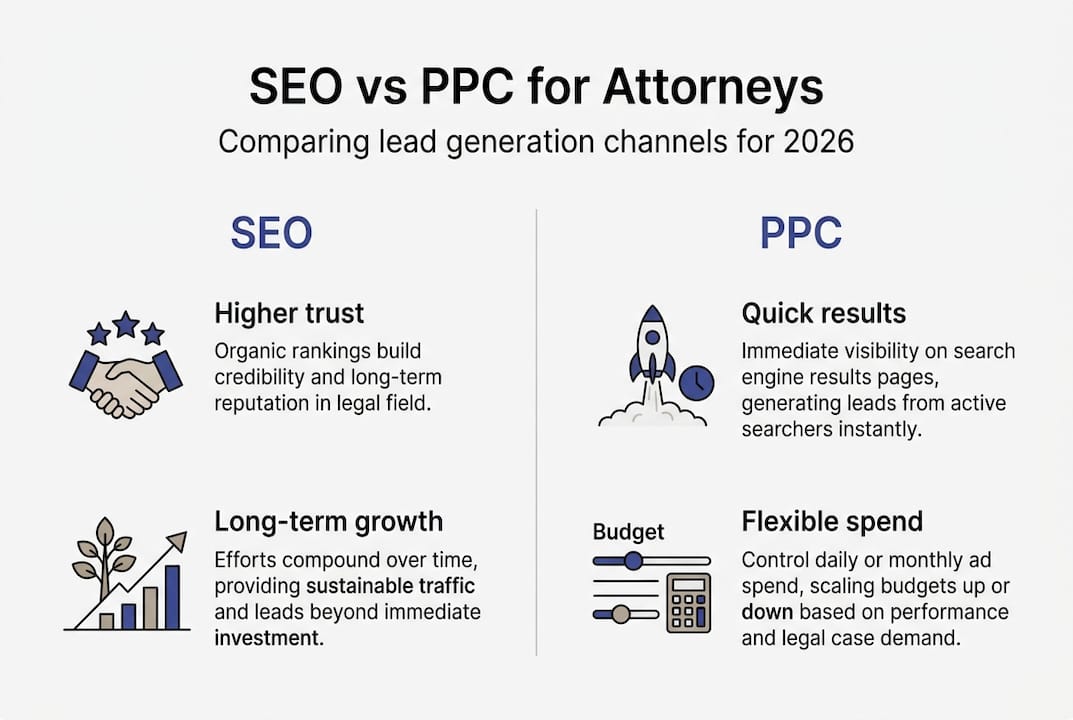
SEO delivers superior long-term results compared to pay-per-click advertising. Studies show SEO generates conversion rates of 7.5% compared to PPC’s 2.2%, with lower ongoing costs once rankings are established. Effective SEO strategies include comprehensive website audits, Google Business Profile optimization, strategic content creation targeting specific practice areas, and authoritative link building from legal directories and industry publications. These tactics build sustained visibility that compounds over time.
Joint advertising models provide another compliant approach. Rather than buying or selling leads, attorneys can partner with other firms or marketing platforms in shared advertising arrangements. This collaborative model distributes costs while maintaining ethical standards, as each attorney retains control over their client relationships and avoids the problematic lead-buying arrangements that many state bars scrutinize.
AI-powered chatbots and intake systems revolutionize how quickly you can respond to inquiries. These tools enable immediate engagement, capturing contact information and qualifying leads 24/7. The speed advantage is critical: contacting leads within five minutes increases conversion rates dramatically compared to delays of even an hour.
Pro Tip: Implement an SEO audit quarterly to identify technical issues, content gaps, and new keyword opportunities. Regular optimization maintains your competitive edge and adapts to algorithm changes.
Effective strategies also include:
- Creating location-specific landing pages for each service area
- Publishing regular blog content addressing common legal questions
- Building citations in legal directories and local business listings
- Optimizing for voice search and AI-driven platforms like ChatGPT
- Implementing schema markup to enhance search visibility
These inbound methods not only comply with ethical rules but also attract higher-quality leads. People who find you through search are actively seeking solutions, making them more likely to convert than cold contacts. Building on these strategies, let’s examine how AI specifically transforms client intake while maintaining ethical standards.
Speed-to-lead and AI-driven client intake: benefits and ethical considerations
AI technology has transformed client intake, delivering answer rates of 99.9% and ROI exceeding 2190% compared to traditional human-only approaches. These systems respond instantly to inquiries, qualify prospects through conversational interactions, and schedule consultations without human intervention. The speed advantage is enormous: AI eliminates the delays that cause potential clients to contact competitors or lose interest entirely.
The benefits extend beyond mere speed. AI chatbots work continuously, capturing leads during evenings, weekends, and holidays when staff aren’t available. They ask consistent qualifying questions, ensuring no critical information is missed. They can handle multiple conversations simultaneously, scaling your intake capacity without proportional cost increases. For firms receiving high inquiry volumes, AI-powered systems become essential infrastructure rather than optional technology.
However, ethical considerations demand careful implementation. AI systems can generate inaccurate information, known as hallucinations, potentially misleading prospective clients about legal rights or case outcomes. Misrepresentation violates advertising rules regardless of whether a human or algorithm created the false statement. Your firm remains responsible for all communications, including those generated by AI.
Human oversight provides the necessary safeguard. Implement these steps for compliant AI integration:
- Program AI systems with accurate, approved responses reviewed by attorneys
- Limit AI to information gathering and scheduling, not legal advice
- Monitor conversations regularly to identify and correct errors
- Include clear disclosures that prospects are interacting with AI
- Route complex or sensitive inquiries to human staff immediately
- Train AI on your specific practice areas and jurisdiction rules
“AI amplifies your intake capacity, but human judgment remains essential to ensure accuracy, compliance, and appropriate client service.”
Pro Tip: Start with AI handling after-hours inquiries only. This limited deployment lets you test accuracy and refine responses before expanding to full-time use.
The key is viewing AI as augmentation, not replacement. Technology handles routine tasks and immediate response, while attorneys and trained staff provide judgment, empathy, and legal expertise. This combination maximizes efficiency without sacrificing quality or compliance. With AI’s role in intake established, let’s compare the two primary channels driving those initial inquiries: SEO and PPC.
SEO vs PPC for law firms: comparing impact on lead generation and compliance
Choosing between SEO and PPC shapes your marketing budget, timeline, and long-term growth trajectory. Both channels generate leads, but they differ dramatically in cost structure, conversion rates, and sustainability. Understanding these differences helps you allocate resources effectively and build a marketing mix aligned with your firm’s goals.
| Factor | SEO | PPC |
|---|---|---|
| Conversion rate | 7.5% average | 2.2% average |
| Time to results | 6-12 months | Immediate |
| Long-term cost | Decreases over time | Constant per click |
| Sustainability | Compounds with effort | Stops when budget ends |
| Compliance ease | High (inbound focus) | Moderate (ad copy scrutiny) |
SEO delivers superior conversion rates because organic search results carry implicit trust. Users perceive top-ranking websites as authoritative and established, while paid ads are recognized as purchased placements. This trust translates directly into higher engagement and conversion. Additionally, SEO captures users throughout their decision journey, from initial research to ready-to-hire stages, while PPC typically targets bottom-funnel keywords due to cost constraints.
The timeline difference is significant. PPC generates traffic immediately once campaigns launch, making it valuable for new firms or practice areas needing quick visibility. SEO requires patience: most competitive legal keywords take six to twelve months to rank well. However, SEO’s compounding nature means your investment builds equity. Rankings improve over time, content continues attracting traffic indefinitely, and authority grows with each quality link earned.
Cost structures favor SEO long term. PPC requires continuous spending: stop paying, stop appearing. Competitive legal keywords often cost $50 to $150 per click, with personal injury and mass tort terms reaching $200 or more. SEO involves upfront investment in content, technical optimization, and link building, but ongoing costs decrease as rankings stabilize. A well-optimized website generates leads for years from a single content investment.
Compliance considerations also differ:
- SEO focuses on educational content, reducing advertising scrutiny
- PPC ads require careful review to avoid misleading claims
- Both must comply with state-specific advertising rules
- SEO’s inbound nature minimizes solicitation concerns
- PPC targeting must avoid prohibited prospect lists
The strategic answer isn’t either/or but both, deployed strategically. Use PPC for immediate visibility, new practice areas, and seasonal campaigns. Invest heavily in SEO for sustainable growth, competitive positioning, and long-term ROI. Combine both with robust lead nurturing to maximize conversion from every channel. With these channel insights clear, let’s translate everything into actionable best practices you can implement immediately.
Applying online lead generation law: best practices and compliance tips
Transforming legal knowledge and strategic insights into daily practice requires systematic implementation. These best practices integrate compliance, technology, and marketing effectiveness into a cohesive approach that generates quality leads while protecting your license and reputation.
-
Audit your current marketing against ABA Model Rules and your state’s specific requirements. Document compliance for every advertising channel, from website content to social media posts. Address any gaps immediately.
-
Prioritize inbound marketing methods, particularly SEO and content marketing. Create valuable resources that answer common legal questions, positioning your firm as a helpful authority rather than aggressive solicitor.
-
Implement AI-powered intake tools with appropriate human oversight. Configure systems to gather information and schedule consultations without providing legal advice or making promises about outcomes.
-
Establish speed-to-lead protocols ensuring inquiries receive responses within minutes, not hours. Even a simple acknowledgment message maintains engagement while staff prepares detailed responses.
-
Develop joint advertising relationships rather than buying leads. Partner with complementary firms or ethical lead generation platforms that provide shared advertising rather than sold contacts.
-
Create a comprehensive lead nurturing system that maintains contact with prospects not ready to hire immediately. Automated email sequences, educational content, and periodic check-ins keep your firm top-of-mind.
-
Monitor and optimize SEO performance continuously. Track rankings, traffic, and conversion rates. Identify underperforming content and technical issues. Update older content to maintain relevance and accuracy.
-
Review AI-generated communications regularly. Spot-check chatbot conversations, analyze common questions, and refine responses to improve accuracy and effectiveness.
Pro Tip: Create a compliance checklist for all marketing materials. Include verification that claims are truthful, expectations are realistic, advertising is clearly identified, and state-specific rules are followed. Use this checklist before publishing any content.
Compliance and effectiveness aren’t competing goals. The most successful lead generation strategies align ethical requirements with proven marketing tactics, creating sustainable growth without risk. Inbound methods attract better prospects, AI systems improve response times, and SEO builds lasting visibility. Together, these approaches form a foundation for predictable, compliant client acquisition. Ready to implement these strategies with expert guidance? Let’s explore how specialized support can accelerate your results.
Enhance your law firm’s lead generation with expert SEO and AI solutions
Navigating the complex intersection of legal compliance, search optimization, and AI technology requires specialized expertise. LawSEO brings 29 years of experience exclusively serving attorneys and law firms, understanding both the technical demands of search rankings and the ethical requirements of legal marketing. Our founder-led approach means every strategy receives direct oversight from seasoned professionals who know legal marketing inside and out.
We offer comprehensive services designed specifically for law firms: local SEO that dominates your market, content strategies that establish authority, AI optimization that captures emerging search channels, and link building that builds lasting credibility. Our exclusivity agreements ensure we never work with your local competitors, giving you an undivided strategic advantage. Whether you need a complete digital marketing overhaul or focused support in specific areas, we deliver measurable results that translate directly into new client acquisition. Let’s discuss how our proven strategies can transform your lead generation while maintaining complete compliance with your jurisdiction’s rules.
FAQ
What are the main legal restrictions on online lead generation for attorneys?
The primary restriction separates advertising from solicitation. Solicitation involves live person-to-person contact for pecuniary gain and is generally prohibited under ABA Model Rules 7.1-7.5, while advertising through websites and search engines is permitted when truthful. State variations create additional complexity: Texas has specific barratry updates, California enforces a 30-day blackout period for accident victims, and Florida imposes waiting periods for certain case types. Mass tort cases typically face fewer restrictions because the harm is publicly known.
Which lead generation strategies best avoid solicitation risks?
Inbound methods like SEO and AI-powered client intake offer the most compliant approaches because prospects initiate contact. Joint advertising models where firms share marketing costs are safer than buying or selling individual leads, which many state bars scrutinize heavily. Proper lead nurturing enhances both compliance and conversion by providing ongoing value without aggressive sales tactics. These strategies attract prospects actively seeking legal help, placing your firm firmly within advertising rules rather than solicitation prohibitions.
How does AI improve client intake while maintaining ethical standards?
AI dramatically increases speed-to-lead response and boosts answer rates to 99.9% with ROI exceeding 2190% compared to human-only approaches. These systems respond instantly, qualify prospects through conversational interactions, and work 24/7 without fatigue. However, human oversight remains critical to guard against AI hallucinations and ensure accurate information. Implement safeguards by limiting AI to information gathering rather than legal advice, monitoring conversations regularly, and routing complex inquiries to trained staff. This combination maximizes efficiency while maintaining ethical client service standards.
Is SEO or PPC more effective for law firm lead generation?
SEO outperforms PPC in long-term conversion rates, delivering 7.5% compared to PPC’s 2.2%, with lower ongoing costs once rankings are established. PPC provides faster initial results, making it valuable for new practice areas or immediate visibility needs, but requires continuous spending. SEO builds sustainable growth that compounds over time as content continues attracting traffic and authority increases. Compliance is also easier with SEO’s inbound focus, as educational content faces less advertising scrutiny than paid ads. The strategic approach combines both channels: PPC for immediate needs and SEO for long-term dominance.