


Many law firms invest heavily in landing pages only to watch visitors leave without converting. Technical missteps, poor content alignment, and missed conversion opportunities drain budgets and waste traffic. This guide delivers proven strategies tailored for legal SEO and conversion optimization, helping you prepare, execute, fix mistakes, and measure success to drive more qualified leads in 2026.
Table of Contents
- Prerequisites Before Optimizing Lawyer Landing Pages
- Technical SEO Requirements For Lawyer Landing Pages
- Content Strategies That Address Legal User Intent
- Conversion Focused Design Elements For Attorneys
- Integration Of AI And Generative Search Optimization
- Common Optimization Mistakes And Their Fixes
- Expected Timelines And Success Metrics
- Enhance Your Lawyer Landing Pages With Expert SEO Tools
- Frequently Asked Questions
Key takeaways
| Point | Details |
|---|---|
| Prerequisites matter | SEO basics, analytics access, and client research form your optimization foundation. |
| Technical SEO is critical | Local keywords, page speed under 3 seconds, mobile responsiveness, and schema markup drive rankings. |
| Content addresses user intent | FAQs, readability, trust signals, and compliance build relevance and confidence. |
| Conversion design converts | Clear CTAs, testimonials, optimized forms, and A/B testing maximize leads. |
| AI accelerates results | Automated tools refine keywords, improve content, and compress optimization timelines from months to weeks. |
Prerequisites before optimizing lawyer landing pages
Before diving into optimization, you need the right foundation in place. Skipping this step creates guesswork that wastes time and money.
First, understand basic SEO principles and the unique nuances of legal marketing. Attorney searches differ from general queries, clients need trust signals before contacting you, and ethical guidelines shape what you can claim. Second, ensure you have access to Google Analytics and Google Search Console. These tools reveal current performance, traffic sources, and user behavior patterns that inform every optimization decision.
Know your target clients inside out. What demographics do they represent? What local search terms do they use when seeking legal help? Which devices do they prefer? Finally, benchmark your current landing page performance. Track baseline metrics like bounce rate, time on page, conversion rate, and organic rankings. Without knowing where you start, you cannot measure improvement or justify optimization investments.
- Grasp SEO fundamentals and legal marketing ethics
- Secure Google Analytics and Search Console access
- Research target client demographics and search behavior
- Document baseline landing page performance metrics
Technical SEO requirements for lawyer landing pages
Technical SEO forms the backbone of any successful lawyer landing page. Get this wrong and even brilliant content fails to rank or convert.
Start with localized keywords in page titles and meta descriptions. Generic terms like “lawyer” get buried, but “Chicago personal injury attorney” or “Dallas DUI defense lawyer” capture relevant local searches. Next, ensure page load speeds under 3 seconds to reduce bounce rates significantly. Speed directly impacts user experience and search rankings.
Mobile optimization is mandatory, not optional. Most legal searches happen on smartphones, often during urgent situations. Your landing page must deliver flawless mobile experiences. Implement schema markup specifically for legal services to enhance search listings with ratings, practice areas, and contact details. This increases click through rates dramatically.
Optimize URL structures for clarity and crawlability. Use descriptive slugs like /personal-injury-lawyer-boston instead of /page123. Clean architecture helps search engines index your content efficiently. For comprehensive guidance, explore our on-page SEO for lawyers guide and local SEO for law firms client growth resources. Learn more about how to optimize URL structure for law firms to boost SEO for additional technical insights.
- Localized keywords in titles and meta descriptions
- Page load speeds under 3 seconds minimum
- Mobile responsive design and testing
- Legal services schema markup implementation
- Clean URL structures and site architecture
Pro Tip: Test your landing pages monthly on both mobile and desktop using Google PageSpeed Insights and mobile usability tools to catch performance issues before they harm rankings.
Content strategies that address legal user intent
Technical excellence means nothing if your content fails to answer client questions and build trust. Legal clients research thoroughly before contacting an attorney, so your content must address their specific concerns.
Start with comprehensive FAQs that answer common questions prospects ask. What does hiring you cost? How long does a case take? What outcomes can they expect? These questions build relevance and simplify decision making. Write all content at a 7th to 9th grade reading level to maximize comprehension. Legal jargon alienates potential clients who need clarity during stressful situations.
Include visible trust signals throughout your landing page. Client testimonials, case result summaries, attorney credentials, awards, and bar memberships all reinforce credibility. Add clear legal and ethical disclaimers that comply with state bar regulations. These disclaimers build trust by showing you follow rules and set realistic expectations.
Naturally integrate keywords without forcing them. Write for humans first, search engines second. Keyword stuffing triggers penalties and reads awkwardly. Update FAQs and content regularly to reflect evolving client concerns and legal trends. Fresh content signals authority to both users and search algorithms. Dive deeper into legal SEO strategies in 2025 and why SEO matters for lawyers to sharpen your approach.
- FAQs addressing common client questions
- Content written at 7th to 9th grade reading level
- Visible trust signals like testimonials and credentials
- Legal and ethical disclaimers for compliance
- Natural keyword integration without stuffing
Pro Tip: Refresh your FAQs quarterly based on actual client questions from consultations to keep content aligned with real user intent.
Conversion focused design elements for attorneys
Compelling content gets visitors interested, but smart design converts them into leads. Every element on your landing page should guide users toward taking action.
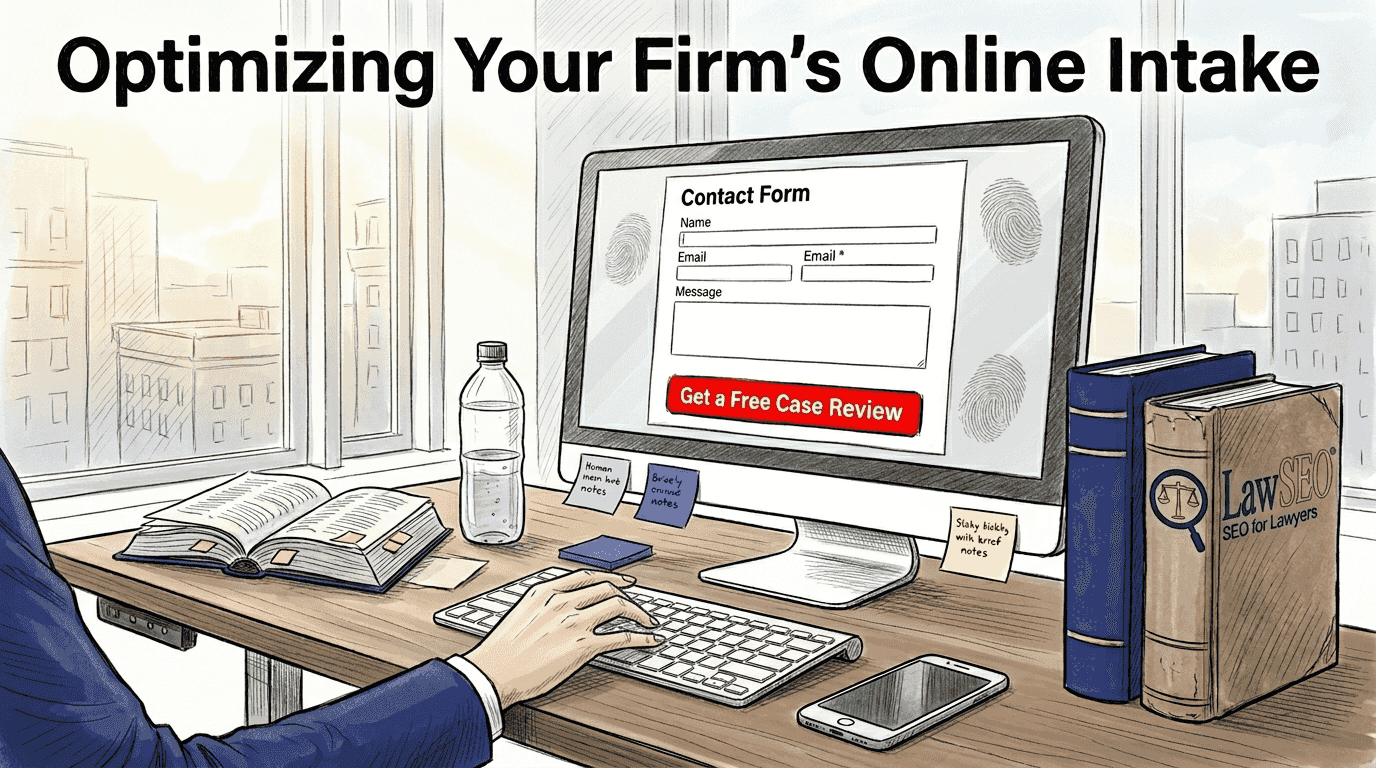
Place clear, compelling calls to action prominently above the fold and throughout your page. Phrases like “Get Your Free Case Review” or “Schedule Your Consultation Today” outperform vague “Contact Us” buttons. Use client testimonials strategically near CTAs to reinforce trust at decision points. Social proof removes hesitation.
Optimize forms for maximum usability. Request only essential information initially, typically name, email, phone, and brief case description. Long forms kill conversions. Ensure forms work flawlessly on mobile devices with large tap targets and minimal typing. Landing pages with clear, compelling CTAs achieve significantly higher conversion rates.
Conduct regular A/B testing on headlines, CTA text, button colors, and form placement. Small tweaks often yield dramatic improvements. Design for minimal friction with fast load times, intuitive navigation, and obvious next steps. Confused visitors leave without converting.
Key conversion tactics:
- Strong, benefit driven headlines that speak to client pain points
- Visible CTAs placed strategically throughout the page
- Trust elements like testimonials and credentials near decision points
- Simple forms with minimal required fields
- Ongoing A/B testing to identify winning variations
Explore conversion rate optimization for attorneys and how to boost Google rankings for law firms for advanced tactics.
Pro Tip: Install heatmap tools like Hotjar to see exactly where visitors click, scroll, and abandon your page, then optimize those high friction areas.
Integration of AI and generative search optimization
AI powered SEO tools and generative search technologies transform how quickly you can optimize and maintain competitive landing pages in 2026. Manual optimization takes months, AI accelerates this to weeks.
Use AI tools to refine keyword targeting based on real time search trends. These platforms analyze competitor rankings, search volumes, and user intent shifts faster than any human. Leverage AI to improve content readability and engagement automatically by rewriting complex sentences and adjusting reading levels.
Adapt content for voice and conversational search patterns. More clients now ask questions naturally using voice assistants like Siri or Google Assistant. AI helps identify and optimize for these long tail, question based queries. AI accelerates SEO results by automating technical audits, content optimization, and performance monitoring tasks that previously consumed hours.
Always monitor AI recommendations but retain human review to ensure compliance with legal ethics and accuracy. AI can generate content quickly but lacks judgment on bar rules and professional responsibility. Use generative AI to create fresh, authoritative content drafts and update landing pages regularly without exhausting your team.
- AI tools for real time keyword targeting
- Automated content readability improvements
- Voice and conversational search optimization
- Accelerated SEO results through automation
- Human oversight for legal ethics compliance
- Generative AI for content creation and updates
Learn how to master AI optimization for law firms and explore SEO and AI for law firms in 2025 to stay ahead of competitors.
Common optimization mistakes and their fixes
Even with solid strategies, common errors sabotage landing page performance. Recognizing and correcting these mistakes ensures sustained success.
Overusing keywords causes search engine penalties and reduces rankings. Fix this by writing naturally for user intent, not algorithms. Google penalizes keyword stuffing aggressively. Ignoring mobile optimization loses leads since most legal searches occur on phones. Fix this immediately with responsive design and rigorous mobile testing.
Neglecting legal disclaimers risks compliance violations and erodes trust. Fix by adding visible, updated disclaimers that meet state bar requirements. Weak CTAs produce low conversion rates. Fix by implementing clear, action driven CTAs with prominent placement and compelling copy. Review how to boost Google rankings for law firms for comprehensive ranking strategies.
| Common Mistake | Effective Fix |
|---|---|
| Keyword stuffing | Write naturally for user intent |
| Poor mobile experience | Implement responsive design and test regularly |
| Missing disclaimers | Add visible, compliant legal disclaimers |
| Weak CTAs | Use clear, action driven calls to action |
| Slow page speed | Optimize images, leverage caching, minimize code |
Pro Tip: Schedule quarterly landing page audits using SEO tools and manual reviews to catch and prevent recurring mistakes before they damage performance.
Expected timelines and success metrics
Realistic expectations prevent frustration and help you stay committed to optimization efforts. SEO and conversion improvements follow predictable patterns.
SEO improvements typically require 3 to 6 months to yield noticeable organic ranking and traffic results. Competition level, current site authority, and optimization effort intensity all influence timing. Conversion rate improvements can appear sooner, sometimes within weeks, through A/B testing and design tweaks.
Track these key metrics consistently: bounce rate, conversion rate, organic search rankings for target keywords, and lead form submissions. Successful law firm case studies show 20 to 50 percent organic traffic growth and 15 to 30 percent conversion rate increases after systematic optimization. Reduced bounce rates by 10 to 20 percent correlate strongly with faster load times and mobile optimization.
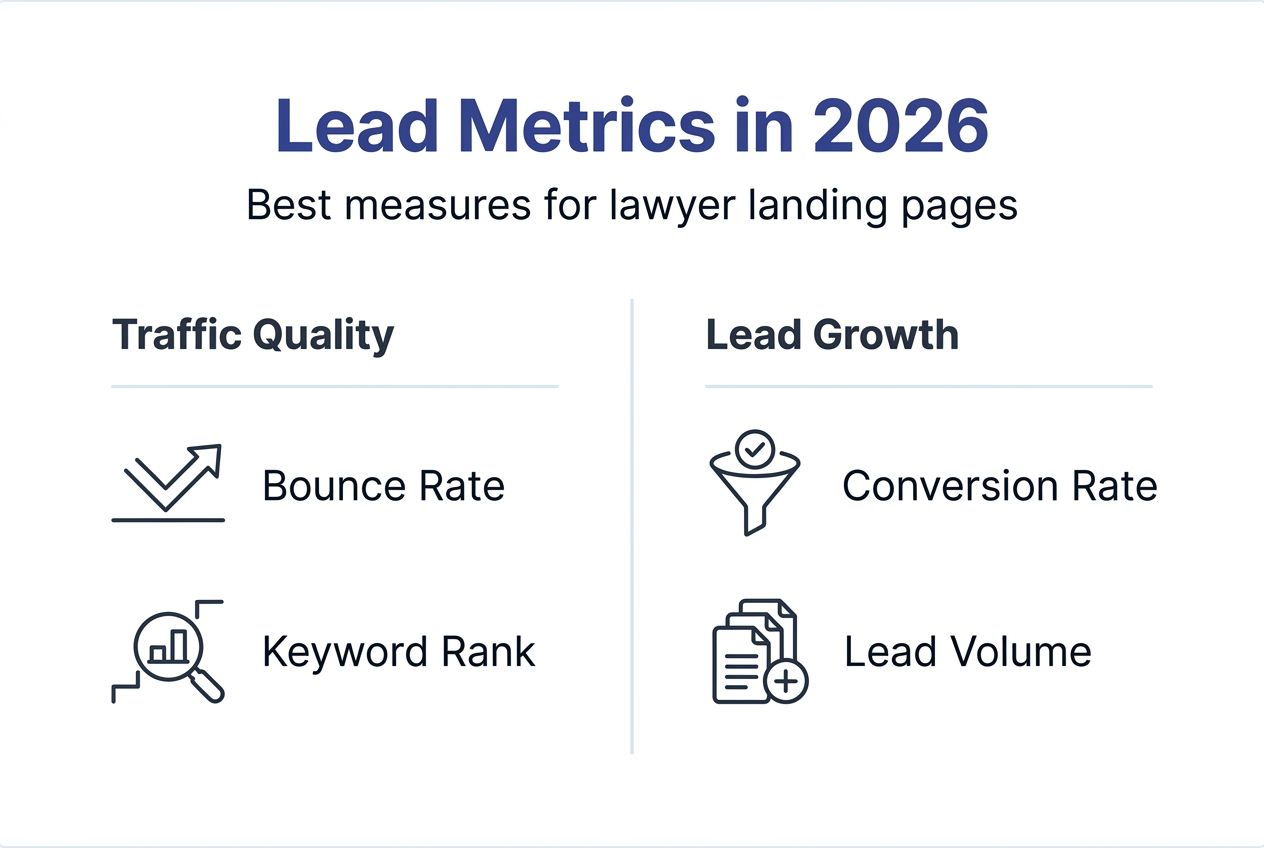
| Timeline Phase | Key Metrics | Expected Improvement |
|---|---|---|
| 0 to 3 months | Page speed, mobile usability, bounce rate | 10 to 20% bounce rate reduction |
| 3 to 6 months | Organic rankings, traffic volume | 20 to 50% traffic increase |
| 6 to 12 months | Conversion rate, lead submissions | 15 to 30% conversion lift |
Success indicators to monitor:
- Steady increase in organic search traffic
- Improved rankings for target local keywords
- Lower bounce rates and higher time on page
- More lead form submissions and phone calls
- Positive trends in Google Search Console impressions and clicks
Interpret analytics trends by comparing month over month and year over year data to account for seasonality. Dive into conversion rate optimization for attorneys for ongoing refinement strategies.
Enhance your lawyer landing pages with expert SEO tools
You now have a complete roadmap for optimizing lawyer landing pages to generate more qualified leads in 2026. Implementing these strategies systematically transforms underperforming pages into lead generation engines.
LawSEO.com offers tailored SEO strategies specifically designed for law firms, with deep expertise in legal marketing ethics and competitive landscapes. Access expert AI powered SEO tools that boost rankings and client leads faster than traditional methods. Leverage professional conversion rate optimization services for attorneys to maximize your landing page results without trial and error.
Visit SEO for Lawyers LLC today to get started with AI search optimization for law firms and transform your online legal marketing performance.
Frequently asked questions
What is the most critical technical SEO factor for lawyer landing pages?
Page load speed under 3 seconds is critical because it directly reduces bounce rates and improves user experience for potential clients. Mobile optimization ranks equally important since most legal searches happen on smartphones. Schema markup and localized keywords also play vital roles but come after speed and mobile readiness.
How can AI improve lawyer landing page content?
AI analyzes search trends to refine keyword targeting and rewrites content for better clarity at a 7th to 9th grade reading level. It also optimizes content for voice and conversational queries, speeding up SEO results from months to weeks. Always retain human oversight to ensure legal ethics compliance and accuracy.
What common mistakes reduce landing page conversion for law firms?
Weak or unclear calls to action, slow page load speeds, and neglecting mobile usability commonly kill conversions. Fixes include placing strong CTAs prominently, improving page speed through image optimization and caching, and ensuring forms work flawlessly on mobile devices. A/B testing reveals which variations convert best.
How long does it take to see results from landing page optimization?
SEO impact typically appears within 3 to 6 months depending on competition level and optimization intensity. Conversion rate improvements can sometimes be seen sooner, within weeks, through A/B testing and design tweaks. Tracking metrics monthly helps identify trends and validate your optimization efforts.